
Aircraft De-Icing Procedures for Connecting Flights in Winter: A Comprehensive Guide
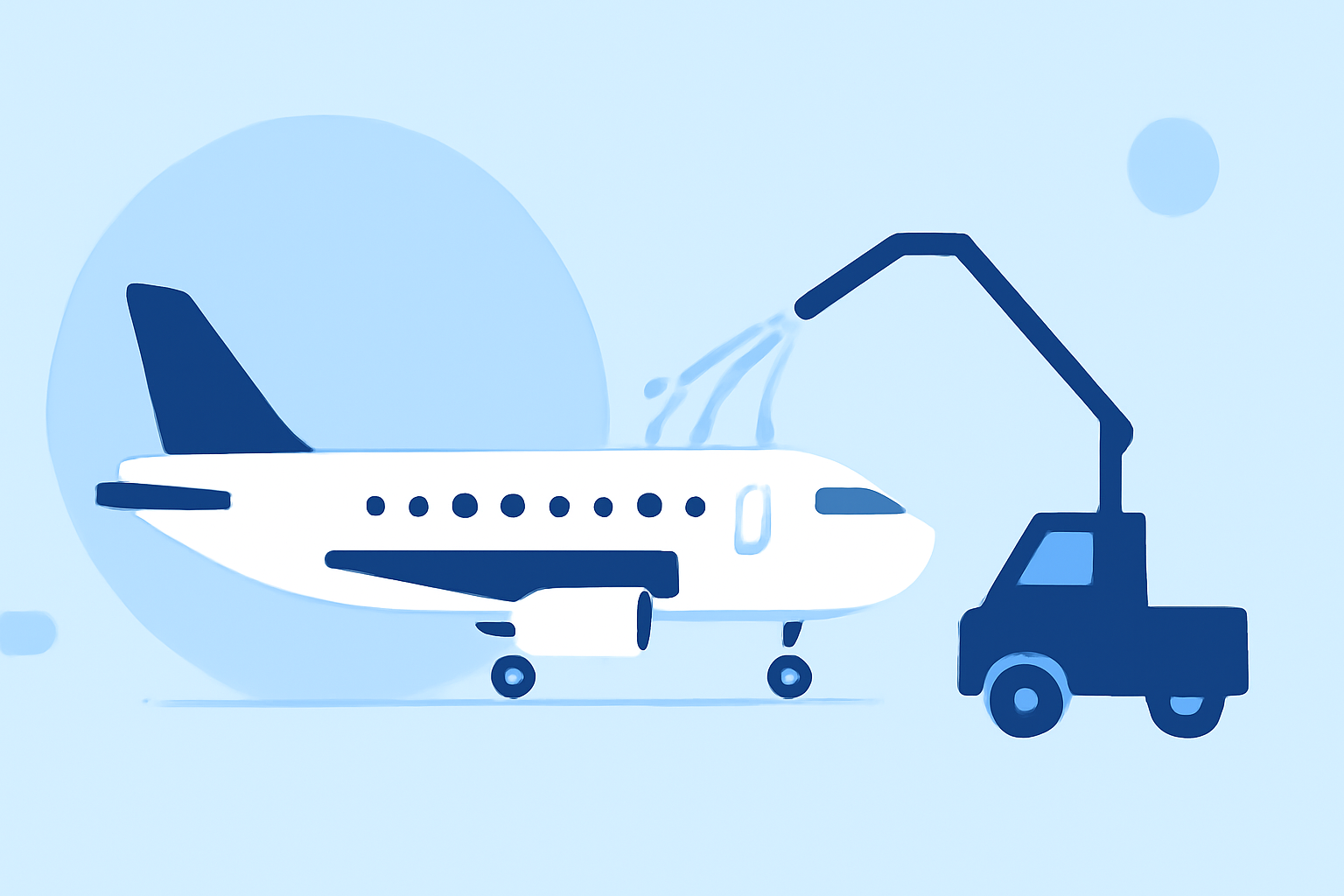
Winter weather poses significant challenges to aviation, particularly concerning aircraft de-icing during connecting flights. Proper de-icing is crucial to maintain aircraft performance and ensure passenger safety.
What Is Aircraft De-Icing?
De-icing involves removing ice, snow, or frost from an aircraft's surfaces before takeoff. Accumulated ice can disrupt airflow, reducing lift and increasing drag, which compromises flight safety. (aircraftsystemstech.com)
Why Is De-Icing Essential for Connecting Flights?
Connecting flights often face tight schedules, making timely de-icing operations vital. Delays in de-icing can lead to missed connections and operational inefficiencies. Ensuring prompt and effective de-icing is essential to maintain the flight schedule and passenger satisfaction.
Common De-Icing Methods
-
Mechanical De-Icing: Utilizes tools like brooms or squeegees to physically remove ice from aircraft surfaces. (aircrafticing.grc.nasa.gov)
-
Thermal De-Icing: Employs heated air to melt ice accumulation.
-
Chemical De-Icing: Applies heated de-icing fluids (Type I) to dissolve ice. (aircrafticing.grc.nasa.gov)
De-Icing Fluids and Holdover Times
De-icing fluids are categorized into types:
-
Type I Fluids: Heated, diluted solutions used for de-icing.
-
Type II, III, IV Fluids: Thicker, undiluted solutions used for anti-icing. (tarmacview.com)
After de-icing, anti-icing fluids are applied to prevent new ice formation. The duration of protection is known as the holdover time (HOT), which varies based on fluid type and weather conditions. (aircrafticing.grc.nasa.gov)
Best Practices for De-Icing During Connecting Flights
-
Timely Coordination: Airlines should coordinate de-icing procedures to minimize delays, especially for connecting flights.
-
Effective Communication: Clear communication between ground crews and flight crews ensures that de-icing is performed promptly and correctly.
-
Regular Training: Continuous training for ground personnel on de-icing techniques and safety protocols is essential.
How Planes Live Enhances De-Icing Operations
Planes Live offers real-time weather updates and flight tracking, enabling airlines to anticipate weather-related delays and plan de-icing operations more effectively. By integrating Planes Live into their operations, airlines can improve scheduling, enhance safety, and provide a better experience for passengers.
Conclusion
Effective de-icing is vital for the safety and efficiency of connecting flights during winter. By understanding de-icing methods, holdover times, and best practices, airlines can ensure timely departures and maintain passenger trust. Utilizing tools like Planes Live can further optimize de-icing operations, leading to smoother winter travel experiences.