
Aircraft De-Icing in Winter: A Beginner's Guide
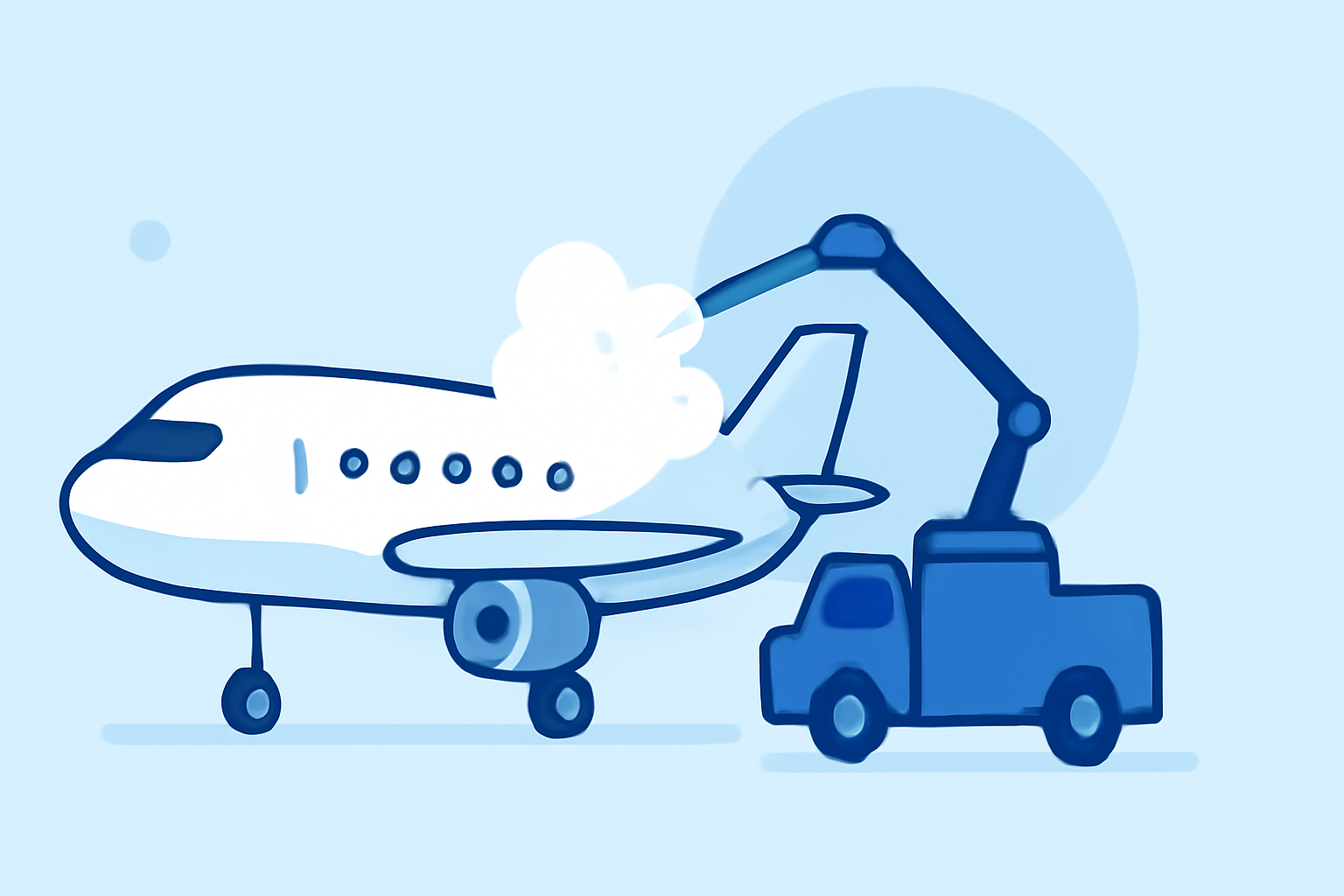
Winter weather poses significant challenges to aviation, with ice, snow, and frost accumulation on aircraft surfaces compromising safety and performance. Understanding aircraft de-icing is crucial for ensuring safe flight operations during these conditions.
What Is Aircraft De-Icing?
Aircraft de-icing involves removing ice, snow, or frost from an aircraft's critical surfaces before takeoff. This process is essential because frozen contaminants can disrupt airflow, reduce lift, and increase drag, leading to potential control issues. Even a thin layer of ice can significantly impact an aircraft's performance. (milesaviation.com)
Why Is De-Icing Necessary?
Ice accumulation on aircraft surfaces can:
- Increase Weight: Additional weight from ice can affect fuel efficiency and performance.
- Reduce Lift: Ice disrupts airflow over wings and control surfaces, decreasing lift.
- Increase Drag: The rough surface created by ice increases aerodynamic drag.
- Affect Control: Ice can interfere with control surfaces, leading to handling difficulties.
Ensuring aircraft surfaces are free from ice is vital for safe flight operations. (milesaviation.com)
How Is De-Icing Performed?
De-icing is typically performed on the ground before takeoff using:
- Heated Fluids: A heated glycol-based mixture is sprayed onto the aircraft to melt and remove ice.
- Mechanical Methods: For smaller aircraft or when fluids are unavailable, ice can be removed manually using brooms or brushes.
- Thermal Methods: Hot air can be used to melt ice, though this is less common.
After de-icing, anti-icing fluids may be applied to prevent new ice from forming during flight. (naa.edu)
What Are the Types of De-Icing Fluids?
De-icing fluids are classified into four main types:
- Type I: A heated, low-viscosity fluid used to remove ice quickly.
- Type II: A thicker fluid used for both de-icing and anti-icing, effective at lower speeds.
- Type III: Similar to Type II but designed for aircraft with lower takeoff speeds.
- Type IV: A highly viscous fluid used for anti-icing, effective at higher speeds.
The choice of fluid depends on factors like aircraft type, weather conditions, and expected holdover time. (naa.edu)
How Long Does De-Icing Last?
The effectiveness of de-icing depends on:
- Holdover Time: The duration anti-icing fluids prevent ice formation.
- Weather Conditions: Heavy precipitation or freezing temperatures can shorten holdover time.
If the aircraft remains on the ground longer than the holdover time, re-de-icing may be necessary. (lot.com)
How Is De-Icing Coordinated?
De-icing procedures are coordinated between the flight crew and ground personnel. Clear communication ensures that the aircraft is properly de-iced and ready for safe departure. (faa.gov)
How Does De-Icing Affect Flight Operations?
De-icing can impact flight schedules due to the time required for the procedure. Airlines often plan for potential delays during winter months and may adjust schedules accordingly. (arxiv.org)
How Can I Learn More About Aircraft De-Icing?
For a visual explanation of aircraft de-icing procedures and their importance, you might find this video helpful:
How Does De-Icing an Aircraft Work & Why Is It Important?
Understanding aircraft de-icing is essential for ensuring safe flight operations during winter conditions. By recognizing the importance of de-icing, the methods involved, and the factors affecting its effectiveness, you can appreciate the critical role this procedure plays in aviation safety.