
Aircraft De-Icing in Winter: A Step-by-Step Guide
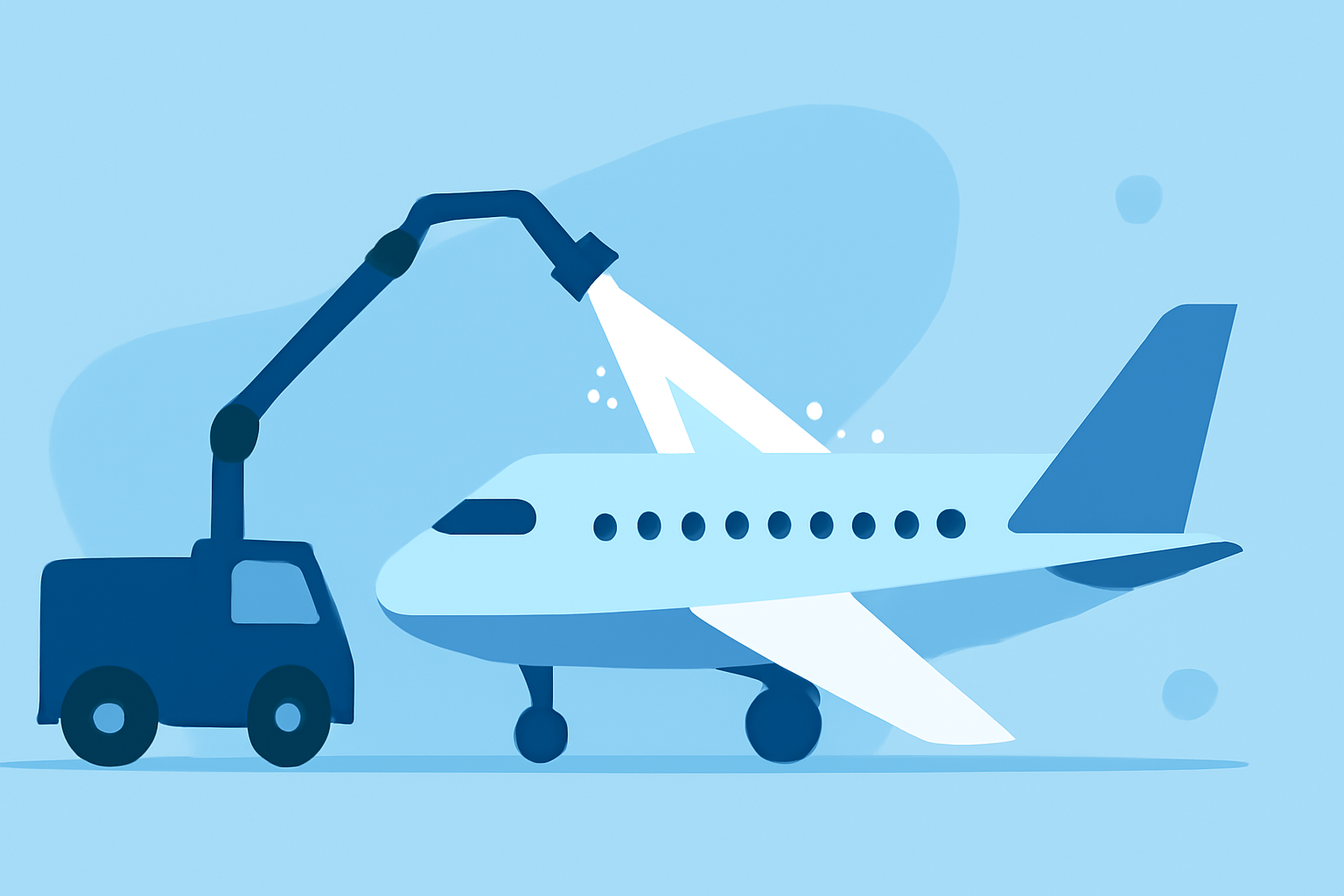
Aircraft de-icing is a critical procedure performed during winter months to ensure flight safety. Accumulated ice, snow, or frost on an aircraft's surfaces can disrupt airflow, increase weight, and impede sensor functionality, all of which can compromise performance. (simpleflying.com)
Why Is Aircraft De-Icing Necessary?
Ice accumulation on aircraft surfaces, especially wings and control surfaces, can adversely affect aerodynamics, leading to reduced lift and increased drag. Additionally, ice can obstruct sensors and vents, leading to inaccurate readings and potential system malfunctions. Therefore, de-icing is essential to maintain optimal performance and ensure passenger safety. (simpleflying.com)
What Are the Steps Involved in Aircraft De-Icing?
-
Inspection: Before de-icing, ground crews conduct a thorough inspection to identify any ice, snow, or frost accumulation on the aircraft's surfaces.
-
De-Icing: A heated glycol-based fluid, typically Type I de-icing fluid, is sprayed under pressure onto the aircraft's surfaces to remove frozen contaminants. This fluid is usually dyed orange and is applied at temperatures between 140-150 degrees Fahrenheit. (naa.edu)
-
Anti-Icing: After de-icing, an anti-icing fluid, such as Type II, III, or IV, may be applied to prevent further ice accumulation during the flight. These fluids are thicker and provide longer-lasting protection. (naa.edu)
Which Parts of the Aircraft Are De-Iced?
The de-icing process targets several critical areas:
-
Wings: Including flaps, slats, ailerons, and spoilers.
-
Horizontal Stabilizers: To maintain proper pitch control.
-
Fuselage: Especially the top centerline, to ensure lift during takeoff.
-
Flight Instruments: Such as pitot tubes, which measure airspeed. (lot.com)
Who Performs Aircraft De-Icing?
De-icing is conducted by specially trained ground handling crews. These professionals undergo regular training to ensure they are equipped with the knowledge and skills necessary for safe and effective de-icing operations. (lot.com)
How Long Does Aircraft De-Icing Take?
The duration of the de-icing process depends on factors such as aircraft size and weather conditions. For instance, larger aircraft like the Boeing 787 Dreamliner may require between 8 and 20 minutes for de-icing due to their extensive wing surface area. (lot.com)
How Does Planes Live Enhance the De-Icing Process?
Planes Live offers real-time weather updates and alerts, enabling ground crews to monitor weather conditions closely. By integrating Planes Live into their operations, crews can make informed decisions about de-icing procedures, ensuring timely and efficient operations.
Conclusion
Aircraft de-icing is a vital procedure during winter months to ensure flight safety and performance. By understanding the de-icing process and leveraging tools like Planes Live, aviation professionals can enhance operational efficiency and maintain high safety standards.