
Aircraft De-Icing in Winter: Essential Guidelines for 2026
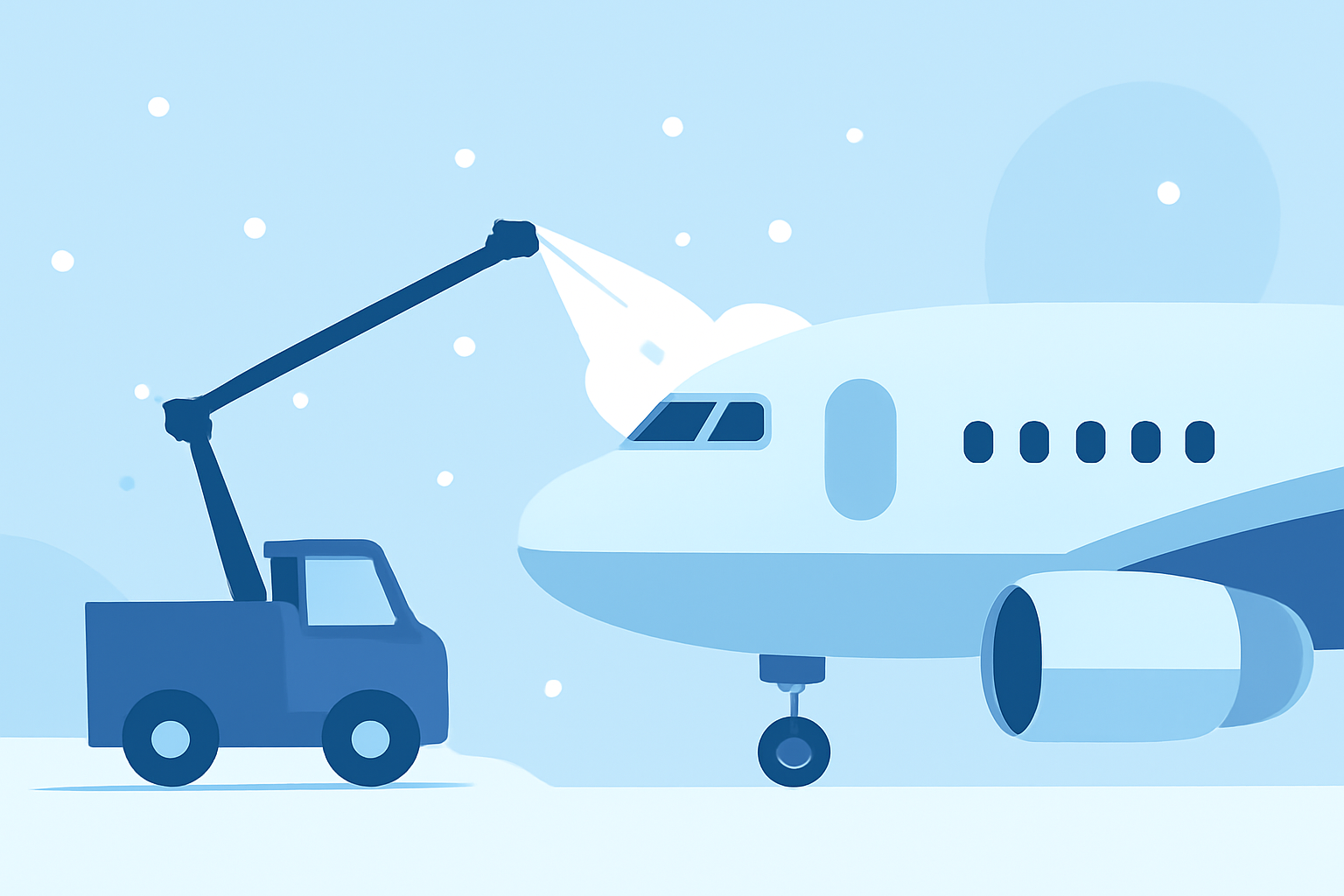
As winter approaches, ensuring aircraft safety through proper de-icing procedures becomes paramount. In 2026, adhering to updated FAA guidelines is crucial for all aviation professionals.
What Are De-Icing and Anti-Icing?
De-icing involves removing existing frozen contaminants from aircraft surfaces, while anti-icing prevents future accumulation. Both processes are vital for maintaining optimal aircraft performance during winter operations. (faa.gov)
Why Is De-Icing Necessary?
Accumulated ice or snow can disrupt airflow over wings and control surfaces, leading to reduced lift and increased drag. This can compromise aircraft stability and control, making timely de-icing essential for safe flight operations.
What Are the FAA's Holdover Time Guidelines for Winter 2025-2026?
The FAA provides Holdover Time (HOT) Guidelines to determine the duration anti-icing fluids remain effective under specific conditions. For Winter 2025-2026, these guidelines are detailed in the FAA's official document. (faa.gov)
How Should De-Icing Fluids Be Applied?
The application of de-icing fluids depends on the outside air temperature (OAT):
-
OAT 0°C (32°F) and Above: A one-step procedure using heated Type I fluid is recommended.
-
OAT Below 0°C (32°F): A two-step procedure is advised, starting with heated fluid to remove contaminants, followed by anti-icing fluid to prevent re-icing.
It's essential to ensure that the fluid's freezing point is at least 10°C (18°F) below the OAT to maintain effectiveness. (faa.gov)
What Are the Risks of Inadequate De-Icing?
Failing to properly de-ice can lead to ice accumulation, resulting in:
-
Reduced Lift: Ice disrupts airflow, decreasing the wing's ability to generate lift.
-
Increased Drag: Ice adds weight and resistance, reducing fuel efficiency.
-
Compromised Control: Ice on control surfaces can hinder maneuverability, posing safety risks.
How Can Planes Live Assist with De-Icing Procedures?
Planes Live offers real-time weather updates, including temperature and precipitation forecasts, aiding in timely de-icing decisions. By integrating Planes Live into your operations, you can enhance situational awareness and ensure compliance with FAA guidelines.
Conclusion
Proper de-icing is vital for aircraft safety during winter months. By following FAA guidelines and utilizing tools like Planes Live, aviation professionals can ensure efficient and safe operations throughout the 2026 winter season.
Highlights:
- [FAA HOLDOVER TIME GUIDELINES
WINTER 2025-202](https://www.faa.gov/other_visit/aviation_industry/airline_operators/airline_safety/deicing/FAA_2025-26_Holdover_Tables.pdf?utm_source=openai), Published on Friday, May 08