
Aircraft De-Icing in Winter: A Step-by-Step Checklist
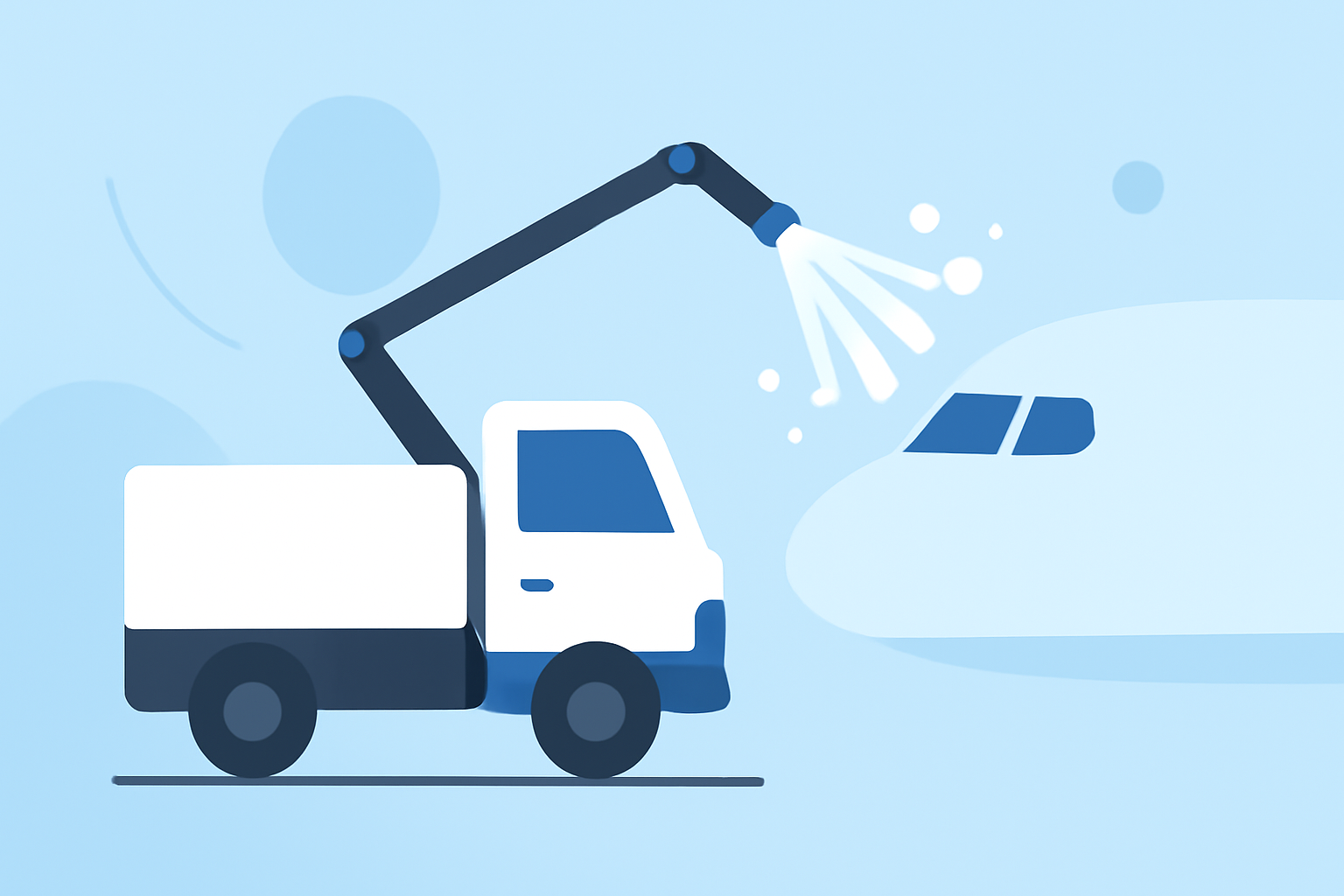
Winter weather poses significant challenges for aviation, particularly concerning aircraft de-icing. Proper de-icing is crucial to maintain aircraft performance and ensure flight safety. This guide provides a step-by-step checklist for effective de-icing procedures, along with best practices and recommended tools.
1. Understand the Importance of De-Icing
Ice accumulation on aircraft surfaces disrupts airflow, increases drag, reduces lift, and can affect propulsion and control systems. Effective de-icing ensures optimal performance and safety during winter operations. (faa.gov)
2. Pre-Flight Preparations
-
Check Weather Conditions: Review current and forecasted weather at departure and arrival airports, including temperature, precipitation, and wind conditions.
-
Inspect Aircraft Surfaces: Examine wings, tail, fuselage, and control surfaces for ice or snow accumulation.
-
Verify De-Icing Equipment: Ensure that de-icing systems, such as heated leading edges and propeller boots, are functioning correctly.
3. De-Icing Procedures
-
Select Appropriate De-Icing Fluids: Choose de-icing fluids based on outside air temperature (OAT) and the type of contamination.
-
Apply De-Icing Fluids Correctly: Use the correct application method and quantity to effectively remove ice and snow.
-
Anti-Icing Application: After de-icing, apply anti-icing fluids to prevent further accumulation during flight.
4. Post-Flight Considerations
-
Inspect Aircraft After Landing: Check for any residual ice or snow that may have accumulated during flight.
-
Report Conditions: Inform ground crews and maintenance personnel of any de-icing issues encountered.
5. Best Practices
-
Use Holdover Time Guidelines: Refer to FAA Holdover Time Guidelines to determine the duration anti-icing fluids remain effective under specific conditions. (faa.gov)
-
Maintain Equipment: Regularly service de-icing equipment to ensure optimal performance.
-
Train Personnel: Ensure that ground crews are trained in proper de-icing techniques and safety protocols.
6. Recommended Tools and Resources
-
De-Icing Fluids: Utilize FAA-approved de-icing and anti-icing fluids suitable for the specific aircraft and conditions.
-
Holdover Time Tables: Use the latest FAA Holdover Time Guidelines to determine the appropriate duration of anti-icing protection. (faa.gov)
-
De/Anti-Icing International Vendor Audit Checklist (DEVA Checklist): Employ this checklist to assess de-icing vendors and ensure compliance with industry standards. (faa.gov)
By following this checklist and adhering to best practices, pilots and ground crews can effectively manage de-icing procedures, ensuring safe and efficient winter operations.
For comprehensive information and resources on aircraft de-icing, refer to the FAA's guidelines and publications. (faa.gov)