
An Introduction to Aircraft De-Icing in Winter for Frequent Flyers
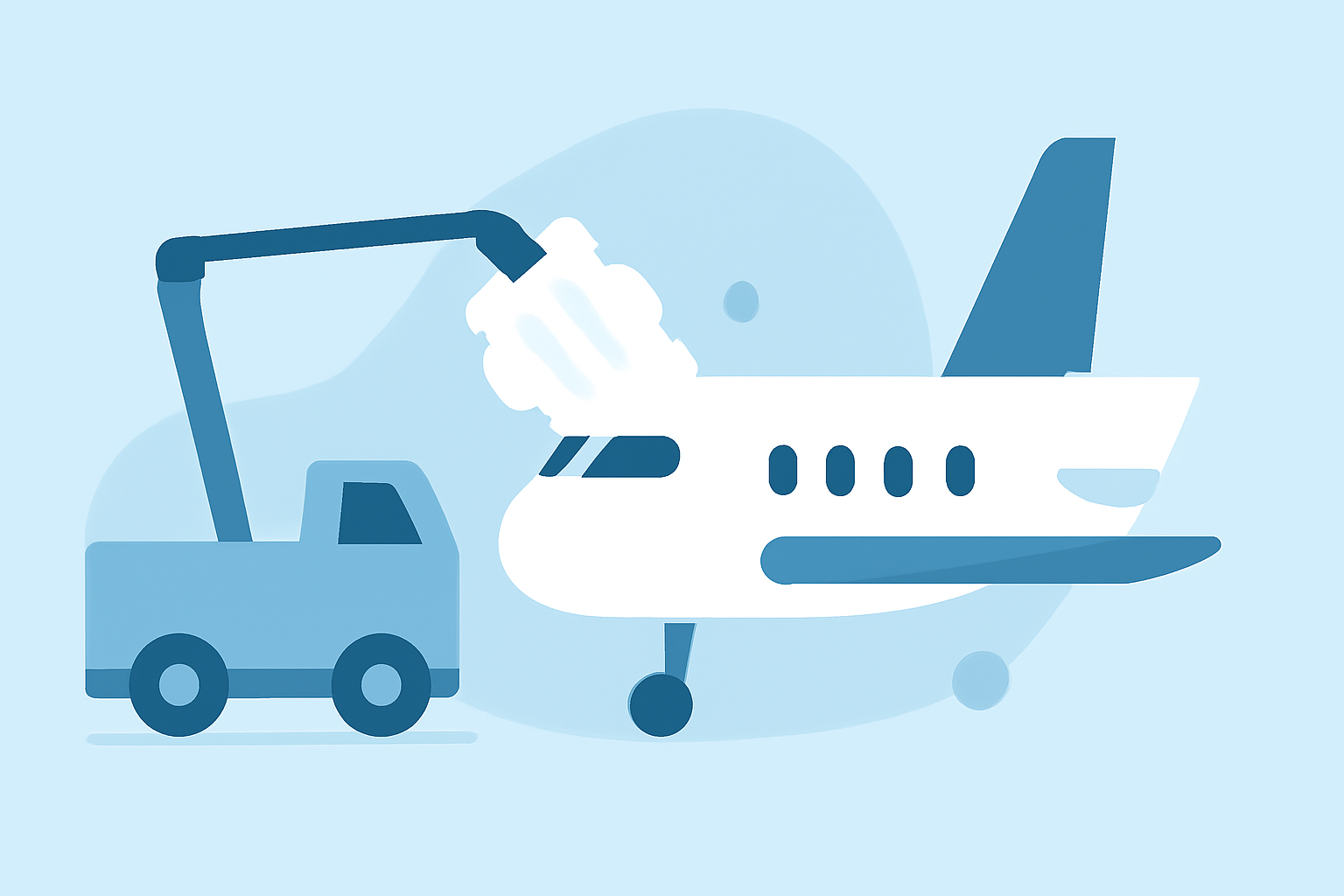
As winter approaches, frequent flyers may notice aircraft being sprayed with fluids before takeoff. This essential procedure, known as de-icing, ensures flight safety by removing ice, snow, and frost from the aircraft's surfaces.
Why Is De-Icing Necessary?
Ice accumulation on an aircraft's wings and tail can disrupt airflow, leading to reduced lift and increased drag. This not only affects the aircraft's performance but also poses significant safety risks. De-icing removes these contaminants, allowing the aircraft to operate efficiently and safely.
How Does the De-Icing Process Work?
-
Inspection: Ground crews assess the aircraft for any ice, snow, or frost accumulation.
-
Removal: A heated glycol-based fluid is sprayed under pressure to melt and remove the frozen contaminants.
-
Protection: To prevent re-icing, especially during heavy snowfall or freezing conditions, a cold glycol-based fluid is applied. This protective layer ensures the aircraft remains free from ice until takeoff.
The de-icing process typically takes a few minutes, depending on the aircraft's size and the weather conditions. Larger aircraft may require more time due to their extensive surface areas.
Which Parts of the Aircraft Are De-Iced?
The de-icing procedure focuses on critical components:
-
Wings: Including flaps, slats, ailerons, and spoilers.
-
Horizontal Stabilizers: Ensuring stability during flight.
-
Fuselage: To maintain lift during takeoff.
-
Flight Instruments: Such as pitot tubes, which measure airspeed.
Who Performs Aircraft De-Icing?
De-icing is conducted by specially trained ground handling crews. These professionals undergo regular training to ensure they perform the procedure efficiently and safely.
How Does De-Icing Affect Flight Schedules?
While de-icing is crucial for safety, it can lead to slight delays, especially during severe winter weather. Airlines prioritize passenger safety, and de-icing ensures that flights depart with optimal performance.
How Can Frequent Flyers Stay Informed?
Staying informed about de-icing procedures can enhance your travel experience. Airlines often provide updates on weather conditions and any potential delays. Additionally, understanding the de-icing process can provide reassurance about the measures taken to ensure flight safety.
In conclusion, aircraft de-icing is a vital procedure that ensures the safety and efficiency of flights during winter months. By understanding this process, frequent flyers can appreciate the importance of these measures and travel with confidence.