
Essential Guide to Aircraft De-Icing Procedures in Winter
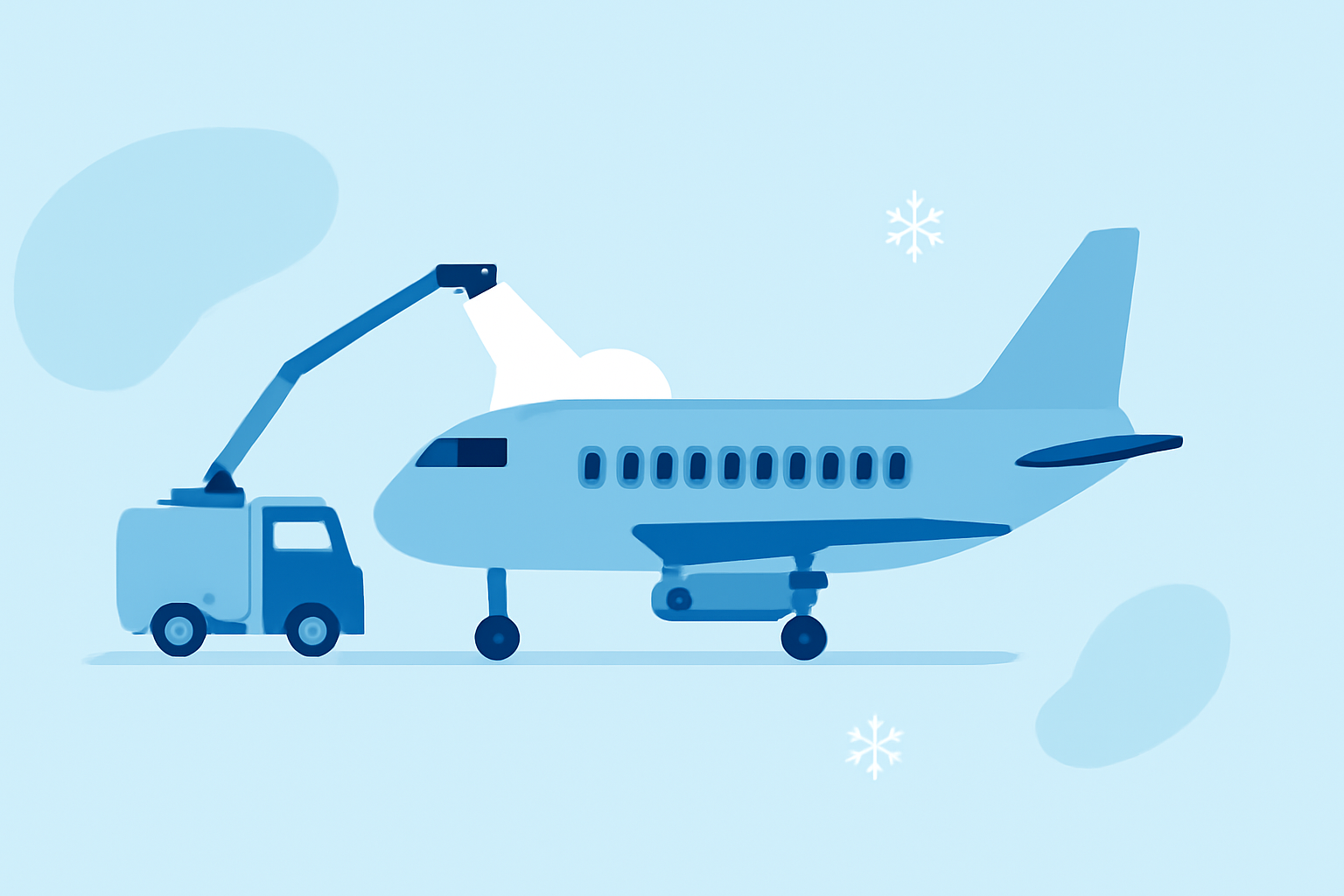
Ensuring aircraft safety during winter operations requires meticulous de-icing procedures to remove ice, snow, and frost from critical surfaces.
Why is Aircraft De-Icing Crucial?
Accumulated ice on aircraft surfaces can severely impair performance, affecting lift, control, and overall safety. De-icing is essential to maintain optimal aerodynamic properties and ensure safe flight operations.
What Are the Key De-Icing Procedures?
-
Pre-Flight Inspection: Before departure, conduct a thorough inspection to identify any ice, snow, or frost on the aircraft's surfaces.
-
De-Icing Application: Utilize heated de-icing fluids to remove existing ice and snow. This process typically involves spraying the aircraft with a heated glycol-water mixture to clear any frozen accumulation. (lot.com)
-
Anti-Icing Application: After de-icing, apply anti-icing fluids to prevent further accumulation during takeoff and initial climb. This involves spraying the aircraft with a cold glycol-water mixture to prevent re-icing. (lot.com)
Which Aircraft Components Are De-Iced?
Critical surfaces requiring de-icing include:
-
Wings: Including flaps, slats, ailerons, and spoilers.
-
Horizontal Stabilizers: Both horizontal and vertical stabilizers.
-
Fuselage: To maximize lift during takeoff.
-
Flight Instruments: Such as pitot tubes, which measure static and dynamic air pressure to calculate airspeed. (lot.com)
Who Performs Aircraft De-Icing?
De-icing is conducted by specially trained ground handling crews. Each year, before winter, these crews undergo refresher training on de-icing procedures to ensure maximum efficiency and safety. (lot.com)
How Long Does Aircraft De-Icing Take?
The duration of the de-icing process depends on two factors:
-
Aircraft Type: Larger aircraft require more time due to their large wing surface area.
-
Weather Conditions: Severe weather may necessitate more extensive de-icing procedures.
Most de-icing procedures take a few minutes. Larger aircraft (like the Boeing 787 Dreamliner) require more time, typically between 8 and 20 minutes, due to their large wing surface area. (lot.com)
How Does De-Icing Affect Aircraft Performance?
Proper de-icing ensures that aircraft surfaces are free from contaminants, allowing for optimal lift and control during takeoff and flight. Neglecting de-icing can lead to reduced performance, increased fuel consumption, and potential safety hazards.
What Are the Regulatory Requirements for De-Icing?
The Federal Aviation Administration (FAA) mandates that operators develop and implement de-icing programs that include:
-
Holdover time tables.
-
De-icing and anti-icing procedures.
-
Pre-takeoff contamination checks.
These requirements are outlined in 14 CFR § 121.629. (law.cornell.edu)
How Can Planes Live Assist with De-Icing Procedures?
Planes Live offers real-time weather updates, including temperature and precipitation forecasts, which are crucial for planning de-icing operations. By integrating Planes Live into your operational workflow, you can receive timely alerts about adverse weather conditions, enabling proactive de-icing measures and enhancing flight safety.
Incorporating Planes Live into your operational workflow can significantly enhance your de-icing procedures, ensuring timely and effective responses to winter weather challenges.
By adhering to these de-icing procedures and leveraging tools like Planes Live, aviation professionals can ensure aircraft safety and performance during winter operations.