
Understanding Aircraft De-Icing: A Step-by-Step Guide for Winter Travel Planning
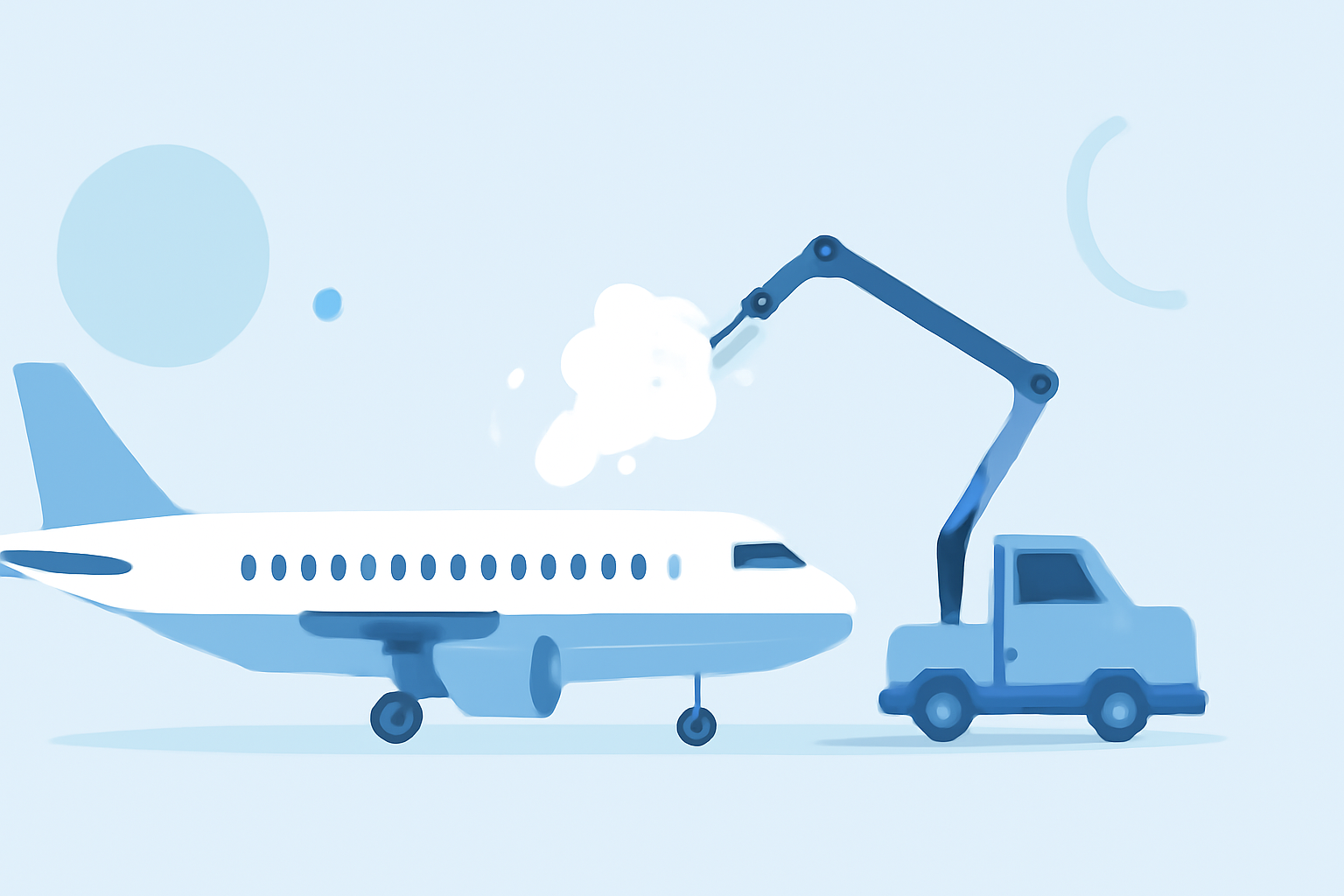
Winter travel often brings the challenge of aircraft de-icing—a crucial process to ensure flight safety in cold conditions. Understanding this procedure can help you plan your trips more effectively.
What Is Aircraft De-Icing?
Aircraft de-icing involves removing ice, snow, or frost from an aircraft's surfaces before takeoff. This is essential because frozen contaminants can negatively affect aerodynamics, lift, and overall performance. De-icing ensures that critical surfaces like wings, tailplanes, and control surfaces are free from ice buildup. (learn-atc.com)
When Is De-Icing Necessary?
De-icing becomes necessary under several conditions:
-
Visible Ice or Snow: If ice or snow is present on the aircraft's surfaces.
-
Frost or Freezing Rain: In conditions where frost or freezing rain can accumulate on the aircraft.
-
Freezing Temperatures: When temperatures are near or below freezing, leading to potential ice formation.
-
Accumulated Slush: After snowfall, slush can accumulate on the aircraft, necessitating de-icing.
-
Overnight Exposure: If the aircraft has been exposed to cold temperatures overnight, ice may form on its surfaces. (jetapp.com)
De-Icing Procedures: A Step-by-Step Overview
-
Pre-Flight Inspection: Before departure, a thorough inspection is conducted to identify any ice, snow, or frost on the aircraft's surfaces.
-
Application of De-Icing Fluids: If contamination is found, heated de-icing fluids are sprayed onto the aircraft to remove the ice. These fluids are typically heated to temperatures between 60°C and 80°C to ensure effective removal. (aircrafticing.grc.nasa.gov)
-
Anti-Icing Treatment (If Necessary): After de-icing, an anti-icing fluid may be applied to create a protective layer that prevents new ice from forming during the flight. The need for anti-icing depends on factors like outside temperature, precipitation type, humidity, and expected holding time on the ground. (jetapp.com)
-
Final Inspection: A final check ensures that all critical surfaces are free from ice and that the anti-icing treatment is intact.
Costs Associated with De-Icing
The cost of de-icing varies based on several factors:
-
Aircraft Size: Larger aircraft require more de-icing fluid and time.
-
Amount of Fluid Used: The volume of de-icing and anti-icing fluids needed.
-
Local Airport Charges: Different airports have varying fees for de-icing services.
-
Weather Conditions: Severe weather may necessitate additional de-icing measures.
For light jets and turboprops, typical de-icing costs range from €500 to €3,000, depending on the aircraft type and conditions. (jetapp.com)
Planning for De-Icing During Winter Travel
To ensure a smooth travel experience during winter months:
-
Stay Informed: Monitor weather forecasts for your departure and arrival locations.
-
Allow Extra Time: De-icing can add time to your pre-flight schedule. Plan accordingly to avoid rushing.
-
Understand Airline Policies: Familiarize yourself with your airline's de-icing procedures and any associated costs.
-
Be Prepared for Delays: Winter weather can lead to unexpected delays. Maintain flexibility in your travel plans.
How Planes Live Can Assist You
For travelers seeking real-time updates and comprehensive information on flight statuses, including de-icing procedures, Planes Live offers a robust platform. By providing timely notifications and detailed insights, Planes Live helps you stay informed and prepared for any winter travel challenges.
Understanding aircraft de-icing is essential for winter travel planning. By staying informed and utilizing resources like Planes Live, you can navigate winter conditions with confidence and ensure a safe journey.
Highlights:
- Winter Weather Resources | Federal Aviation Administration, Published on Tuesday, January 06