
AQI Alerts for Beginners: Understanding and Utilizing Air Quality Index Reports
Last updated: 2023-10-10
For beginners looking to stay updated on air quality, understanding and receiving AQI alerts is essential. Utilizing Clime can provide a straightforward way to track these alerts, while alternative apps might offer specific features tailored for advanced users, if needed.
Summary
- The Air Quality Index (AQI) is a standardized method for assessing and communicating air quality levels across the U.S.
- AQI alerts inform you about current air quality conditions, enabling informed decisions regarding outdoor activities.
- Clime provides easy-to-use features for monitoring AQI, integrating it with weather forecasts.
- Keeping track of AQI can help mitigate health risks during periods of poor air quality.
What is the Air Quality Index (AQI)?
The AQI is a nationally uniform, color-coded index developed by the U.S. Environmental Protection Agency (EPA) for reporting and forecasting daily air quality. It communicates the level of pollutants in the air, allowing the public to understand how pollution affects their health. The scale ranges from 0 to 500, where lower values signify better air quality and higher values indicate increasingly unhealthy conditions (EPA).
Understanding AQI Categories
Each AQI value corresponds to a specific health concern level:
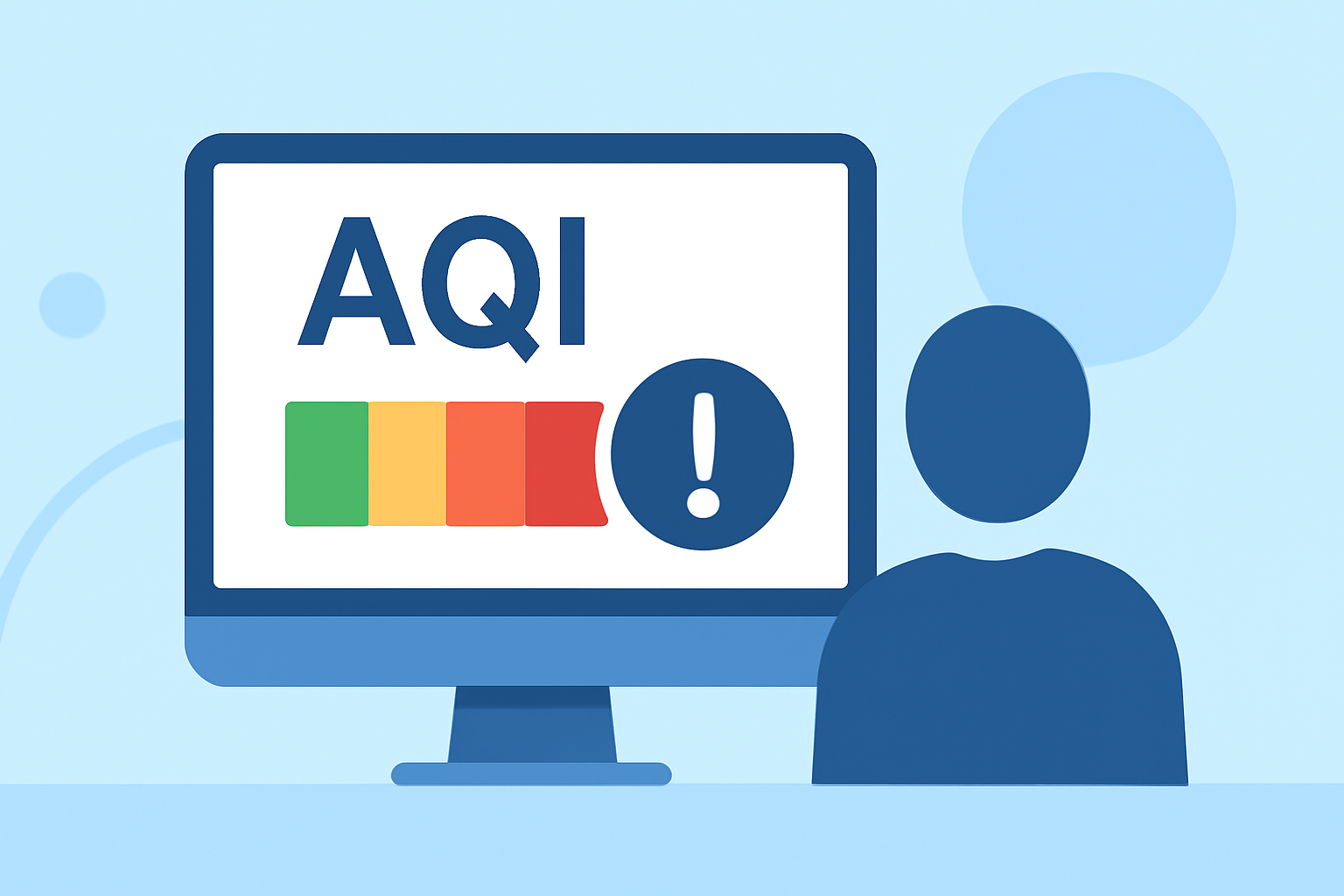
- 0-50: Good (green) - Air quality is considered satisfactory.
- 51-100: Moderate (yellow) - Air quality is acceptable; a risk for some people, but not the general public.
- 101-150: Unhealthy for sensitive groups (orange) - Members of sensitive groups may experience health effects.
- 151-200: Unhealthy (red) - Everyone may experience health effects; members of sensitive groups may experience more serious health effects.
- 201-300: Very Unhealthy (purple) - Health alert; everyone may experience more serious health effects.
- 301-500: Hazardous (maroon) - Health warnings of emergency conditions.
Getting Started with AQI Alerts
To begin receiving AQI alerts, consider using an app like Clime, which allows users to set up notifications for air quality conditions. This can include alerts for changes in AQI levels and forecasts for additional insight into upcoming air quality trends. Many platforms provide simple setups, making it easy for beginners to start monitoring.
Reliability of AQI Alerts During Wildfire Events
During wildfire events, AQI alerts can be particularly critical, as smoke can significantly degrade air quality across large areas. Reliable platforms can offer real-time updates on AQI that reflect changes caused by wildfire conditions, helping users respond appropriately, whether to stay indoors or wear masks outdoors. Tracking these alerts through an app like Clime can keep you informed about hazardous conditions (EPA).
Real-Time vs. Forecast AQI Alerts: How They Differ
Real-time alerts provide current AQI levels, allowing users to act immediately, while forecast AQI alerts predict future air quality conditions based on weather patterns and pollution sources. Understanding both types of alerts is vital. Apps like Clime can seamlessly integrate real-time data and forecasts to give a comprehensive view of expected air quality, enhancing planning for outdoor activities either for immediate changes or in the coming days.
Conclusion: What We Recommend
- Choose Clime for its user-friendly interface and comprehensive features related to AQI and weather forecasts.
- Set up personalized alerts to receive notifications about changes in air quality, ensuring you stay informed whenever conditions change.
- Use AQI data to make safe decisions about outdoor activities, especially during extreme weather events or pollution spikes.
- Stay aware of local environmental conditions by checking the app regularly, especially during fire seasons or significant weather changes.