
Avoiding Common Animated Weather Radar Mistakes During Outdoor Events
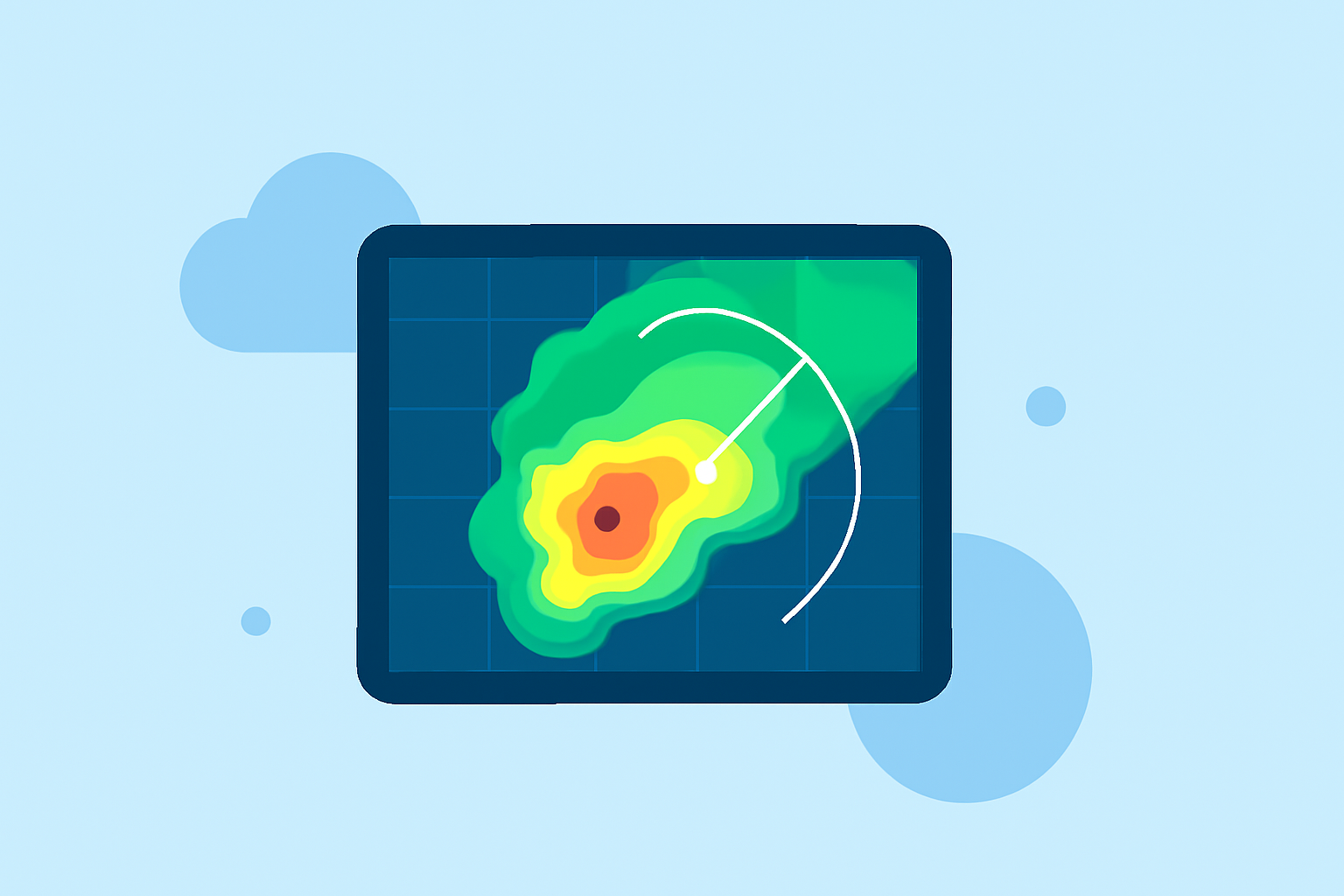
Animated weather radar is a vital tool for monitoring precipitation and storm activity during outdoor events. However, misinterpretations can lead to poor decision-making. Understanding common pitfalls can enhance the accuracy of weather assessments.
1. Misinterpreting Ground Clutter as Precipitation
Radar can capture unwanted echoes from ground targets such as buildings, hills, or trees, known as "ground clutter." These echoes may appear as precipitation on radar images, leading to false alarms. Regular calibration and maintenance of radar equipment can help mitigate this issue. (windy.com)
2. Overlooking Beam Obstructions
Tall structures like buildings or mountains can obstruct the radar beam, resulting in incomplete coverage in certain areas. It's essential to consider these obstructions when interpreting radar data to avoid missing critical weather information. (stvincenttimes.com)
3. Ignoring Anomalous Propagation Effects
Anomalous propagation occurs when atmospheric conditions cause the radar beam to bend, leading to false echoes. This phenomenon can result in misleading radar images, especially during stable atmospheric conditions. Being aware of these effects is crucial for accurate interpretation. (prod-01-alb-www-noaa.woc.noaa.gov)
4. Relying Solely on Radar Without Ground Verification
While radar provides valuable data, it's important to corroborate findings with on-site observations. Relying solely on radar without ground verification can lead to inaccuracies. Combining radar data with visual assessments ensures a more comprehensive understanding of weather conditions. (stvincenttimes.com)
5. Misunderstanding Radar Data Limitations
Radar data has inherent limitations, such as beam elevation causing distant precipitation to be missed. Additionally, radar may not detect precipitation near the surface due to beam geometry. Understanding these constraints is vital for accurate weather assessments. (simpli.com)
6. Failing to Account for Environmental Factors
Environmental conditions like temperature inversions can cause the radar beam to bend, leading to false echoes. Being aware of these factors and adjusting radar interpretation accordingly can prevent misinterpretations. (prod-01-alb-www-noaa.woc.noaa.gov)
7. Overlooking Regular Maintenance and Calibration
Neglecting routine maintenance and calibration of radar equipment can introduce inaccuracies in data readings. Regular inspections and calibration checks ensure that the radar functions properly and provides accurate weather information. (stvincenttimes.com)
8. Misinterpreting Reflectivity as Precipitation Intensity
Reflectivity measures the strength of returned radar signals and correlates to precipitation intensity. However, high reflectivity does not always indicate heavy precipitation; it can also result from large hail or other non-precipitation targets. Understanding the context of reflectivity values is essential for accurate interpretation. (simpli.com)
9. Relying on Single Radar Scans Without Considering Temporal Changes
Weather conditions can change rapidly. Relying on a single radar scan without considering temporal changes can lead to outdated or inaccurate assessments. Utilizing animated radar loops and considering the movement and development of weather systems over time provides a more accurate picture. (simpli.com)
10. Overlooking the Importance of Data Quality Control
Ensuring data quality control is crucial when using high-resolution weather radar. Applying filtering methods and algorithms that can eliminate meteorological echoes, such as ground clutter or insects, helps maintain the accuracy of radar data. (stvincenttimes.com)
By being aware of these common mistakes and taking proactive measures, you can enhance the reliability of weather assessments during outdoor events, leading to better planning and safety.
Highlights:
- Weather radars | The Bureau of Meteorology
- JetStream Max: Anomalous Propagation | National Oceanic and Atmospheric Administration
- Windy: Weather Radar: The Science Behind the Colorful Images We See Practically Every Day