
Common Mistakes to Avoid When Viewing Precipitation Maps on Tablets
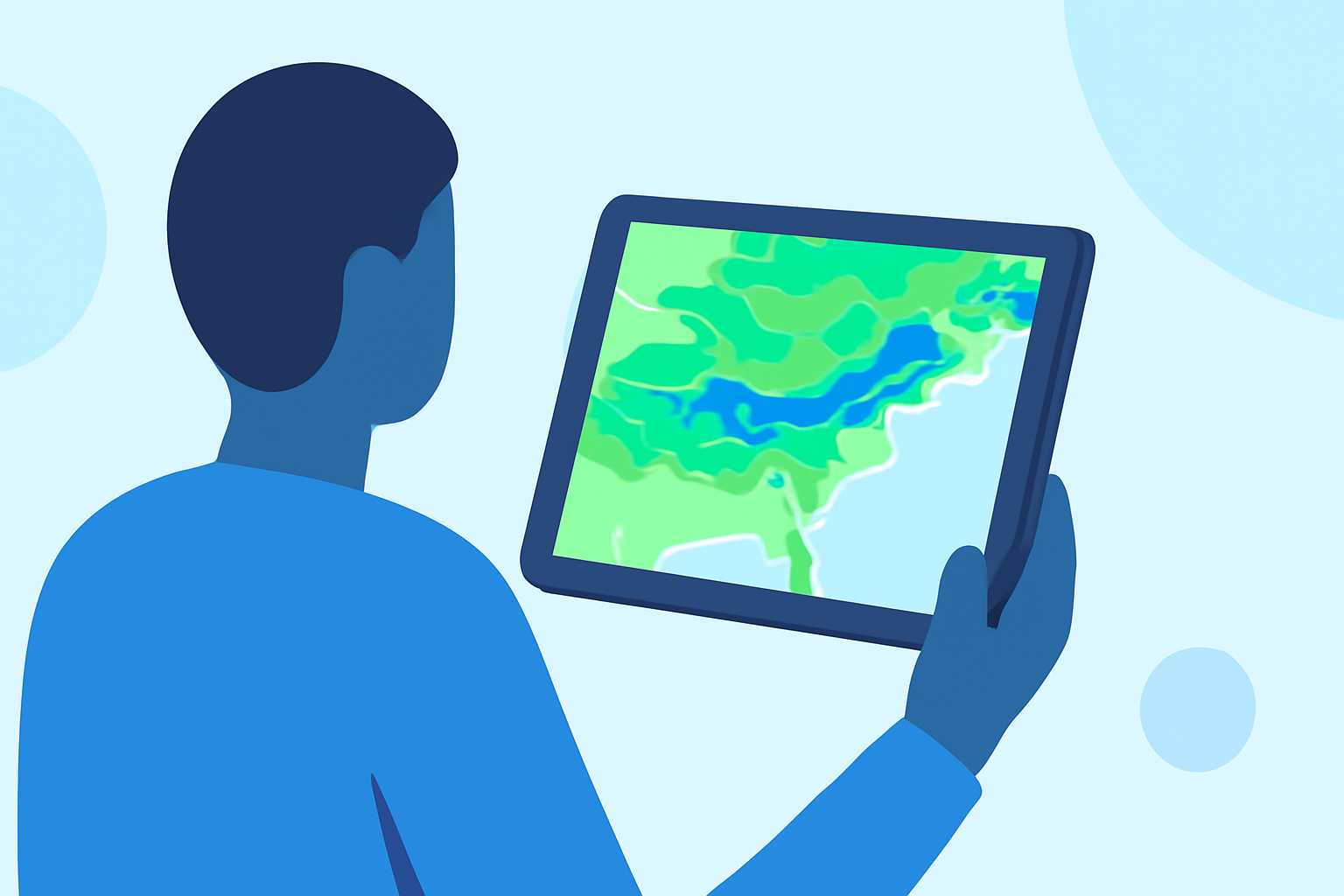
Precipitation maps are invaluable tools for understanding weather patterns, especially when accessed via tablets. However, certain mistakes can lead to misinterpretations. Here's how to navigate them:
1. Misunderstanding Map Resolution and Detail
Tablet-based precipitation maps often vary in resolution, affecting the level of detail displayed. Higher-resolution maps provide more localized information, while lower-resolution maps offer broader overviews. For instance, a high-resolution map might show a localized thunderstorm, whereas a low-resolution map could depict a general area of precipitation. Being aware of these differences helps in accurately interpreting the data. (content.meteoblue.com)
2. Ignoring Map Layer Settings
Many tablet weather apps allow users to toggle various map layers, such as precipitation, temperature, or wind. Accidentally leaving an unintended layer active can obscure the information you need. Regularly check and adjust these settings to ensure clarity. (support.onxmaps.com)
3. Overlooking Device-Specific Issues
Some tablets may experience glitches affecting map displays. For example, users have reported issues with precipitation maps not loading correctly on certain devices. If you encounter such problems, consider restarting the app or device, or checking for software updates. (discussions.apple.com)
4. Misinterpreting Data Due to Projection Distortions
Map projections can distort the appearance of precipitation patterns, especially on global maps. Be cautious when interpreting data from such maps, as they may not accurately represent actual conditions. (theweathernetwork.com)
5. Relying Solely on One Source
No single map can provide a complete picture of precipitation. Cross-referencing multiple sources can offer a more accurate and comprehensive understanding of weather patterns.
6. Neglecting to Update the App
Outdated weather apps may lack the latest features or data accuracy. Ensure your app is updated to benefit from improved functionalities and more precise information.
7. Misunderstanding the Scale and Units
Precipitation maps often use different units (e.g., inches vs. millimeters) and scales. Familiarize yourself with these to avoid misinterpretation.
8. Not Considering Temporal Changes
Precipitation patterns can change rapidly. Always check the time of the data displayed and consider more recent forecasts for planning purposes.
9. Overlooking Local Variations
Tablet maps provide a general overview, but local topography can significantly influence precipitation. Be aware of how mountains, valleys, and bodies of water might affect local weather patterns.
10. Misinterpreting Color Codes and Legends
Different apps may use varying color schemes to represent precipitation levels. Always refer to the map's legend to accurately interpret the data.
Conclusion
By being aware of these common mistakes, you can enhance your understanding of precipitation patterns and make more informed decisions based on tablet-based weather maps.