
Comparing Weather Across Airports: Essential Insights for Travelers and Aviation Enthusiasts
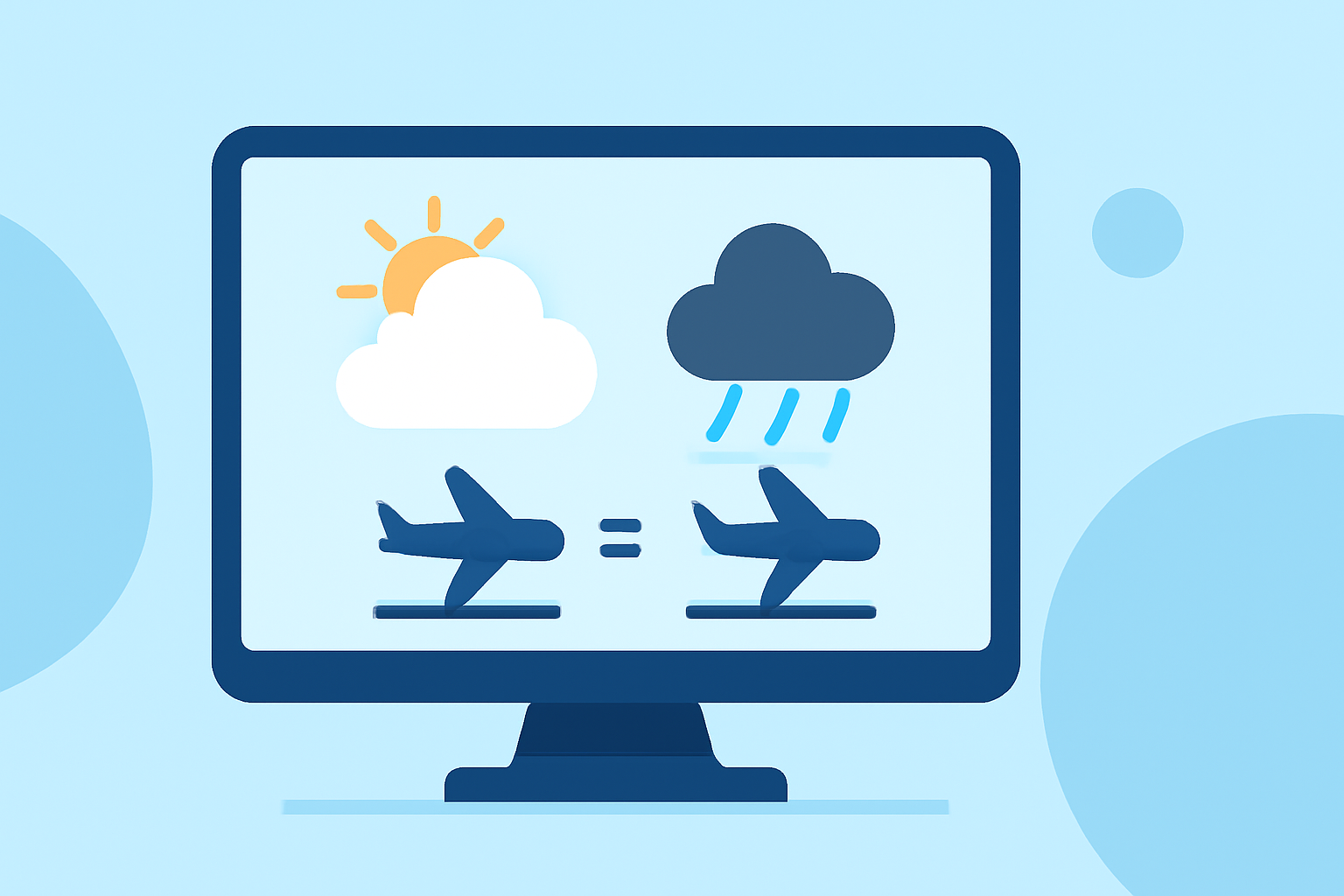
When planning travel or aviation operations, understanding and comparing weather conditions across different airports is crucial. This knowledge helps in making informed decisions, ensuring safety, and optimizing schedules.
Why Compare Weather Across Airports?
Comparing weather conditions between airports allows travelers and aviation professionals to:
- Optimize Flight Planning: Anticipate weather-related delays and adjust routes accordingly.
- Enhance Safety: Identify adverse weather conditions that may affect flight safety.
- Improve Scheduling: Plan activities around favorable weather conditions to minimize disruptions.
Key Factors to Consider When Comparing Airport Weather
When evaluating weather across airports, focus on the following elements:
- Temperature: Affects aircraft performance and passenger comfort.
- Precipitation: Impacts visibility and runway conditions.
- Wind Speed and Direction: Influences flight paths and fuel efficiency.
- Humidity: Affects aircraft performance and passenger comfort.
- Visibility: Crucial for safe takeoffs, landings, and in-flight navigation.
Tools and Resources for Comparing Airport Weather
Utilizing specialized tools can streamline the process of comparing weather conditions across airports:
-
AirportWX: Provides real-time METAR and TAF reports for over 48,000 airports worldwide, offering instant access to current weather data. (airportwx.app)
-
TempPredict: Delivers real-time weather data, temperature forecasts, and market predictions for airports across the U.S., allowing for multi-model forecasting and live station data tracking. (temppredict.com)
-
SkyGrid: Combines real-time weather data, airport information, and flight tracking into a single interface, featuring an interactive aviation map and verified aviation data. (skygrid.dev)
-
Flyable: Offers personalized Go/No-Go recommendations for general aviation pilots based on live weather, aircraft specifics, and personal minimums, including real-time METARs and TAFs. (flyableapp.com)
-
RunwayBrief: Provides aviation weather information with features like lock screen widgets, airport search, METAR and TAF summaries, and live radar. (runwaybrief.com)
Practical Example: Comparing Weather at Major U.S. Airports
To illustrate how weather conditions can vary across airports, consider the following current conditions:
- Los Angeles International Airport (LAX): Clear skies with a temperature of 64°F (18°C).
- John F. Kennedy International Airport (JFK): Clear skies with a temperature of 72°F (22°C).
- George Bush Intercontinental Airport (IAH): Partly cloudy with a temperature of 82°F (28°C).
- Miami International Airport (MIA): Partly cloudy with a temperature of 83°F (29°C).
- Chicago O'Hare International Airport (ORD): Rainy conditions with a temperature of 60°F (16°C).
These variations highlight the importance of comparing weather conditions to make informed decisions.
Conclusion
Effectively comparing weather conditions across airports is essential for optimizing travel plans and ensuring aviation safety. By leveraging specialized tools and focusing on key weather factors, travelers and aviation professionals can make informed decisions, anticipate potential disruptions, and enhance overall operational efficiency.
For comprehensive and real-time weather data across numerous airports, consider utilizing platforms like AirportWX, TempPredict, SkyGrid, Flyable, and RunwayBrief.
By integrating these resources into your planning process, you can navigate the complexities of varying weather conditions and ensure a smoother and safer journey.
Highlights:
- The 5 Best (and Worst) US Airports for Flight Delays in 2026, Published on Monday, June 01