
Understanding De-Icing and Departure Delays During Holiday Travel
Holiday travel often brings increased flight delays due to various factors, including de-icing procedures and air traffic congestion. Understanding these elements can help travelers better prepare for their journeys.
What Is De-Icing and Why Is It Necessary?
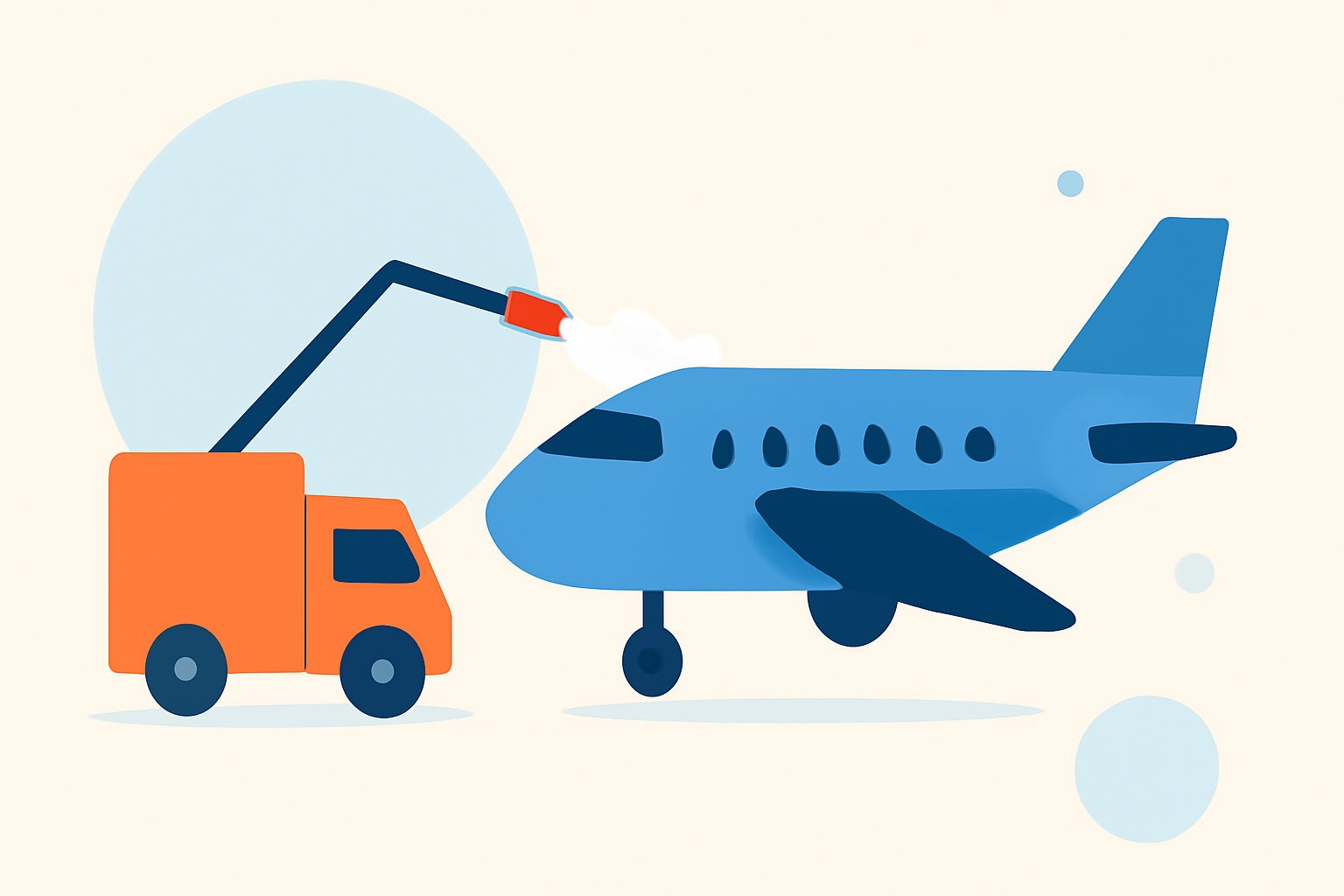
De-icing involves removing ice and snow from an aircraft's surfaces before takeoff to ensure safe flight operations. Accumulated ice can affect the aircraft's aerodynamics, weight distribution, and engine performance. To mitigate these risks, de-icing fluids are applied to the aircraft's wings, tail, and other critical surfaces. The Federal Aviation Administration (FAA) provides guidelines for de-icing procedures to maintain safety standards. (faa.gov)
How Do De-Icing Procedures Lead to Departure Delays?
De-icing is a time-consuming process, especially during severe winter weather conditions. Aircraft may need to be de-iced multiple times if they remain on the ground for extended periods, further delaying departures. For instance, in November 2025, a ground stop was issued at O'Hare International Airport due to severe icing, affecting departures from several cities. (nbcchicago.com)
What Are the Common Causes of Departure Delays During the Holidays?
During the holiday season, several factors contribute to increased departure delays:
-
Weather Conditions: Winter storms, heavy snow, and freezing rain can disrupt flight schedules. In December 2025, winter storms led to over 2,000 flight delays and numerous cancellations across the U.S. (visahq.com)
-
Air Traffic Congestion: The holiday season sees a surge in air travel, leading to crowded airports and airspace. The FAA often implements traffic management initiatives to handle the increased volume, which can result in delays. (travelradar.aero)
-
Operational Challenges: Staff shortages, equipment issues, and other operational problems can also cause delays. For example, in December 2025, winter storms exposed vulnerabilities in the U.S. travel system, leading to widespread disruptions. (salon.com)
Which Airports Are Most Affected by Holiday Delays?
Certain airports are more prone to delays during the holiday season:
-
El Paso International Airport (ELP): Historically, ELP has experienced the highest percentage of delayed departures during the holidays, with an average of 32.78% of flights leaving late. (travelagentcentral.com)
-
Chicago Midway International Airport (MDW): MDW has the highest percentage of delayed arrivals during the holiday season, with 30.67% of flights arriving late. (travelagentcentral.com)
-
Houston William P. Hobby Airport (HOU): HOU ranks high for both delayed departures and arrivals, with 30.22% of departures and 29.44% of arrivals delayed. (travelagentcentral.com)
How Can Travelers Stay Informed About Delays?
Staying informed about flight statuses is crucial during the holiday season. Utilizing real-time tracking services can provide up-to-date information on flight delays, cancellations, and airport conditions. Platforms like Planes Live offer comprehensive flight tracking, allowing travelers to monitor their flights and make informed decisions.
How Can Planes Live Help with Holiday Travel Delays?
Planes Live provides real-time flight tracking, offering updates on delays, cancellations, and airport conditions. By using Planes Live, travelers can receive timely notifications about their flights, helping them adjust plans as needed. This proactive approach can reduce stress and improve the overall travel experience during the busy holiday season.
Conclusion
De-icing procedures and various operational factors can lead to departure delays during the holiday season. By understanding these causes and utilizing tools like Planes Live, travelers can stay informed and better navigate the challenges of holiday air travel.