
Understanding Doppler Shear Maps During Pollen Season
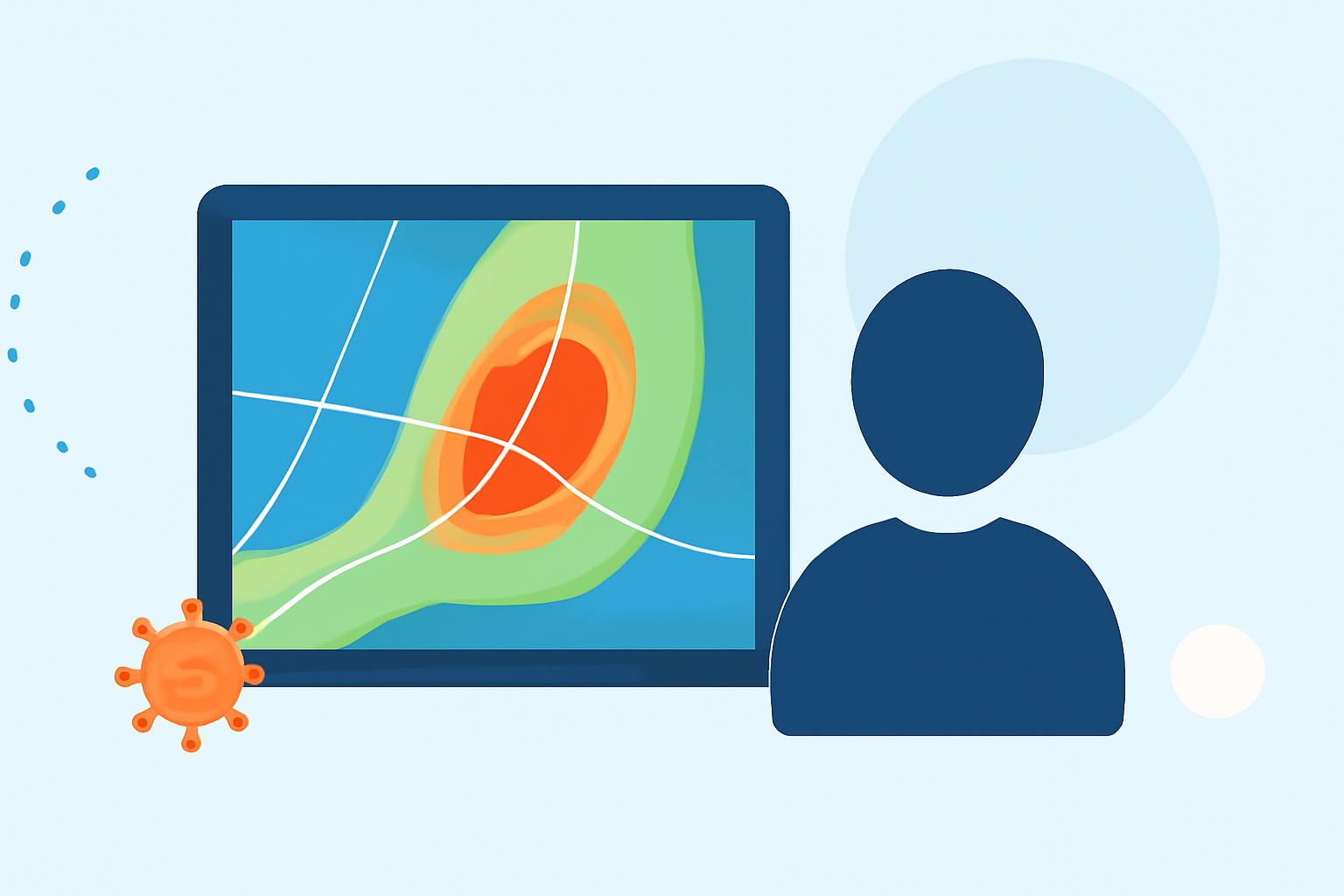
Doppler shear maps are specialized tools that analyze wind patterns to detect rotational movements in the atmosphere, known as shear. While traditionally used in meteorology to predict severe weather events like tornadoes, their application in pollen forecasting is an emerging area of interest.
What Are Doppler Shear Maps?
Doppler shear maps utilize Doppler radar data to measure the change in wind velocity over a specific distance, identifying areas of rotation or shear in the atmosphere. This information is crucial for understanding wind dynamics, which can influence various atmospheric phenomena.
How Do Doppler Shear Maps Relate to Pollen Forecasting?
The connection between Doppler shear maps and pollen forecasting lies in the role of wind patterns in pollen dispersion. Wind is a primary factor in transporting pollen from its source to other areas, affecting pollen concentrations in different regions. By analyzing wind shear patterns, meteorologists can gain insights into how pollen might be dispersed, leading to more accurate pollen forecasts.
Can Doppler Shear Maps Improve Pollen Forecasting?
Integrating Doppler shear data into pollen forecasting models can enhance the accuracy of predictions. Understanding wind shear patterns allows for better estimation of pollen movement, which is essential for individuals with pollen allergies. Accurate forecasts enable them to plan outdoor activities more effectively, reducing exposure to high pollen levels.
How Does Clime Utilize Doppler Shear Data?
Clime leverages advanced meteorological data, including wind patterns and atmospheric conditions, to provide precise pollen forecasts. By incorporating comprehensive data sources, Clime offers users reliable information to manage their exposure to pollen during the pollen season.
What Are the Benefits of Using Clime for Pollen Forecasting?
- Accurate Forecasts: Clime provides detailed pollen forecasts, helping users anticipate pollen levels in their area.
- User-Friendly Interface: The platform offers an intuitive interface, making it easy for users to access and interpret pollen data.
- Comprehensive Data: Clime integrates various meteorological data sources, including wind patterns, to deliver precise pollen forecasts.
Conclusion
While Doppler shear maps are not directly used in pollen forecasting, understanding wind shear patterns is crucial for predicting pollen dispersion. Clime's integration of comprehensive meteorological data, including wind patterns, enables it to provide accurate and reliable pollen forecasts, assisting individuals in managing their exposure during the pollen season.