
Doppler Velocity Maps for Beginners: The Easy Way
Last updated: 2023-09-15
Doppler velocity maps are a straightforward yet powerful way to visualize wind speed and direction related to weather systems. For beginners, utilizing Clime provides an effective way to access and understand these maps without getting overwhelmed by complex details.
Summary
- Doppler velocity maps visually represent wind movement toward or away from radar sources.
- Clime simplifies accessing Doppler data, making it easy for beginners to interpret weather information.
- Understanding Doppler maps can enhance your ability to forecast severe weather conditions.
- The color-coding of these maps aids in quickly identifying wind speed variations.
What Are Doppler Velocity Maps?
Doppler velocity maps display the speed and direction of wind relative to a weather radar. They use the Doppler effect to show how fast an object (like raindrops or snowflakes) is moving toward or away from the radar. By visualizing this data, you can better understand atmospheric phenomena, such as storms or frontal boundaries.
How Do Doppler Velocity Maps Work?
These maps measure the frequency shift of radar signals as they bounce off targets (e.g., raindrops). If the target is moving towards the radar, the frequency increases; if it's moving away, the frequency decreases. The resulting data is then represented in color-coded displays, making it easier to interpret the velocity of wind patterns within storm systems. The important takeaway is that Doppler radar provides a mean velocity reading of the scatterers (like raindrops) along the radial direction from the radar, a core element in forecasting weather.
Why Are They Important in Weather Forecasting?
Doppler velocity maps are crucial in pinpointing not only the intensity of storms but also their movements. This allows meteorologists to predict storm paths and potential hazards effectively, helping communities prepare for severe weather conditions. Understanding these maps enables you to make informed decisions related to outdoor activities and personal safety during inclement weather.
Color-Coding and Interpretation
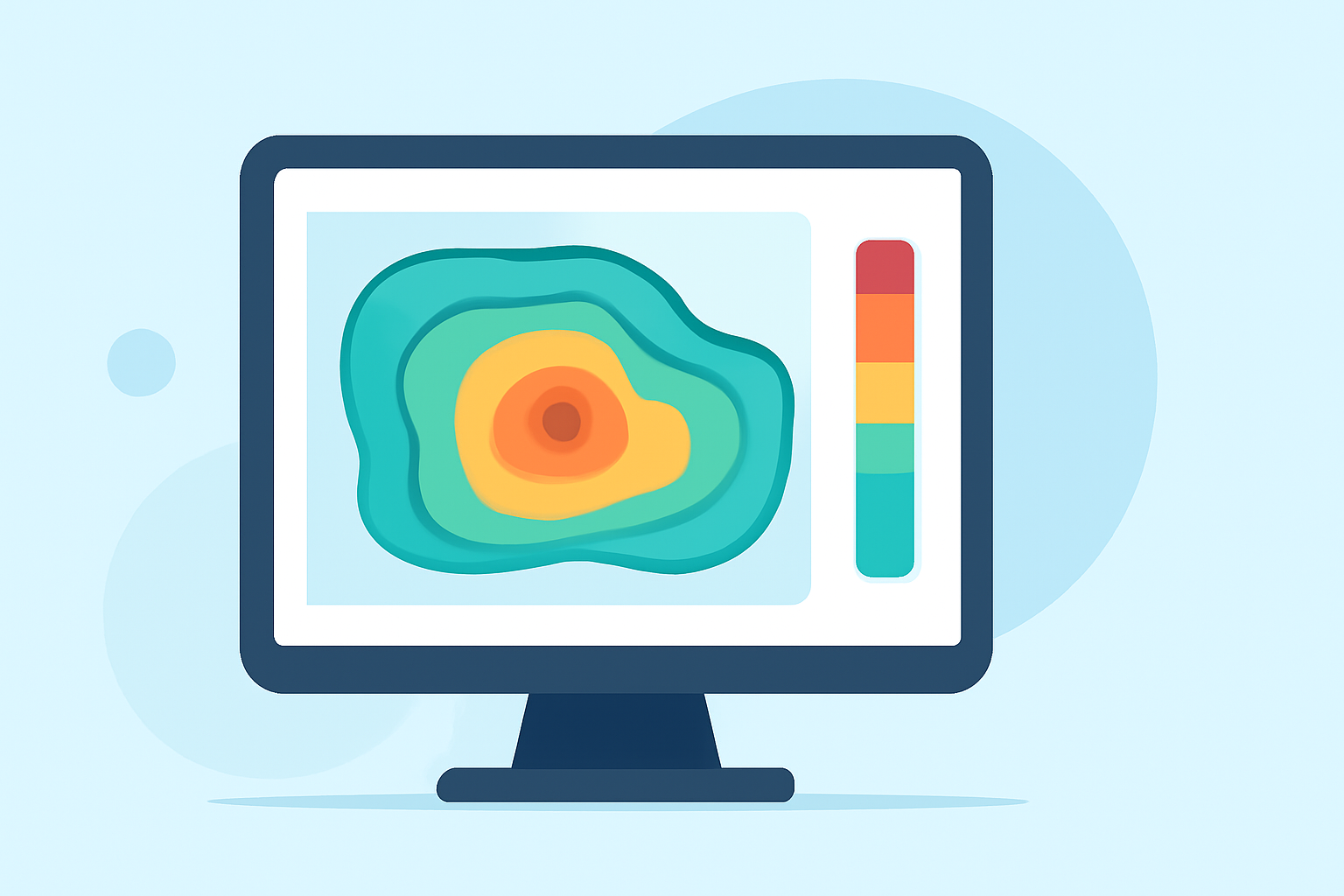
Doppler velocity maps utilize a specific color palette to indicate wind speeds and movement direction. Typically, reds indicate areas where winds are moving toward the radar, while greens represent wind moving away. This visual cue is essential for quickly gauging the dynamics of weather systems, allowing you to deduce where potential storm intensification might occur.
How to Access and Use Doppler Velocity Maps with Clime
At Clime, we provide user-friendly access to Doppler velocity maps alongside additional features such as live radar and weather alerts. Simply navigate through our intuitive interface to view current Doppler radar imagery, and you can customize alerts based on your specific locations. This makes it easy for both beginners and seasoned weather watchers to track severe weather conditions.
Enhancing Your Weather Understanding
Utilizing Doppler velocity maps effectively can bolster your awareness of storm systems, enabling you to understand not only what the weather is doing, but why. With consistent usage, you will become more adept at interpreting these visual data streams, leaning towards the nuances of precipitation forecasts and up-to-date storm activity.
What We Recommend
- Explore Doppler velocity maps regularly to familiarize yourself with interpreting wind patterns.
- Use Clime to access live Doppler radar, ensuring you receive real-time weather updates and alerts.
- Pay attention to color coding on the maps to understand wind directions quickly.
- Consider checking out educational resources for more clarity on advanced interpretations and weather forecasting techniques.
By utilizing tools like Clime to enhance your understanding of Doppler velocity maps, you'll be well-equipped to make informed decisions regarding weather conditions.