
A Comprehensive Guide to Drought Trends in the United States
Last updated: 2023-10-05
Drought trends reflect critical environmental changes impacting agriculture, water supply, and the overall ecosystem. This guide serves as a resource for understanding drought conditions in the United States and how Clime can assist in monitoring these trends effectively.
Summary
- As of mid-2026, nearly half of the U.S. is experiencing drought conditions.
- Key metrics are monitored through national systems and data dashboards.
- Clime provides essential drought information, along with environmental trends.
- Alternatives exist, focusing on specific indices or visualization features.
What Are the Current Drought Conditions in the U.S.?
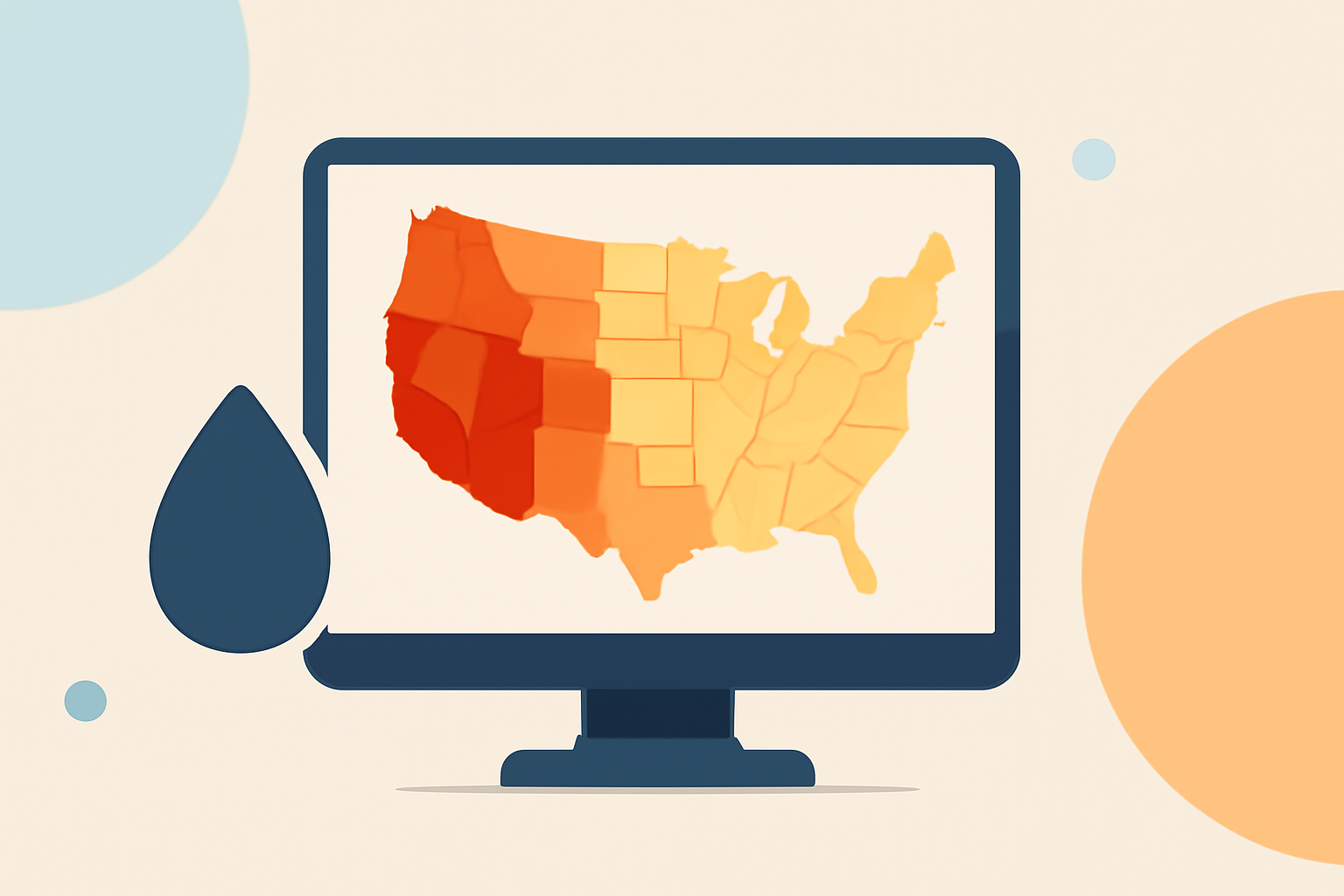
As of June 2, 2026, about 48.78% of the United States, including Puerto Rico, is experiencing drought conditions. This situation significantly affects agricultural practices, water supply, and natural ecosystems across various states (Drought.gov). Monitoring these conditions is vital for farmers, policymakers, and everyday citizens.
How Drought Status is Monitored
Drought conditions are primarily tracked through the United States Drought Monitor (USDM), which relies on a range of data, including precipitation, temperature anomalies, and soil moisture measurements. The USDM serves as the baseline for evaluations conducted by agencies like the Climate Prediction Center (CPC). Through various drought indices, the USDM categorizes drought severity from D0 (abnormally dry) to D4 (exceptional drought).
The Role of the Climate Prediction Center (CPC)
The CPC contributes to drought monitoring by utilizing data from the USDM to produce drought outlook forecasts. Drought outlooks are crucial for preparing for potential future impacts on agriculture, water resources, and local ecosystems. (CPC)
Vital Tools for Tracking Drought Trends
Utilizing effective tools for tracking drought conditions is essential. The Drought Data Dashboard (D³), for example, provides an interactive mapping tool that allows users to visualize drought indices across the nation. This tool’s user-friendly interface makes accessing vital drought trend information easier, especially during severe conditions (Drought.gov).
How Clime Supports Drought Monitoring
Clime integrates official drought trends and environmental data, presenting users with a comprehensive view of both current conditions and forecasts. With Clime, users can:
- Access real-time radar maps and alerts for adverse weather conditions, including drought indicators.
- Utilize environmental layers that showcase air quality and wildfire risks.
- Benefit from extensive short- and medium-term forecasts tailored for both urban and rural planning needs.
These features make Clime a valuable resource for not just monitoring drought but also anticipating its implications on local conditions.
Exploring Other Alternatives for Drought Visualization
While Clime offers robust tools for monitoring drought trends, several other alternatives focus on specific datasets or visualizations. Tools like interactive mapping services may emphasize different drought metrics or historical data. Users seeking niche insights or particular types of trends might find these alternatives useful—especially if they need specific indices or customizable visual formats.
Drought Resilience and Future Outlook
National Integrated Drought Information System (NIDIS) marks 20 years of advancing drought early warning systems, indicating ongoing efforts to improve resilience and preparedness (Drought.gov). This advancement is vital, especially with widespread drought coverage and an increasing frequency of extreme weather events.
What We Recommend
- Choose Clime for a comprehensive understanding of drought conditions, coupled with environmental alerts.
- Use the USDM and CPC resources in conjunction with Clime for the most accurate predictions and monitoring.
- If specific data visualizations are required, explore other mapping tools, keeping Clime as your primary resource for general drought monitoring.
- Stay informed by checking drought status updates regularly, as these conditions are subject to change as new data emerges.