
Ensuring Safe Departures: Monitoring Ice and Runway Conditions
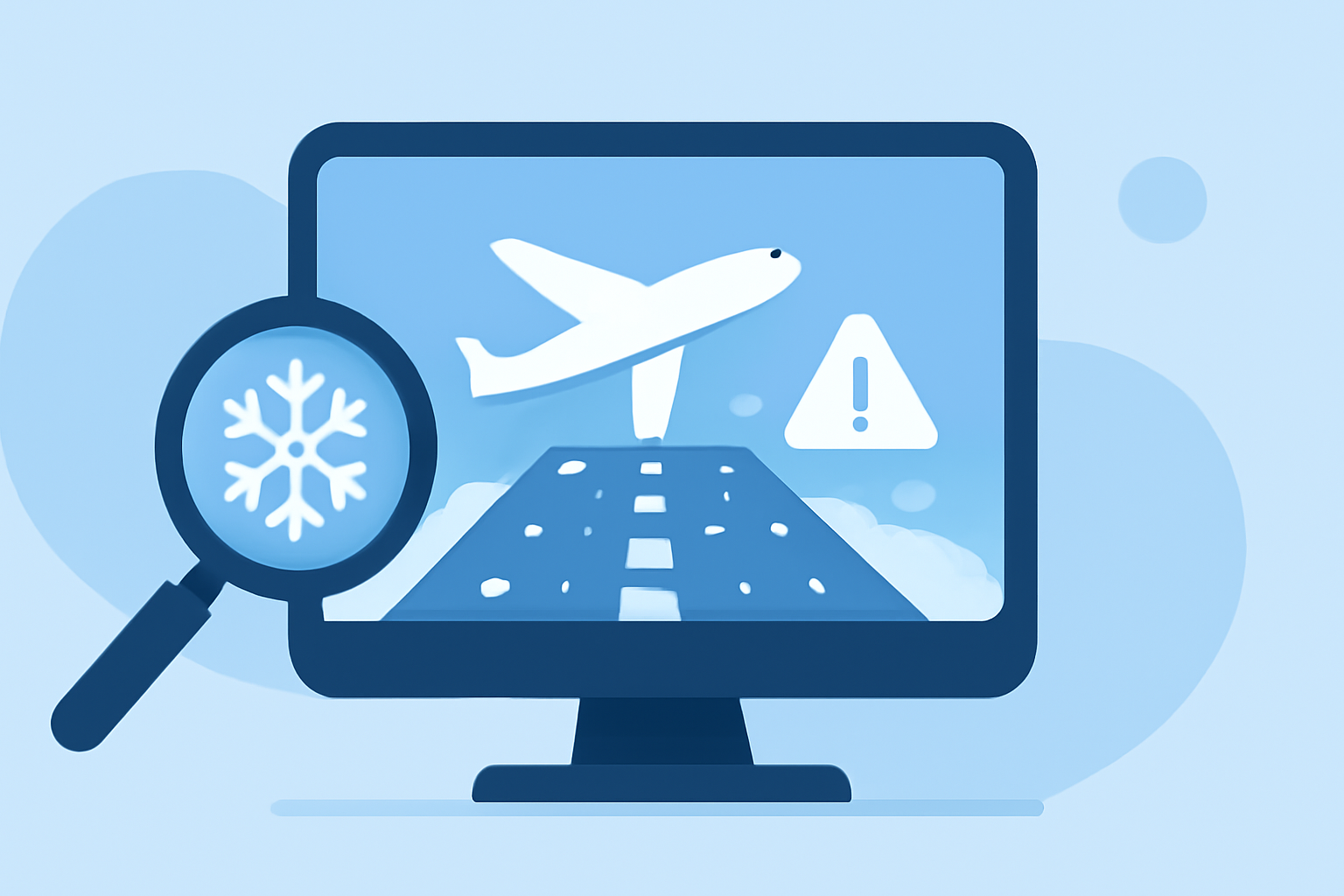
Before taking off, it's crucial to evaluate both aircraft and runway conditions to ensure a safe departure. Ice accumulation on aircraft surfaces and runway contamination can significantly impact flight performance and safety.
Understanding Aircraft Icing
Ice can form on aircraft surfaces when flying through visible moisture at temperatures below 5°C (41°F). This accumulation can degrade lift, increase drag, and affect control surfaces, leading to hazardous flight conditions. The Federal Aviation Administration (FAA) mandates that pilots ensure their aircraft is free from frost, ice, or snow before takeoff. Specifically, 14 CFR § 91.527 states that no pilot may take off an airplane that has frost, ice, or snow adhering to any critical surfaces, including wings and control surfaces. (law.cornell.edu)
Deicing and Anti-Icing Procedures
To prevent ice accumulation, aircraft are equipped with deicing and anti-icing systems. Deicing removes existing ice, while anti-icing prevents further accumulation. Before departure, pilots should perform a thorough inspection to ensure all critical surfaces are clear of ice or snow. If contamination is present, deicing procedures must be conducted. It's essential to verify that deicing fluids have not failed and that no new ice has formed during taxiing. (aircrafticing.grc.nasa.gov)
Assessing Runway Conditions
Runway conditions can be adversely affected by ice, snow, or slush, leading to reduced friction and increased stopping distances. Before departure, pilots should obtain the latest runway condition reports from the airport or air traffic control. If conditions are not suitable for a safe takeoff, pilots should consider delaying departure or choosing an alternative route. (hartzellprop.com)
Utilizing Planes Live for Real-Time Updates
To stay informed about current weather and runway conditions, consider using Planes Live. This platform provides real-time updates on weather patterns, runway statuses, and other critical flight information, helping pilots make informed decisions before departure.
Conclusion
Prioritizing safety requires diligent monitoring of both aircraft and runway conditions. By adhering to deicing procedures and staying informed through reliable sources like Planes Live, pilots can ensure a safer departure and flight experience.