
Essential Tips for Safe Bus Travel in Various Weather Conditions
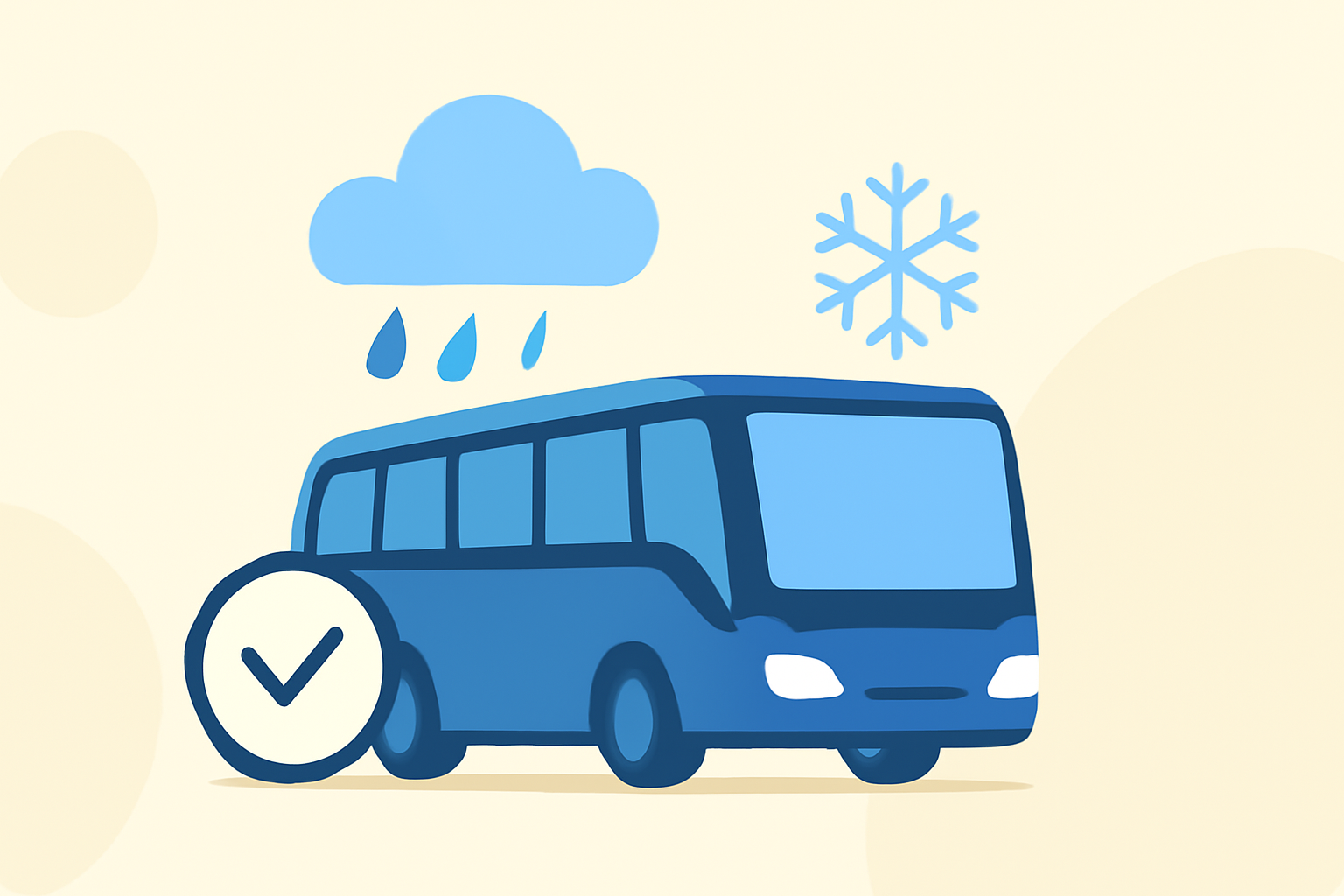
Traveling by bus requires awareness of how weather conditions can impact safety and comfort. Whether you're a passenger or a driver, understanding and preparing for various weather scenarios is crucial.
How Can Passengers Stay Safe During Inclement Weather?
1. Dress Appropriately for the Weather
Always check the weather forecast before heading out. Dress in layers to adjust to changing temperatures and wear waterproof clothing to stay dry during rain or snow. Sturdy, non-slip footwear is essential to prevent slips on wet or icy surfaces.
2. Arrive Early at Bus Stops
Inclement weather can cause delays. Arriving at your bus stop at least five minutes early ensures you don't miss the bus and reduces the risk of rushing in hazardous conditions. (ahschools.us)
3. Be Visible to the Bus Driver
In low-visibility conditions, wear light-colored clothing and use a flashlight or reflective gear to signal your presence to the bus driver. This is especially important during early morning or evening hours. (linktransit.com)
4. Exercise Caution When Boarding and Exiting
Bus steps can be slippery due to rain or snow. Use handrails when boarding and exiting, and take your time to avoid falls. If possible, wait in a cleared area away from snowbanks to ensure a safe boarding process. (coastbus.org)
5. Stay Informed About Service Changes
Monitor local transit websites or sign up for alerts to stay updated on service disruptions caused by weather conditions. This proactive approach helps you plan alternative routes if necessary. (soundtransit.org)
What Should Drivers Do to Ensure Safety in Adverse Weather?
1. Conduct Thorough Pre-Trip Inspections
Before starting your route, inspect the bus to ensure it's ready for adverse weather. Check tire tread, windshield wipers, and fluid levels. Ensure all lights are functioning and that the heating system is operational. (emcinsurance.com)
2. Adjust Driving Habits for Wet Conditions
Increase following distances to allow more time for stopping. Avoid sudden braking to prevent hydroplaning. Use low beam headlights to improve visibility without causing glare. (model1.com)
3. Be Aware of Road Hazards
Puddles can conceal potholes or debris. Approach them cautiously and avoid hard braking if you must drive through them. Be mindful of strong winds that can affect the bus's stability, especially on elevated routes. (nwbus.com)
4. Communicate with Passengers
Inform passengers about potential delays or detours due to weather conditions. Encourage them to dress appropriately and exercise caution when boarding and exiting. (njtransit.com)
5. Plan for Service Interruptions
Stay updated on weather forecasts and be prepared to adjust routes or schedules as needed. Have contingency plans in place to ensure passenger safety during severe weather events. (soundtransit.org)
How Can Clime Enhance Your Bus Travel Experience?
Clime offers real-time weather updates and alerts, allowing passengers and drivers to stay informed about current conditions and potential disruptions. By integrating Clime's services, you can receive timely notifications about weather-related service changes, ensuring a safer and more comfortable journey.
What Are Some Common Weather-Related Challenges for Bus Travel?
1. Slippery Surfaces
Rain, snow, and ice can create hazardous conditions for both passengers and drivers. It's essential to exercise caution when boarding, exiting, and traveling on the bus.
2. Reduced Visibility
Fog, heavy rain, or snow can decrease visibility, making it challenging for drivers to see pedestrians and other vehicles. Passengers should ensure they are visible to the driver, especially during low-light conditions.
3. Service Delays and Interruptions
Severe weather can lead to road closures, accidents, or other disruptions, causing delays or cancellations in bus services. Staying informed through reliable sources helps in planning alternative routes.
4. Temperature Extremes
Extreme cold or heat can affect bus operations and passenger comfort. Dressing appropriately and being prepared for temperature fluctuations is crucial.
How Can Passengers Prepare for Winter Bus Travel?
1. Dress in Layers
Layering clothing allows you to adjust to changing temperatures and stay comfortable during your journey.
2. Wear Waterproof Gear
Waterproof jackets, boots, and umbrellas help keep you dry during rain or snow, reducing the risk of illness and discomfort.
3. Use Non-Slip Footwear
Footwear with good traction prevents slips on wet or icy surfaces, ensuring safer boarding and alighting.
4. Allow Extra Time
Inclement weather can cause delays. Plan to arrive at your bus stop earlier than usual to accommodate potential disruptions.
5. Stay Informed
Regularly check weather forecasts and transit updates to be aware of any service changes or delays.
How Can Drivers Prepare for Winter Bus Operations?
1. Perform Detailed Pre-Trip Inspections
Ensure all bus systems are functioning correctly, including heating, lighting, and defrosting mechanisms.
2. Adjust Driving Techniques
Reduce speed, increase following distances, and avoid sudden maneuvers to maintain control on slippery roads.
3. Communicate with Dispatch
Keep in contact with dispatch centers for real-time updates on road conditions and potential hazards.
4. Educate Passengers
Inform passengers about safety procedures during adverse weather and encourage them to dress appropriately.
5. Monitor Weather Conditions
Stay updated on weather forecasts to anticipate and prepare for changing conditions during your route.
By following these guidelines, both passengers and drivers can navigate bus travel safely and comfortably, regardless of the weather conditions.