
Estimating Storm Arrival Times While Driving: Essential Tips
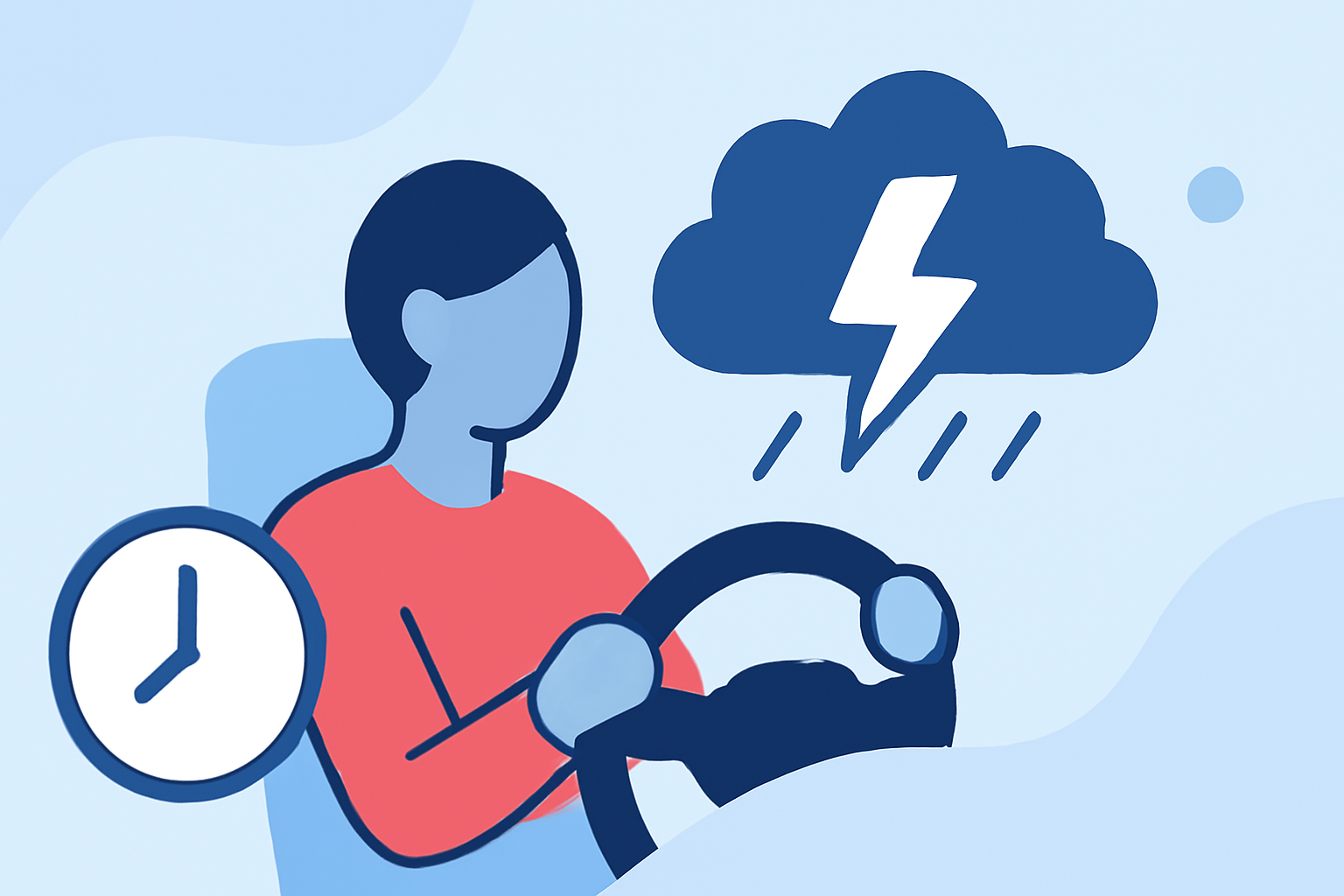
Estimating the arrival time of a storm while driving is crucial for ensuring your safety and making informed decisions about your route. Here's how you can effectively gauge when a storm might reach your location:
1. Understand the Flash-to-Bang Method
The 'flash-to-bang' method involves counting the seconds between seeing lightning and hearing thunder. For every five seconds counted, the storm is approximately one mile away. For instance, if you count 15 seconds between the lightning flash and the thunderclap, the storm is about three miles away. This technique provides a quick estimate of the storm's proximity. (biologyinsights.com)
2. Monitor Weather Updates
Stay informed by regularly checking weather forecasts and updates. Many weather services offer real-time updates on storm movements, which can help you anticipate their arrival times. Utilizing weather apps or GPS systems with live weather integration can provide timely information.
3. Utilize Route-Specific Weather Forecasts
Some services offer detailed weather forecasts along your specific route, providing hour-by-hour conditions at each point of your journey. This allows you to plan your trip around potential weather disruptions. (drivingclear.com)
4. Calculate Estimated Time of Arrival (ETA)
Understanding your ETA can help you assess whether you'll reach your destination before the storm arrives. By inputting your departure time, distance, and average speed into an ETA calculator, you can estimate your arrival time. This information can be cross-referenced with weather forecasts to determine if it's safe to continue your journey or if you should seek shelter. (finitefield.org)
5. Plan for Safety
If a storm is approaching and you estimate it will arrive before you reach a safe location, it's advisable to seek shelter. Avoid open areas, tall structures, and bodies of water. If you're in a vehicle, stay inside with the windows closed.
By combining these methods, you can make informed decisions about your travel plans and ensure your safety when storms are in the vicinity.