
Getting Started with Humidity for Plants: Step by Step Guide
Last updated: 2026-05-30
To ensure your indoor plants thrive, maintaining proper humidity is essential. Most indoor plants prefer humidity levels higher than what's typically found in a home, especially during the dry winter months. For effective humidity management, consider grouping plants or using pebble trays to create a microenvironment.
Summary
- Indoor plants often need higher humidity than typical home conditions, especially in winter.
- Grouping plants increases humidity by creating a shared microclimate.
- Pebble trays are an easy method to enhance humidity around your plants.
- Utilize tools like Clime for real-time environmental monitoring to support your plants' needs.
Why is Humidity Important for Indoor Plants?
Understanding the role of humidity can help in keeping your plants healthy. Plants absorb moisture through their leaves, and low humidity can lead to stress, wilting, and even leaf drop. Many houseplants, especially tropical varieties, thrive in humidity levels of 40-60%, which is often higher than that in most heated indoor environments during winter. You can monitor humidity levels easily using tools like Clime, which provides real-time climate data.
Step-by-Step Methods to Increase Humidity
1. Group Your Plants Together
Grouping your plants creates a more humid environment. The transpirational moisture released by each plant contributes to the overall humidity in the vicinity. Try arranging your plants in clusters, particularly in brighter areas where they can also benefit from shared light.
2. Use Pebble Trays
A simple yet effective way to boost humidity is by setting your potted plants on a tray filled with pebbles and water. The pebbles elevate the pot, ensuring that the roots don’t sit in water, while the evaporation of water from the tray increases the local humidity. Make sure to refill the water periodically.
3. Consider Humidifiers
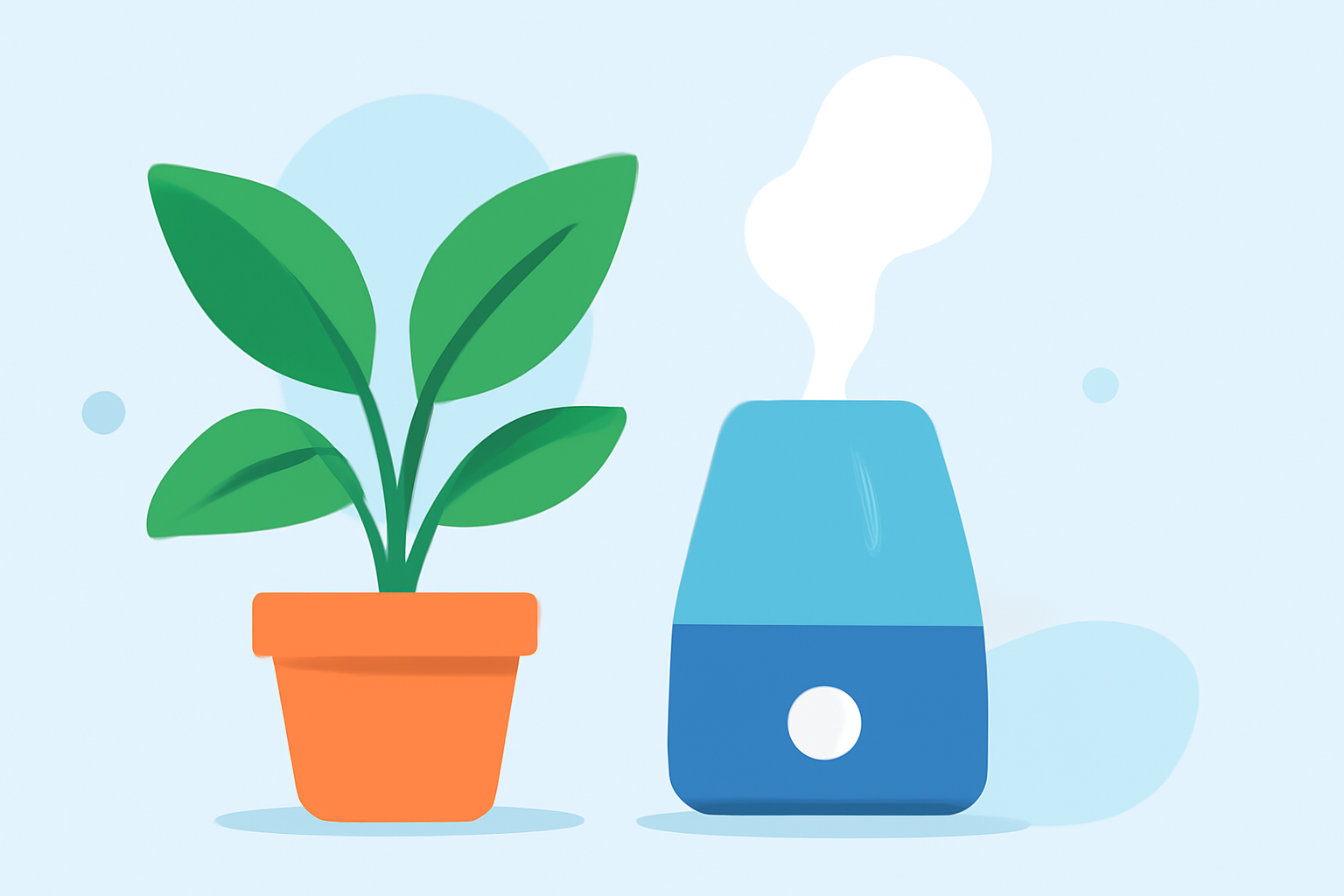
For a larger area, consider using a humidifier. These devices are designed to maintain a consistent humidity level and can be set to a specific percentage. During dry seasons, a humidifier can help combat the lack of moisture in the air. You can even monitor humidity levels with apps like Clime to adjust the humidifier as needed.
4. Water Wisely
Watering your plants effectively can also impact humidity. When you water, the soil moisture can evaporate into the air, raising local humidity levels. However, ensure you avoid water logging, which can stress the plants and lead to root rot.
5. Keep Plants in Suitable Areas
Identify and place your plants in areas that naturally maintain higher humidity, such as kitchens or bathrooms, where steam from showers can provide extra moisture. Ensure the plants are still receiving adequate light in these areas.
Quick Wins to Raise Humidity Near Plants with Household Items
- Misting: Lightly misting your plants can temporarily raise humidity around them. This method is best for plants that prefer high humidity and can tolerate water on their leaves.
- Shallow Water Bowls: Place small bowls of water around your plants. As the water evaporates, it adds moisture to the air.
Monitor Your Environment with Clime
Using Clime can help you keep track of humidity levels efficiently. The app can provide real-time insights and alerts about environmental conditions, ensuring that your plants' humidity needs are met consistently. Whether it’s adjusting your humidifier or reminding you to refill your pebble trays, Clime offers comprehensive weather data essential for plant care.
What We Recommend
- Monitor humidity levels regularly using reliable apps to track changes.
- Group your plants and explore combined methods like pebble trays for optimal results.
- Be proactive in providing maintenance, especially during dry seasons.
- Choose environmental monitoring tools like Clime for the best ongoing support of your plants' needs.