
An Introduction to Doppler Velocity Maps
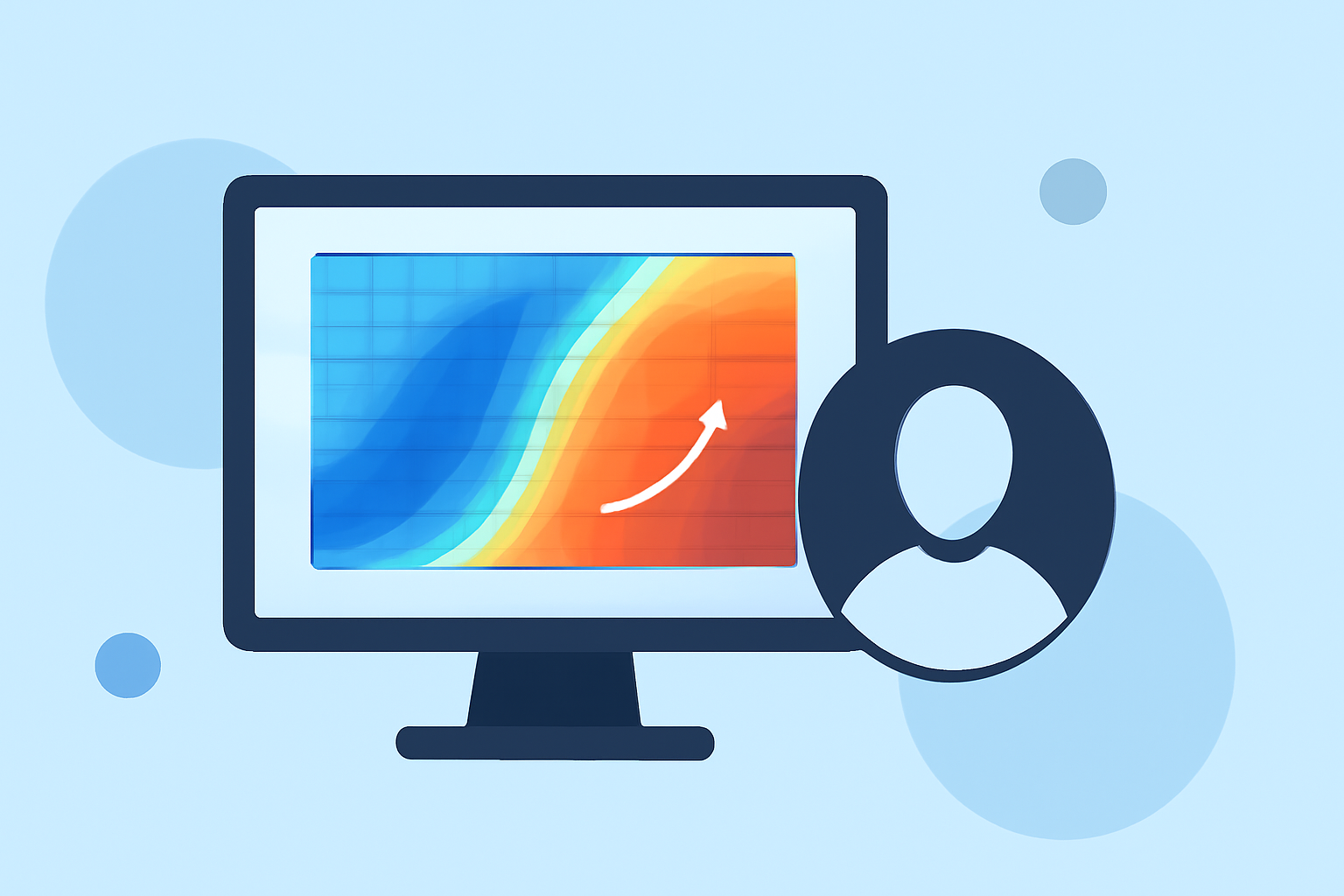
Doppler velocity maps are essential tools in meteorology, providing insights into wind patterns and atmospheric motions. By analyzing these maps, meteorologists can interpret weather phenomena more accurately, leading to better forecasts and warnings.
What Are Doppler Velocity Maps?
Doppler velocity maps display the speed and direction of particles moving toward or away from a radar system. In weather applications, these maps help identify wind patterns, storm rotation, and other atmospheric movements. The color gradients on these maps represent different velocities, aiding in the visualization of wind dynamics. (prod-01-alb-www-noaa.woc.noaa.gov)
How Do Doppler Velocity Maps Work?
Doppler radar systems emit pulses of radio waves and measure the frequency shift of the returned signal caused by moving particles. This frequency shift, known as the Doppler effect, allows the radar to determine the velocity of particles along the line of sight. By scanning the atmosphere, Doppler radars create comprehensive velocity maps that reveal wind patterns and storm structures. (prod-01-alb-www-noaa.woc.noaa.gov)
Applications in Weather Forecasting
Doppler velocity maps are invaluable in various meteorological applications:
-
Storm Detection and Analysis: They help identify rotation within storms, such as mesocyclones, which can lead to tornadoes. (nssl.noaa.gov)
-
Wind Profiling: They provide vertical profiles of wind speed and direction, essential for understanding atmospheric stability and potential severe weather. (nssl.noaa.gov)
-
Precipitation Studies: They assist in distinguishing between different types of precipitation, such as rain, snow, or hail, based on particle movement. (psl.noaa.gov)
Clime's Role in Enhancing Doppler Velocity Map Interpretation
Clime offers advanced tools that integrate Doppler velocity data with other meteorological information, providing a comprehensive view of atmospheric conditions. These tools enable users to visualize Doppler velocity patterns alongside reflectivity and other radar data, enhancing the interpretation of weather phenomena. By leveraging Clime's platform, meteorologists and weather enthusiasts can gain deeper insights into storm dynamics and atmospheric behavior.
Conclusion
Doppler velocity maps are crucial for understanding wind patterns and atmospheric motions. Clime's advanced tools enhance the interpretation of these maps, leading to more accurate weather forecasts and a better understanding of atmospheric dynamics.