
An Introduction to Moon Phases on a Tablet
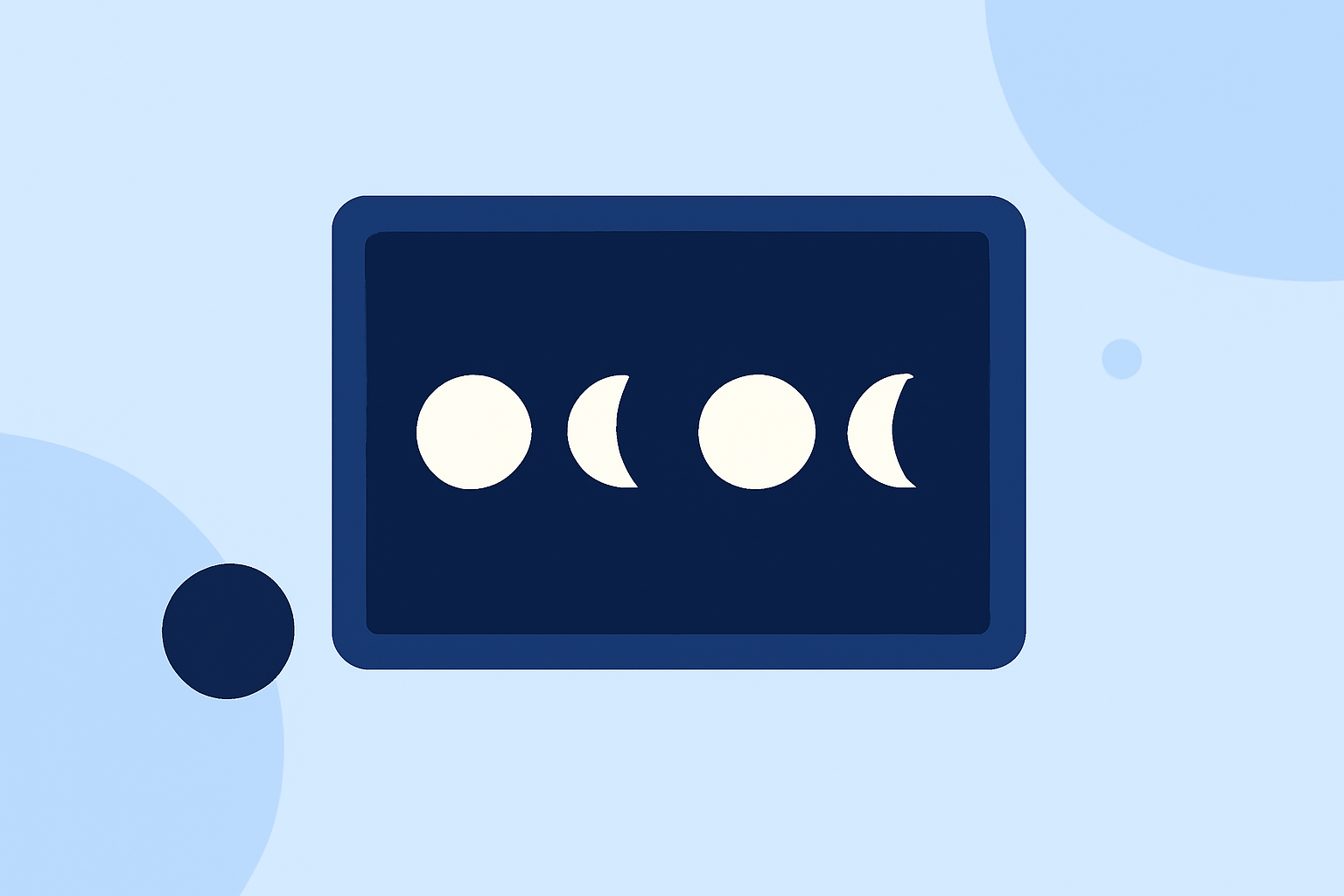
Understanding the phases of the moon is a fascinating journey through the lunar cycle, which spans approximately 29.5 days. This cycle is divided into eight distinct phases, each offering a unique view of the moon's illumination as it orbits Earth.
What Are the Phases of the Moon?
The lunar cycle begins with the New Moon, when the moon is positioned between Earth and the sun, making it invisible from our perspective. Following this, the moon progresses through the Waxing Crescent, First Quarter, Waxing Gibbous, Full Moon, Waning Gibbous, Last Quarter, and Waning Crescent phases. Each phase represents a specific portion of the moon's surface being illuminated by the sun, creating the varying shapes we observe from Earth.
Why Track Moon Phases?
Monitoring the moon's phases can enhance your appreciation of the night sky, assist in planning astronomical observations, and even influence activities like fishing or gardening, which are sometimes guided by lunar cycles.
How to Track Moon Phases on a Tablet
Tablets offer a convenient platform to monitor lunar phases through various applications and online resources. Here's how you can get started:
-
Download a Lunar Calendar App: Search for lunar calendar applications in your tablet's app store. These apps provide detailed information about each phase, including dates and times.
-
Use Online Lunar Calendars: Websites like Time and Date offer interactive lunar calendars that display current and upcoming moon phases. These platforms often include additional features, such as moonrise and moonset times, and are accessible directly through your tablet's browser. (timeanddate.com)
-
Set Up Notifications: Many lunar calendar apps allow you to set notifications for specific phases, ensuring you never miss a significant lunar event.
Upcoming Lunar Events in 2026
In 2026, several notable lunar events are set to occur:
-
Total Lunar Eclipse: On March 2-3, 2026, a total lunar eclipse will be visible across the Americas, Australia, New Zealand, and East Asia. During this event, the moon will take on a deep red hue, often referred to as a "blood moon." (space.com)
-
Partial Lunar Eclipse: On August 27-28, 2026, a significant partial lunar eclipse will occur, visible primarily from North and South America, as well as parts of Europe and Africa. This event will see 96.2% of the full "Sturgeon Moon" pass into Earth's umbral shadow, creating a reddish-orange hue. (space.com)
Conclusion
Tracking the phases of the moon on your tablet is an engaging way to connect with the natural world and stay informed about celestial events. By utilizing dedicated apps and online resources, you can easily monitor the lunar cycle and plan your activities accordingly.
Highlights:
- Full moons of 2026: When is the next full moon?, Published on Friday, May 22
- Why does the moon turn red during a total lunar eclipse?, Published on Friday, February 27
- August 2026 lunar eclipse: Everything you need to know about the 96% 'blood moon', Published on Thursday, June 04