
An Introduction to NEXRAD Radar Product Types on a Smart Display
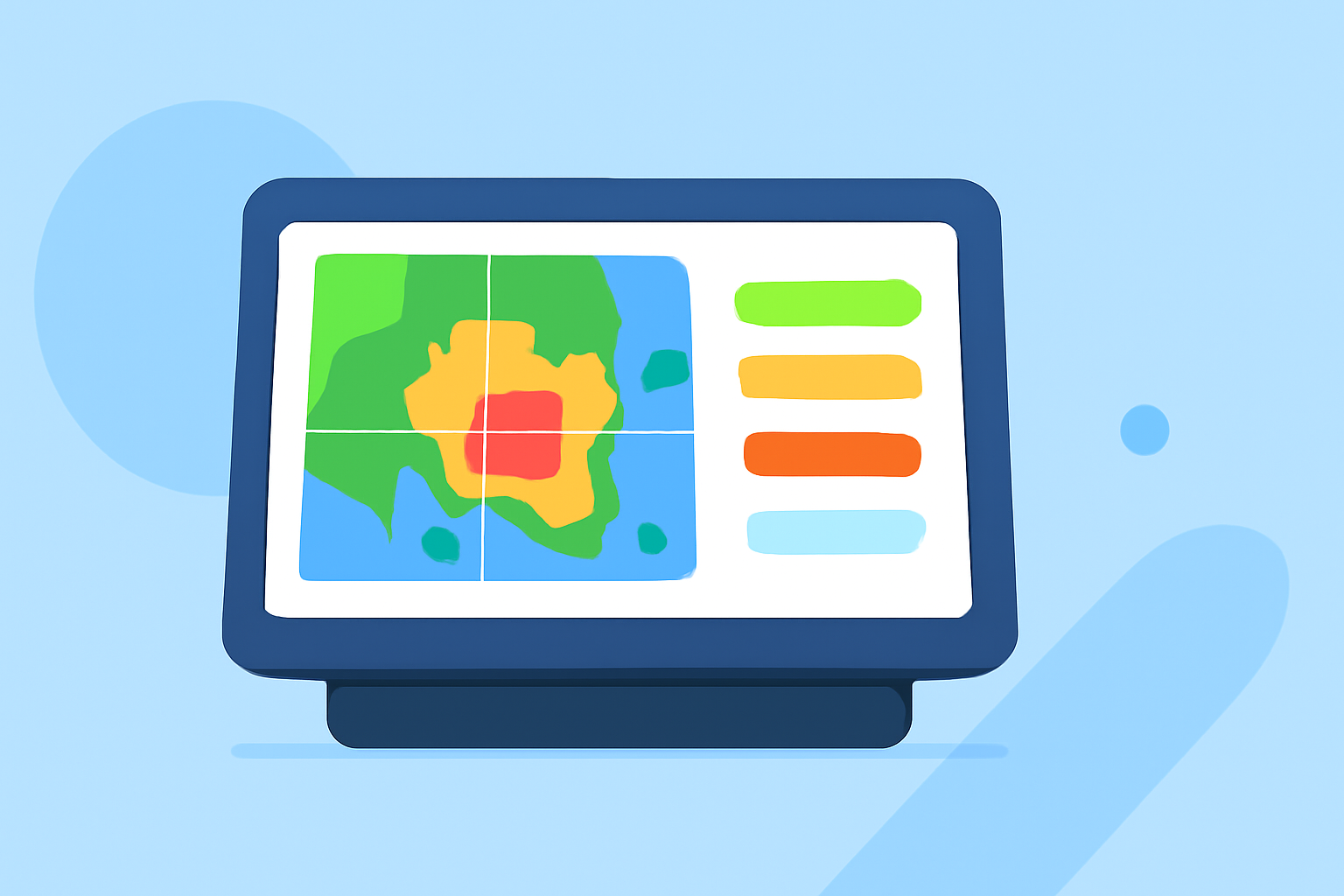
The Next Generation Weather Radar (NEXRAD) system is a network of high-resolution S-band Doppler weather radars operated by the National Weather Service (NWS), the Federal Aviation Administration (FAA), and the U.S. Air Force. This system provides critical data for detecting and analyzing atmospheric phenomena, including precipitation and wind patterns. Integrating NEXRAD data into smart displays offers users real-time, detailed insights into weather conditions, enhancing situational awareness and decision-making.
What Are NEXRAD Radar Products?
NEXRAD radar products are outputs generated by the WSR-88D radar system, encompassing various data types that describe atmospheric conditions. These products are categorized into two primary levels:
-
Level II Data: Raw, high-resolution data captured directly from the radar, including reflectivity, mean radial velocity, and spectrum width.
-
Level III Data: Processed, lower-resolution data derived from Level II, such as composite reflectivity, storm relative velocity, and precipitation estimates.
Key NEXRAD Radar Product Types on Smart Displays
Integrating NEXRAD data into smart displays provides users with a comprehensive view of weather conditions. Key product types include:
-
Base Reflectivity: Displays the intensity of precipitation, aiding in identifying areas of rainfall, snow, or hail.
-
Base Velocity: Shows the speed and direction of precipitation particles, assisting in detecting wind patterns and potential severe weather events.
-
Composite Reflectivity: Combines data from multiple elevation angles to present the maximum reflectivity, useful for assessing storm structure and intensity.
-
Storm Relative Velocity: Removes storm motion from the velocity data, highlighting rotation within storms, which is crucial for tornado detection.
-
Precipitation Estimates: Provides quantitative rainfall or snowfall amounts, essential for flood forecasting and monitoring.
Benefits of NEXRAD Data on Smart Displays
Incorporating NEXRAD radar products into smart displays offers several advantages:
-
Enhanced Situational Awareness: Real-time data visualization aids in understanding current weather conditions and potential hazards.
-
Improved Decision-Making: Accurate weather information supports timely and informed decisions in sectors like aviation, agriculture, and emergency management.
-
User-Friendly Interface: Smart displays provide intuitive platforms for accessing complex radar data, making it accessible to a broader audience.
Implementing NEXRAD Data on Smart Displays
To effectively integrate NEXRAD radar products into smart displays, consider the following steps:
-
Data Acquisition: Access NEXRAD data through authorized channels, ensuring compliance with data usage policies.
-
Data Processing: Utilize software tools to process raw Level II data into Level III products suitable for display.
-
Display Integration: Develop or utilize applications that can render radar data on smart displays, ensuring clarity and accuracy.
-
User Training: Provide training to users on interpreting radar data, enhancing the utility of the smart display system.
Conclusion
Integrating NEXRAD radar product types into smart displays significantly enhances the ability to monitor and analyze weather conditions. This integration supports informed decision-making across various sectors, contributing to safety and efficiency.
(faa.gov)