
Optimizing Orchid Care with Clime: Humidity Management on Your Apple Watch
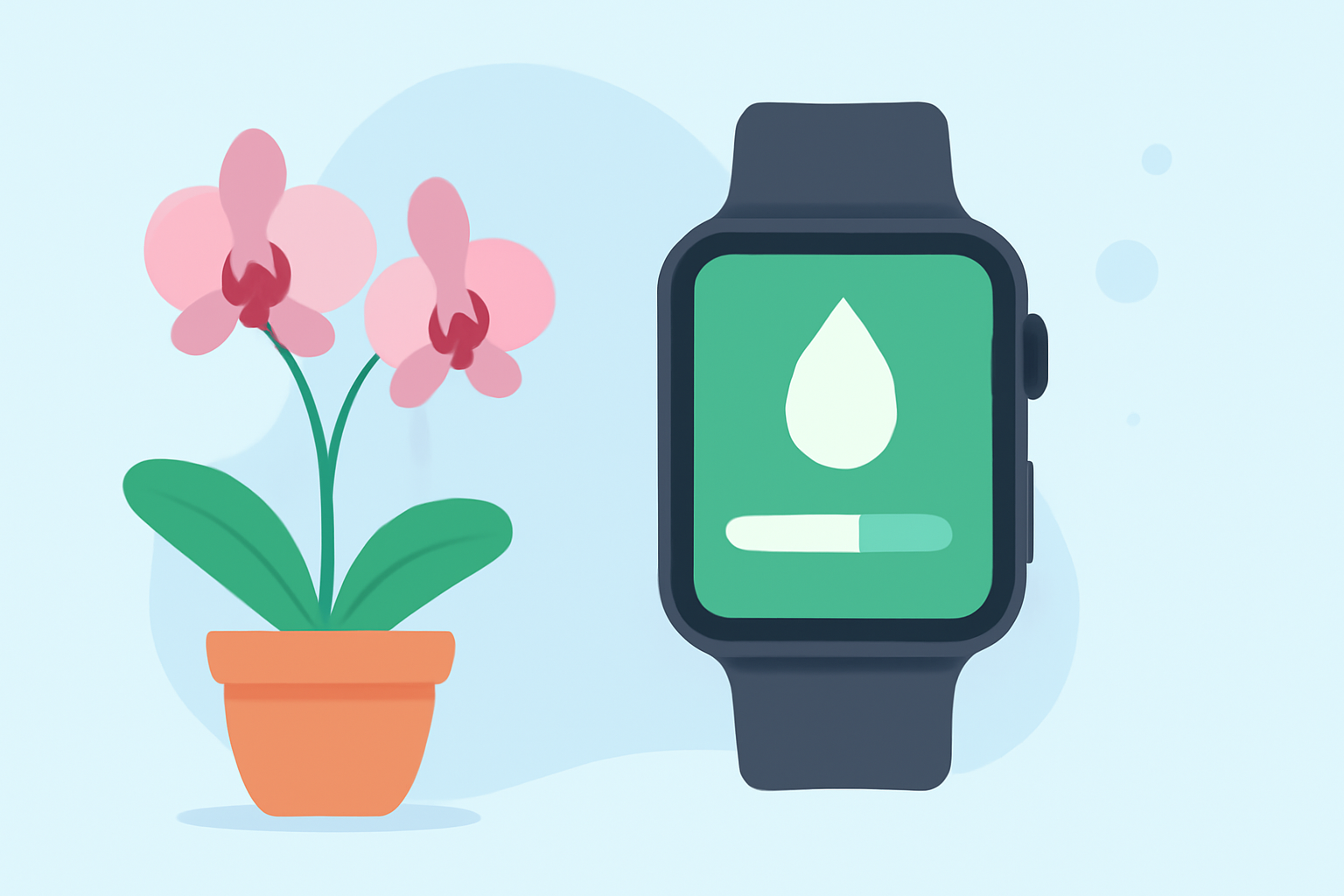
Orchids, celebrated for their exquisite blooms, thrive in environments that closely mimic their native tropical habitats. A critical factor in their well-being is humidity, which influences their growth, flowering, and overall health. Utilizing Clime on your Apple Watch can assist in effectively monitoring and managing these conditions.
Why Is Humidity Crucial for Orchids?
Orchids are predominantly epiphytes, meaning they naturally grow on trees in humid, tropical climates. This environment provides consistent moisture, which is essential for their survival and flourishing. Inadequate humidity can lead to various issues, including:
-
Dehydration: Low humidity levels can cause orchids to lose moisture rapidly, leading to shriveled leaves and stunted growth.
-
Bud Drop: Insufficient humidity may result in premature bud drop, preventing flowers from blooming.
-
Pest Infestations: Dry conditions can make orchids more susceptible to pests like spider mites, which thrive in low humidity.
Ideal Humidity Levels for Orchids
While specific humidity requirements can vary among orchid species, most common houseplant orchids prefer humidity levels between 50% and 70%. Maintaining humidity within this range helps replicate their natural environment, promoting healthy growth and vibrant blooms. (healthyhouseplants.com)
Monitoring Humidity with Clime on Your Apple Watch
Clime offers a user-friendly interface on your Apple Watch, allowing you to monitor local humidity levels in real-time. Here's how you can utilize Clime to support your orchid care:
-
Set Up Clime on Your Apple Watch: Download and install Clime from the App Store. Ensure your watch is connected to your iPhone and that Clime has the necessary permissions to access location data.
-
Add Your Location: Open Clime on your Apple Watch and add your location to receive accurate, localized weather information.
-
Monitor Humidity Levels: Regularly check the humidity readings provided by Clime. Aim to maintain indoor humidity levels between 50% and 70% to create an optimal environment for your orchids.
Adjusting Indoor Humidity for Orchids
If Clime indicates that your indoor humidity is below the ideal range, consider implementing the following strategies to increase moisture levels:
-
Use a Humidifier: Place a humidifier near your orchids to add moisture to the air. Ensure the humidifier is clean to prevent mold and bacteria growth.
-
Create a Humidity Tray: Fill a shallow tray with water and place it near your orchids. As the water evaporates, it will raise the humidity around the plants. Ensure the orchid pots are not sitting directly in the water to prevent root rot. (westerlay.com)
-
Group Orchids Together: Placing multiple orchids close together can create a microenvironment with higher humidity, as the plants release moisture into the air.
-
Misting: Light misting can temporarily increase humidity around the plant. However, avoid over-misting, as excessive moisture on leaves can lead to fungal issues. (aos.org)
Avoiding Excessive Humidity
While orchids require higher humidity, excessively high levels can be detrimental, leading to fungal and bacterial infections. Ensure that your humidity-boosting methods do not create overly damp conditions. Proper air circulation is also essential to prevent stagnant, humid air, which can promote disease. (aos.org)
Conclusion
Maintaining the appropriate humidity levels is vital for the health and vitality of your orchids. By leveraging Clime on your Apple Watch, you can effectively monitor local humidity conditions and make informed adjustments to create an environment that supports your orchids' needs. Regular attention to humidity, along with other care practices, will help ensure your orchids thrive and reward you with their beautiful blooms.
Highlights:
- What Your Orchid Really Needs in March - to Trigger Reblooming and Encourage Lush Growth, Published on Friday, March 20