
Essential Guide to Safe Dog Walking in Various Weather Conditions
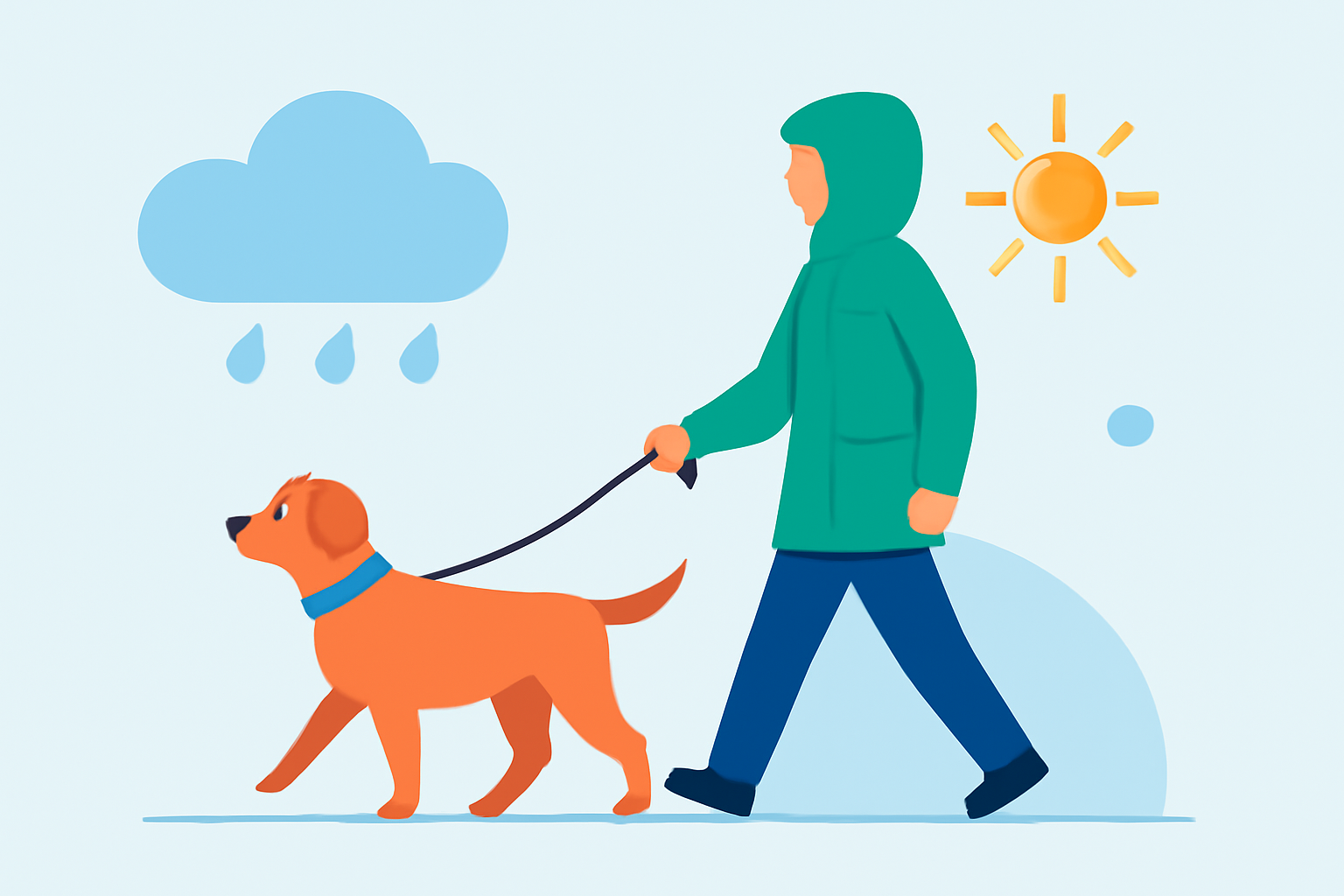
Walking your dog is a cherished activity, but understanding how weather conditions affect your dog's safety is crucial. This guide provides essential tips for walking your dog in various weather scenarios.
How Does Hot Weather Affect Dog Walks?
Hot temperatures can pose significant risks to dogs, including heatstroke and paw pad burns. To protect your dog:
-
Choose Cooler Times: Walk during early morning or late evening when temperatures are lower.
-
Check Pavement Temperature: Asphalt can become extremely hot and burn your dog's paws. Place your hand on the pavement for seven seconds; if it's too hot for you, it's too hot for your dog.
-
Stay Hydrated: Bring water for both you and your dog to prevent dehydration.
-
Watch for Signs of Overheating: Excessive panting, drooling, or lethargy are signs your dog may be overheating. If you notice these, stop the walk and seek shade.
What About Cold Weather?
Cold temperatures can lead to hypothermia and frostbite, especially in small or short-haired breeds. To keep your dog safe:
-
Limit Walk Duration: Keep walks short, around 10-15 minutes, to prevent exposure to cold for extended periods.
-
Use Protective Gear: Consider dog coats or sweaters to provide extra warmth.
-
Monitor for Cold Stress: Shivering, whining, or lifting paws off the ground are signs your dog is cold. If you notice these, return indoors.
Is It Safe to Walk Dogs in the Rain?
Rain can make walks slippery and uncomfortable. To ensure safety:
-
Use Waterproof Gear: Equip your dog with a waterproof coat to keep them dry.
-
Be Cautious of Slippery Surfaces: Wet sidewalks and roads can be slippery. Keep your dog on a leash to prevent sudden movements.
-
Dry Off After Walks: Thoroughly dry your dog to prevent skin issues from prolonged moisture.
How About Snow and Ice?
Snow and ice present unique challenges:
-
Protect Paws: Ice can cause cuts and abrasions. Consider using dog booties or applying paw balm to protect their paws.
-
Watch for Ice Melt Chemicals: These can irritate your dog's paws. Wipe their paws after walks to remove any residue.
-
Keep Walks Short: Limit exposure to cold and ice to prevent frostbite.
How Can Technology Assist in Safe Dog Walking?
Utilizing technology can enhance your dog's walking experience:
-
Breed-Specific Weather Apps: Some apps provide weather forecasts tailored to your dog's breed, considering factors like heat tolerance and paw safety.
-
Pavement Temperature Monitoring: Certain apps can alert you when pavement temperatures are unsafe for your dog's paws.
-
Walk Tracking: GPS-enabled apps can track your walks, ensuring you maintain a safe route and duration.
Conclusion
Being aware of how weather conditions impact your dog's safety is essential for enjoyable walks. By taking appropriate precautions and utilizing available resources, you can ensure your dog's well-being in various weather scenarios.
FAQs
1. What temperature is too hot for walking my dog?
Temperatures above 85°F (29°C) can be dangerous for dogs, as pavement can reach temperatures high enough to burn paws. It's advisable to avoid walks during these conditions. (goodrx.com)
2. How can I protect my dog's paws in cold weather?
Use dog booties or apply paw balm to protect against ice and cold surfaces. After walks, wipe your dog's paws to remove any ice melt chemicals. (akc.org)
3. Are there apps to help with safe dog walking?
Yes, there are apps that provide breed-specific weather forecasts, monitor pavement temperatures, and track walks to ensure safety. (pawcast.io)
4. How do I know if it's too cold for my dog to walk?
If temperatures drop below freezing (32°F or 0°C), limit walks to 10-15 minutes. Short-haired or small breeds are more susceptible to cold and may require additional protection. (goodrx.com)
5. Can I walk my dog in the rain?
Yes, but ensure your dog is equipped with waterproof gear, and be cautious of slippery surfaces. Dry your dog thoroughly after the walk to prevent skin issues. (akc.org)