
Mastering Storm-Relative Velocity Maps: A Comprehensive Workflow Guide
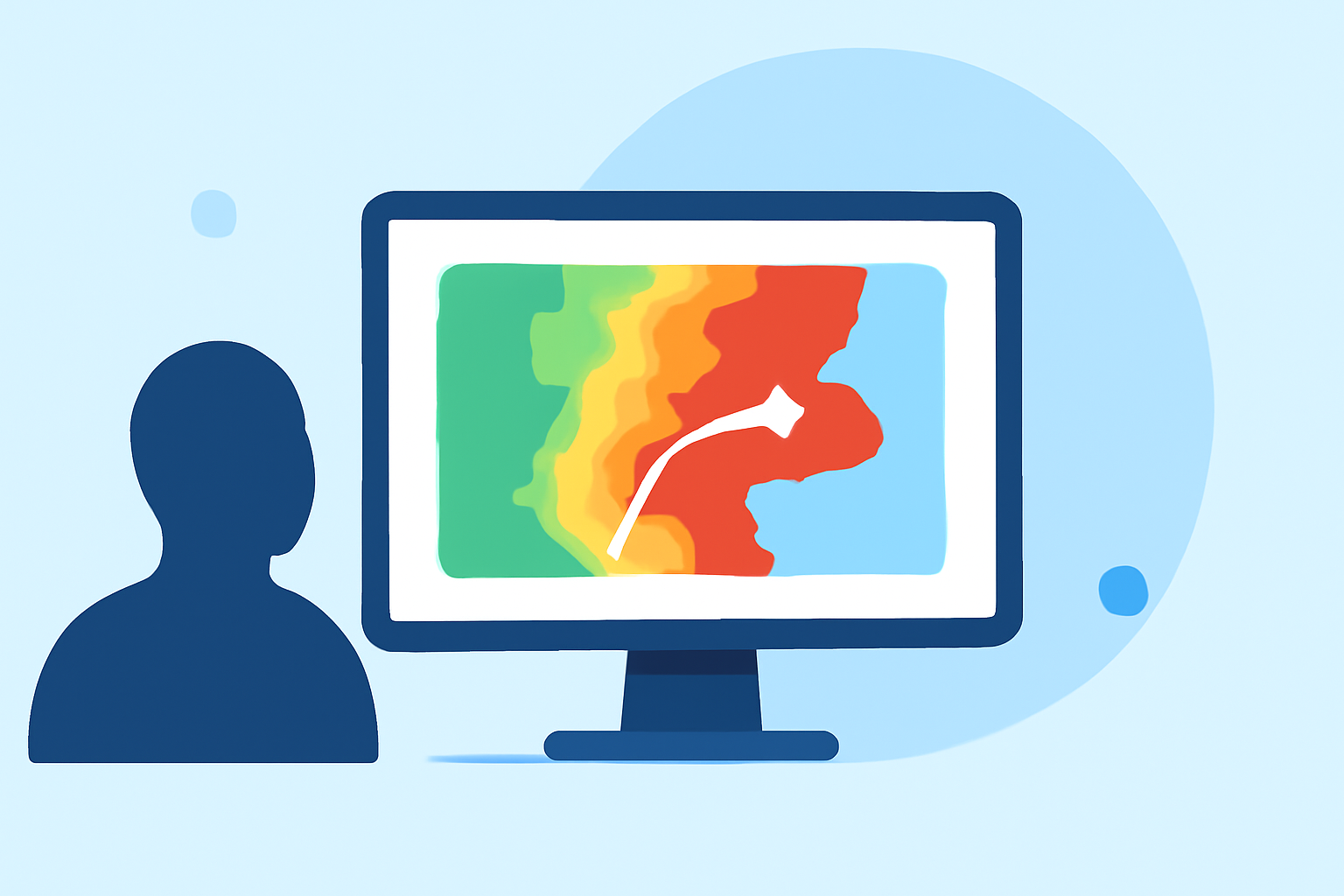
Storm-relative velocity maps are essential tools in meteorology, enabling forecasters to analyze wind patterns within storms by removing the influence of the storm's motion. This process enhances the detection of rotational features, such as mesocyclones and tornadoes, which might otherwise be obscured by the storm's movement.
Understanding Storm-Relative Velocity Maps
A storm-relative velocity map, often referred to as a Storm Relative Mean Radial Velocity Map (SRM), displays a full 360° sweep of radial velocity data with the average motion of all identified storms subtracted out. This subtraction isolates the wind components within the storm, aiding in the identification of shear and rotation, and assisting in determining rotational features in fast-moving storms. (forecast.weather.gov)
The Importance of Storm-Relative Velocity Maps
By removing the storm's motion, these maps provide a clearer view of the storm's internal dynamics, making it easier to detect rotation and other significant features. This clarity is particularly crucial when dealing with rapidly moving storms, where traditional velocity data might mask important rotational signatures. (prod-01-alb-www-noaa.woc.noaa.gov)
Steps to Utilize Storm-Relative Velocity Maps
-
Accessing the Data: Obtain the base velocity data from your radar system. This data represents the raw wind velocities detected by the radar.
-
Determining Storm Motion: Calculate the average motion of the storm. This can be achieved by analyzing the movement of identifiable features within the storm over time.
-
Subtracting Storm Motion: Adjust the base velocity data by subtracting the calculated storm motion. This process involves vector subtraction, where the storm's motion vector is subtracted from each data point in the base velocity dataset.
-
Analyzing the Adjusted Data: Examine the resulting storm-relative velocity map to identify areas of rotation, shear, and other significant features.
Best Practices for Effective Analysis
-
Regular Updates: Continuously update the storm motion vector to ensure accurate subtraction and reliable analysis.
-
Multi-Tilt Analysis: Review data across multiple elevation angles to gain a comprehensive understanding of the storm's structure.
-
Integration with Other Data: Combine storm-relative velocity maps with other radar products, such as reflectivity and spectrum width, to enhance the overall analysis.
Leveraging Advanced Tools for Enhanced Analysis
Utilizing advanced radar software can significantly improve the analysis of storm-relative velocity maps. These tools often offer features like super-resolution velocity data, which provides higher detail and can make it easier to spot rotational features in fast-moving storms. (radarscope.zendesk.com)
By mastering the workflow of storm-relative velocity maps, meteorologists can enhance their ability to detect and analyze severe weather phenomena, leading to more accurate forecasts and timely warnings.
Highlights:
- Radar Images: Velocity | National Oceanic and Atmospheric Administration
- Super-Res Storm Relative Velocity – RadarScope, Published on Wednesday, January 18
- NOAA's National Weather Service - Glossary