
Essential Guide to Tree Trimming During Severe Weather: A Step-by-Step Approach
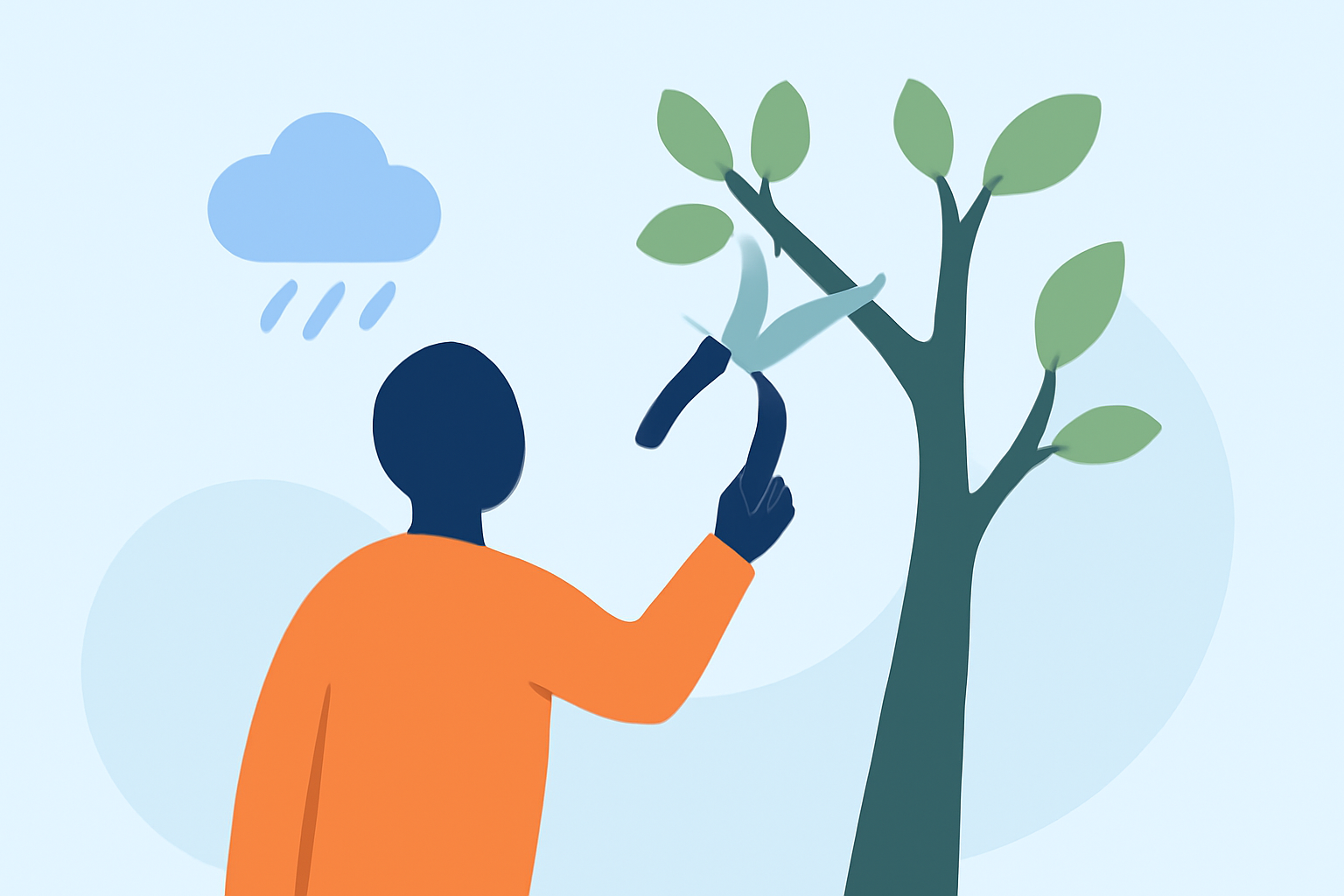
Trimming trees during severe weather is crucial for preventing damage and maintaining safety. However, it's essential to approach this task with caution and proper knowledge. Here's a step-by-step guide to assist you:
1. Assess the Weather Conditions
Before initiating any tree trimming, evaluate the current and forecasted weather. Avoid trimming during active storms, high winds, or when the ground is saturated, as these conditions can increase the risk of accidents and tree damage.
2. Inspect the Tree for Hazards
Conduct a thorough examination of the tree to identify:
-
Dead or Diseased Branches: These are more likely to break during severe weather.
-
Structural Weaknesses: Look for cracks, splits, or weak branch unions.
-
Branches Near Power Lines: These pose significant safety risks.
3. Prioritize Safety Measures
Safety should be your top priority:
-
Use Proper Equipment: Ensure all tools are in good working condition.
-
Wear Protective Gear: This includes helmets, gloves, and eye protection.
-
Avoid Working Alone: Have a partner present in case of emergencies.
4. Prune Strategically
When trimming, follow these guidelines:
-
Remove Dead or Diseased Branches: Cut back to the main branch or trunk to prevent decay.
-
Address Structural Issues: Remove weak branches that could pose a risk during storms.
-
Avoid Over-Pruning: Do not remove more than 20-25% of the tree's canopy in a single session to prevent stress.
5. Dispose of Debris Properly
After trimming, ensure all debris is cleared away to prevent potential hazards. Check with local authorities for guidelines on debris disposal, especially if the tree was near power lines.
6. Monitor the Tree's Health
After trimming, observe the tree for signs of stress or disease. If issues arise, consult a certified arborist for further assessment.
7. Consider Professional Assistance
If the tree is large, near power lines, or poses significant risks, it's advisable to hire a professional arborist. They have the expertise and equipment to perform the job safely.
By following these steps, you can effectively trim trees during severe weather, reducing potential damage and enhancing safety.