
Understanding Aircraft De-Icing and Its Impact on Departure Delays
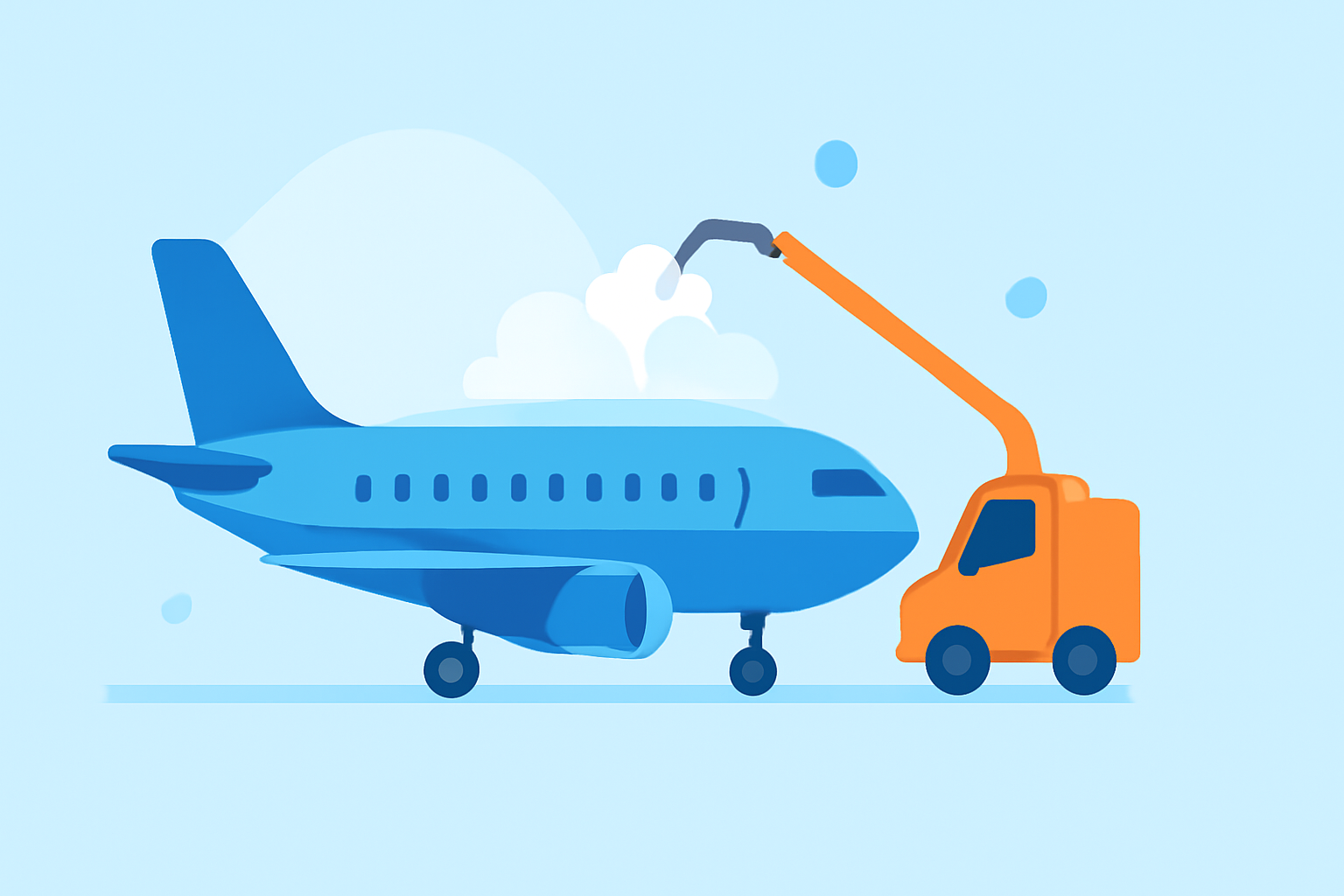
Aircraft de-icing is a critical procedure that ensures flight safety during winter conditions. However, it can also lead to departure delays, affecting both airlines and passengers. Understanding the de-icing process and its impact on flight schedules is essential for efficient air travel.
What Is Aircraft De-Icing?
De-icing involves removing ice, snow, or frost from an aircraft's surfaces, particularly the wings and tail, to maintain optimal aerodynamic performance. This process is vital because ice accumulation can disrupt airflow, leading to reduced lift and increased drag. The de-icing procedure typically includes spraying the aircraft with heated, glycol-based solutions to melt and remove the ice. (simpleflying.com)
How Does De-Icing Affect Departure Delays?
De-icing is a time-consuming process that can significantly impact flight schedules. The time required for de-icing depends on factors such as the amount of ice accumulation, weather conditions, and the efficiency of ground operations. In severe weather conditions, multiple de-icing cycles may be necessary, further extending ground time. Additionally, de-icing operations can lead to congestion at gates and de-icing pads, causing delays for subsequent flights. (nltimes.nl)
What Are the Main Causes of De-Icing Delays?
Several factors contribute to delays caused by de-icing:
-
Weather Conditions: Heavy snowfall, freezing rain, and low temperatures increase the need for de-icing and can slow down the process.
-
Airport Infrastructure: Limited de-icing facilities or equipment can lead to bottlenecks, especially during peak travel times.
-
Operational Procedures: Inefficient de-icing protocols or miscommunication between ground crews and flight crews can add unnecessary time to the process.
How Can Planes Live Help Manage De-Icing Delays?
Planes Live offers real-time flight tracking and status updates, providing passengers and airlines with timely information about flight delays, including those caused by de-icing. By staying informed, travelers can make better decisions regarding their travel plans, and airlines can optimize their operations to minimize the impact of delays.
What Are the Implications of De-Icing Delays?
De-icing delays can have several consequences:
-
Passenger Inconvenience: Extended wait times can lead to missed connections and disrupted travel plans.
-
Operational Challenges: Airlines may need to adjust schedules, leading to further delays and potential cancellations.
-
Economic Impact: Delays can result in increased operational costs for airlines and compensation claims from passengers.
How Do Airlines Mitigate De-Icing Delays?
Airlines employ various strategies to minimize the impact of de-icing delays:
-
Advanced Planning: Monitoring weather forecasts to anticipate de-icing needs and adjust schedules accordingly.
-
Efficient Ground Operations: Streamlining de-icing procedures and ensuring adequate staffing during winter months.
-
Passenger Communication: Providing timely updates to passengers about delays and alternative arrangements.
What Are the Alternatives to Traditional De-Icing Methods?
Emerging technologies and methods are being explored to reduce the need for traditional de-icing:
-
Electro-Impulse De-Icing: Using electrical impulses to remove ice from aircraft surfaces.
-
Anti-Icing Coatings: Applying special coatings that prevent ice from adhering to aircraft surfaces.
-
Heated Surfaces: Integrating heated elements into aircraft components to prevent ice formation.
How Does Weather Impact De-Icing and Delays?
Adverse weather conditions are the primary cause of de-icing delays. According to the Federal Aviation Administration (FAA), weather accounted for 74.26% of system-impacting delays over a six-year period. (faa.gov) Severe weather not only increases the need for de-icing but also affects overall flight operations, leading to longer delays and potential cancellations.
How Can Passengers Prepare for De-Icing Delays?
Travelers can take several steps to minimize the impact of de-icing delays:
-
Stay Informed: Use tools like Planes Live to monitor flight statuses and receive real-time updates.
-
Allow Extra Time: Plan for potential delays, especially during winter months when de-icing is more common.
-
Communicate with Airlines: Confirm flight details and inquire about any expected delays before heading to the airport.
Understanding the de-icing process and its impact on departure delays is crucial for both airlines and passengers. By staying informed and prepared, travelers can navigate these challenges more effectively, ensuring a smoother journey.