
Understanding and Managing Drought Trends in the United States
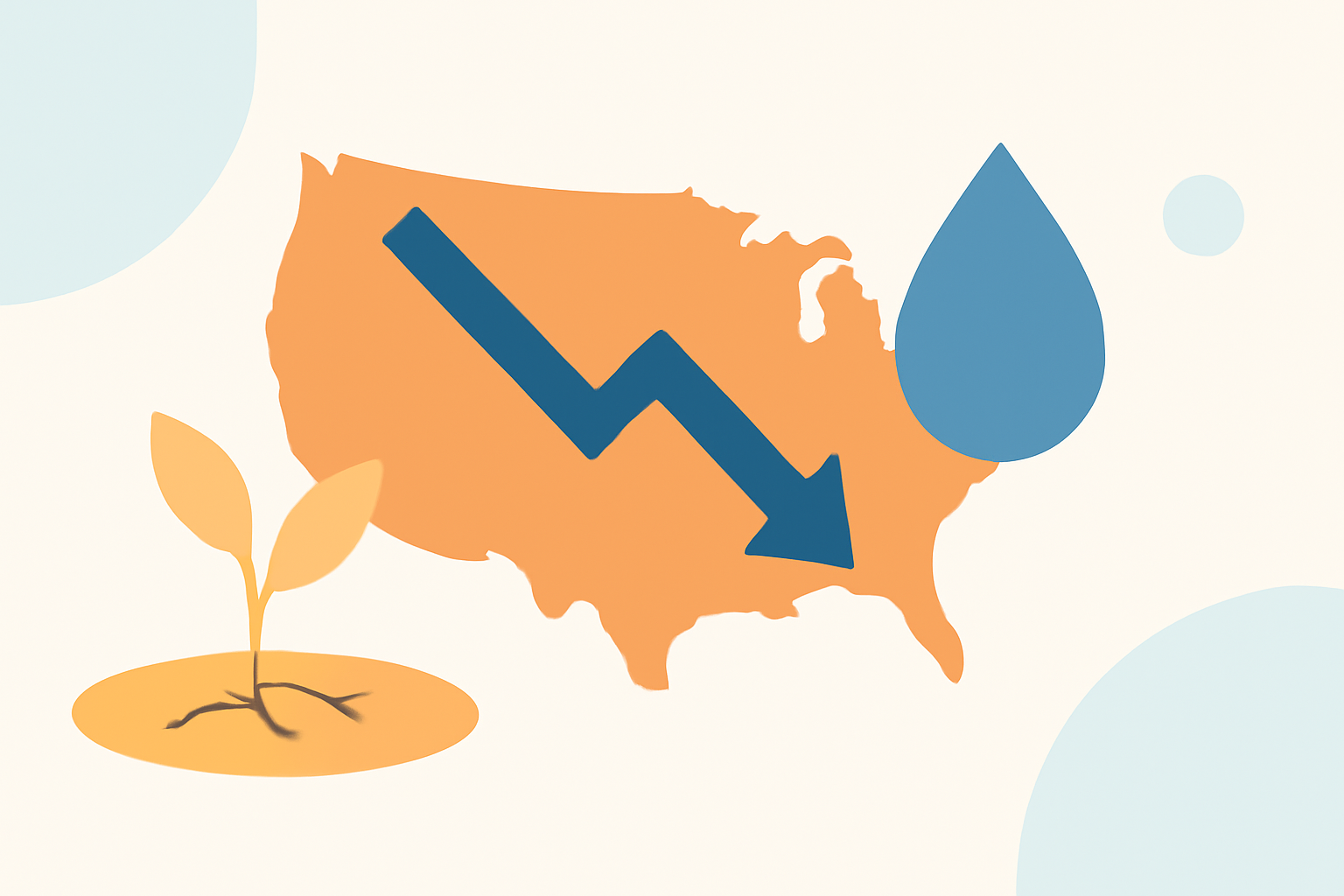
As of June 2026, the United States is grappling with severe drought conditions affecting over 60% of the country, with more than 20% experiencing extreme drought. (phys.org) This widespread water scarcity poses significant challenges to agriculture, water resources, and ecosystems.
What Are the Current Drought Conditions?
The U.S. Drought Monitor reports that as of June 9, 2026, approximately 46.93% of the United States and Puerto Rico, and 56.16% of the Lower 48 states, are in drought. (drought.gov) Regions such as the Southeast and the West are particularly affected, with 97% of the Southeast and two-thirds of the West experiencing drought conditions. (fortune.com)
What Are the Causes of the Current Drought?
The current drought is influenced by several factors:
-
El Niño Phenomenon: The return of a strong El Niño is expected to exacerbate climate disruptions, potentially impacting precipitation patterns and contributing to drought conditions. (lemonde.fr)
-
Climate Change: Long-term climate change, driven by greenhouse gas emissions, has led to increased temperatures and altered precipitation patterns, intensifying drought conditions. (lemonde.fr)
How Can Communities Prepare for Drought?
Implementing green infrastructure can help communities prepare for drought by replenishing groundwater reserves and reducing stress on local water supplies. Techniques such as rain gardens, green streets, and rainwater harvesting can be effective. (epa.gov)
What Are the Impacts of Drought?
Drought conditions can lead to:
-
Agricultural Challenges: Reduced crop yields and livestock health issues due to water scarcity.
-
Water Shortages: Decreased water availability for municipal and industrial use.
-
Ecosystem Stress: Negative effects on wildlife habitats and biodiversity.
How Can Technology Assist in Drought Management?
Advancements in technology, such as machine learning tools developed by the U.S. Geological Survey, can forecast drought conditions up to 90 days in advance. These tools provide early warnings, allowing communities to prepare for potential water shortages. (usgs.gov)
What Are the Future Outlooks for Drought in the U.S.?
While El Niño conditions may bring temporary relief, the long-term outlook remains uncertain. Persistent climate change effects suggest that droughts may become more frequent and severe, necessitating ongoing adaptation and mitigation strategies. (drought.gov)
In conclusion, understanding the current drought trends and implementing proactive measures are crucial for mitigating the impacts of water scarcity in the United States.
Highlights:
- Georgia drought report: Blame it on the rain, Published on Friday, May 29
- Scientists warn 2026 could be extreme year as global warming slips down agenda, Published on Tuesday, May 12