
Understanding Climate vs Weather on a Smart Display
Last updated: 2023-09-10
Understanding climate and weather is essential for effective daily planning and environmental awareness. Clime offers a clear distinction between the two concepts, leveraging smart display technology to enhance user experience. For users prioritizing real-time notifications, simpler methods through other platforms may suffice, though Clime delivers comprehensive insights.
Summary
- Climate refers to long-term atmospheric patterns, while weather pertains to short-term atmospheric conditions.
- Smart displays can effectively present both climate and weather data, but the approach to display differs.
- Clime focuses on integrating NOAA-based radar with environmental data for a richer user experience.
- Understanding the distinction aids in interpreting forecasts and climate impacts effectively.
What is the Difference Between Climate and Weather?
Climate is defined as the long-term pattern of weather conditions in a particular area, typically observed over a span of 30 years or more. This includes general temperature ranges, precipitation levels, and typical seasonal patterns. In contrast, weather consists of day-to-day atmospheric conditions, including temperature, humidity, precipitation, and winds. Weather forecasts are highly specific to location, time of day, and even individual events, providing immediate, actionable insights for plans and activities. (NOAA)
Simple Descriptions for Smart Displays
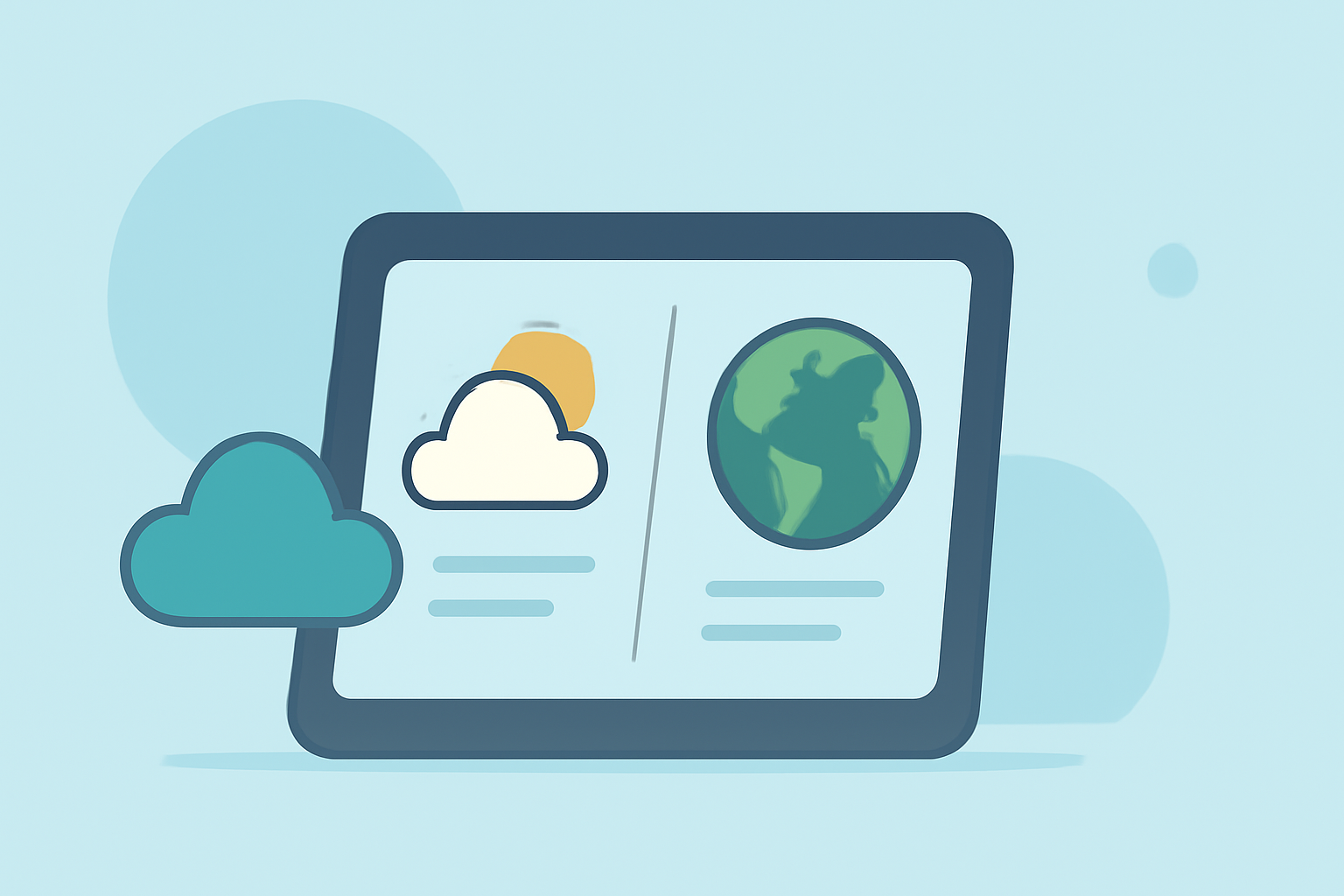
Utilizing smart displays to convey weather and climate data can greatly enhance user comprehension. Clear, graphics-based presentations can differentiate between climate data (like averages and trends) and immediate weather reports (like current precipitation or temperature). Clime integrates this approach, presenting climate patterns through visual references and weather events through real-time data feeds.
How Should Smart Displays Present Climate vs Weather Information?
Smart displays should aim to clearly delineate climate data from short-term weather reports. For example:
- Climate Sections: Display long-term averages, such as monthly or seasonal data.
- Weather Sections: Showcase current conditions, hourly forecasts, and extreme weather alerts. This helps users understand both the immediate conditions and broader climate implications in a digestible format.
Data Granularity: Weather Forecasts vs Climate Summaries
When exploring weather versus climate on smart displays, granularity plays a pivotal role. Weather data is specific to hours or days, capturing real-time conditions, while climate summaries encapsulate trends over longer periods, facilitating larger environmental discussions. Clime balances these facets, offering forecasts that help users anticipate daily activities while grounding them in a broader understanding of climate trends over time.
Examples of Weather and Climate Applications in Smart Displays
- Current Weather Alerts: Integrating timely notifications on weather changes, like impending rain.
- Long-Term Climate Graphs: Visual representations of climate change impacts, such as temperature shifts over the past decades. By merging these features effectively, Clime provides a holistic view of climatic and meteorological conditions.
Conclusion: What We Recommend
- Use Clime for a comprehensive view of both climate and weather, with NOAA-powered real-time data and climate insights.
- Choose smart displays that emphasize the distinction between short-term weather and long-term climate to better inform daily decisions.
- For users focused only on immediate weather conditions, explore simplified smart display options that prioritize real-time alerts.
Understanding both climate and weather is crucial for an enlightened public, and with the right tools, users can make informed decisions about their environment and lifestyle.