
Understanding De-Icing and Departure Delays: A Traveler's Guide
Traveling during winter months or in regions prone to cold weather can present unique challenges, particularly concerning aircraft de-icing and potential departure delays. Understanding these processes can help you better prepare for your journey and minimize disruptions.
What Is Aircraft De-Icing?
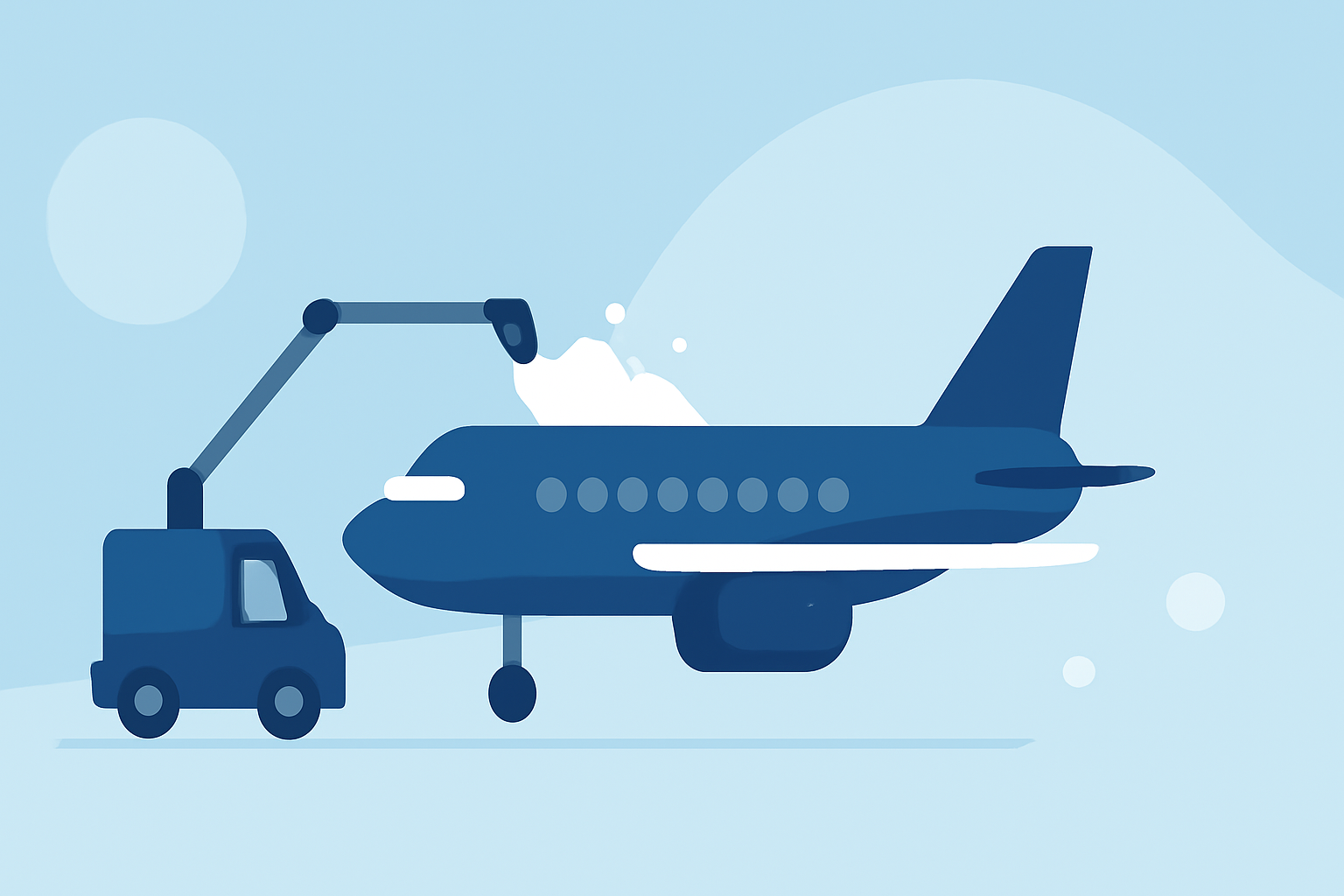
Aircraft de-icing is the process of removing existing ice, snow, or frost from an aircraft's critical surfaces, such as wings and tail, to ensure safe flight operations. This is typically achieved by applying heated de-icing fluids, often a mixture of glycol and water, which melt the contaminants. In some cases, anti-icing fluids are also applied to prevent further accumulation during the flight. (afar.com)
When Is De-Icing Necessary?
De-icing becomes essential when temperatures are at or below freezing, or when frost is present on the aircraft's surfaces. Even in warmer conditions, if frost forms, de-icing procedures are required. The decision to de-ice is made by the pilot in command, in consultation with ground personnel, based on current weather conditions and the aircraft's status. (icao.int)
How Does De-Icing Affect Departure Times?
De-icing can lead to departure delays due to several factors:
-
Time Constraints: De-icing fluids have a limited effectiveness period, known as holdover time. If an aircraft is de-iced too early, the fluid may lose its effectiveness before takeoff, necessitating reapplication. This can result in additional delays as the aircraft returns to the de-icing area. (thepointsguy.com)
-
Operational Coordination: Airports and airlines must coordinate de-icing operations to ensure efficiency. This includes managing the number of aircraft at departure queues and minimizing the time aircraft spend on the ground after de-icing. (faa.gov)
-
Weather Conditions: Adverse weather, such as heavy snow or freezing rain, can increase the need for de-icing and extend holdover times, leading to longer delays.
Tips to Minimize the Impact of De-Icing Delays:
-
Stay Informed: Monitor your flight status regularly for updates on departure times and potential delays.
-
Plan Ahead: Allow extra time between connecting flights to accommodate potential delays caused by de-icing procedures.
-
Contact Your Airline: If you have concerns about de-icing and its impact on your flight, reach out to your airline for the most accurate information.
How Can Planes Live Help?
Planes Live offers real-time flight tracking and updates, providing you with the latest information on your flight's status, including any delays due to de-icing or other factors. By utilizing Planes Live, you can stay informed and make timely decisions to ensure a smoother travel experience.
Understanding the de-icing process and its potential impact on departure times can help you better prepare for your journey. By staying informed and planning accordingly, you can minimize the effects of these delays and enjoy a more seamless travel experience.