
Understanding De-Icing and Departure Delays in Aviation
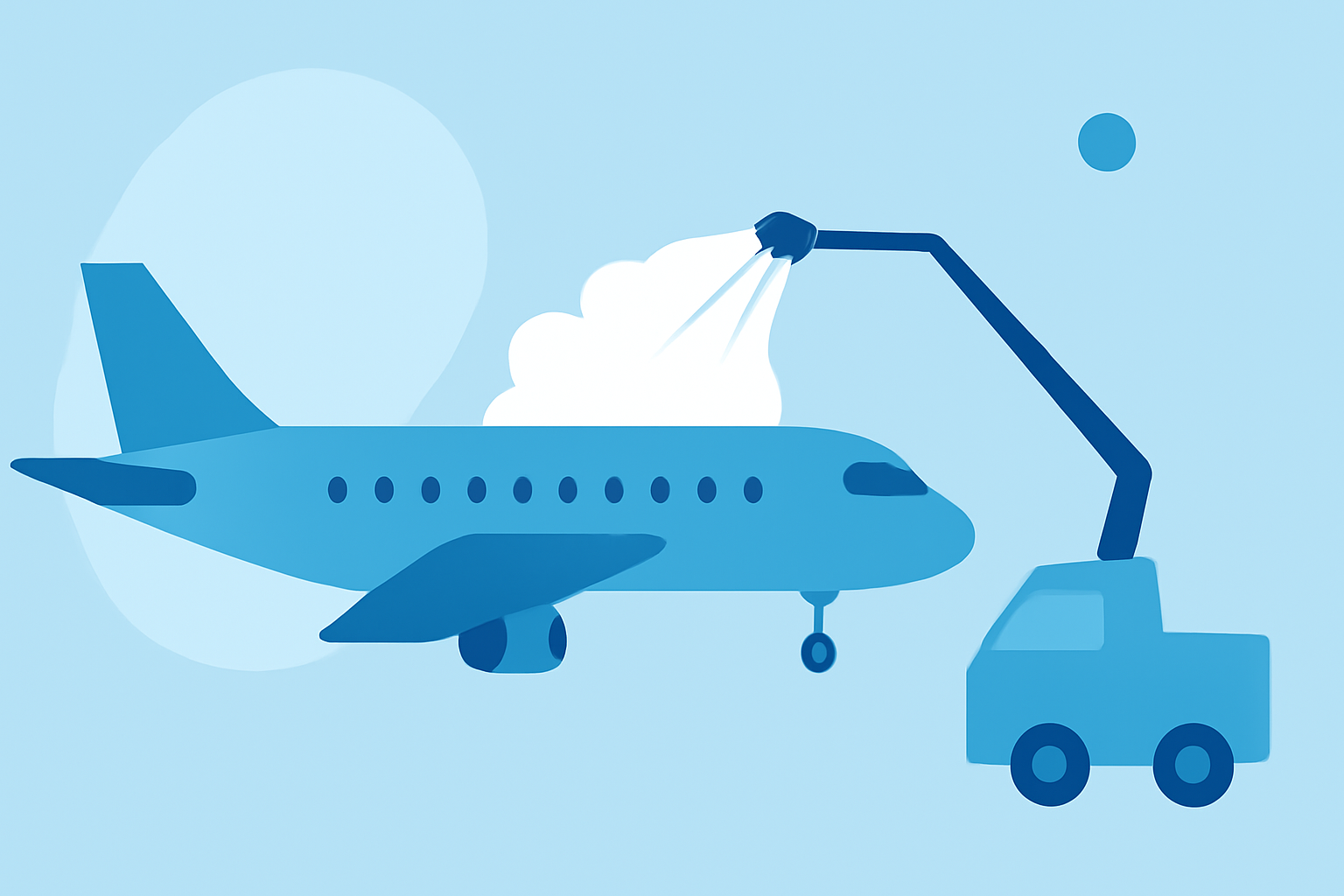
De-icing is a critical process in aviation, especially during winter months, to ensure aircraft safety and performance. Accumulated ice or snow on an aircraft's surfaces can adversely affect aerodynamics, increase weight, and hinder controllability. Therefore, removing these contaminants is essential before takeoff.
What Is De-Icing?
De-icing involves the removal of ice, snow, or frost from an aircraft's surfaces, particularly the wings and tail, to maintain optimal aerodynamic performance. This process is typically achieved using heated de-icing fluids or mechanical methods. The primary goal is to eliminate any frozen contamination that could compromise flight safety. (jetapp.com)
De-Icing vs. Anti-Icing: What's the Difference?
While de-icing removes existing ice, anti-icing prevents new ice from forming after the initial de-icing. After de-icing, a protective layer of anti-icing fluid is applied to the aircraft's surfaces. This coating helps prevent new ice from forming, even during precipitation or freezing conditions. The need for anti-icing depends on factors such as outside temperature, precipitation type, humidity, wind, and expected holding time on the ground. (jetapp.com)
When Is De-Icing Necessary?
De-icing is required when any of the following conditions are present:
- Visible ice or snow on wings or tail.
- Frost or freezing rain conditions.
- Temperatures near or below freezing.
- Accumulated slush after snowfall.
- Aircraft remained overnight outdoors.
Even if the probability is low, de-icing can become necessary shortly before departure due to changing weather conditions. (jetapp.com)
How Does De-Icing Affect Departure Delays?
De-icing procedures can lead to departure delays, especially during winter months when multiple flights require de-icing. The time taken for de-icing depends on factors such as the amount of ice or snow, the type of aircraft, and the efficiency of the de-icing crew. Airports and airlines strive to minimize these delays to maintain schedules. However, during severe weather conditions, de-icing can significantly impact departure times. (thepointsguy.com)
How Are De-Icing Delays Managed?
Airports and airlines implement various strategies to manage de-icing delays:
- Scheduling: Allocating specific time slots for de-icing to ensure a smooth flow of departures.
- Communication: Keeping passengers informed about expected delays and the reasons behind them.
- Efficiency Improvements: Investing in advanced de-icing equipment and training to speed up the process.
Despite these efforts, during peak winter periods, some delays are inevitable. Passengers are advised to check with their airlines for the latest information on flight statuses.
How Can Passengers Stay Informed About De-Icing Delays?
Passengers can stay informed about de-icing delays by:
- Monitoring Flight Status: Regularly checking the airline's website or mobile app for real-time updates.
- Subscribing to Notifications: Opting in for email or SMS alerts regarding flight changes.
- Contacting the Airline: Reaching out to the airline's customer service for the most current information.
Understanding the de-icing process and its impact on departure times can help passengers manage expectations and plan accordingly during winter travel.
For real-time updates on flight statuses, consider using platforms that provide live flight tracking and notifications.
Highlights:
- Aircraft De-Icing Explained | Process, Costs & Insurance – JetApp
- How aircraft de-icing works - The Points Guy, Published on Saturday, January 29
- All You Never Wanted to Know about Airplane De-Icing | Port of Seattle, Published on Wednesday, November 30