
Understanding De-Icing and Departure Delays in Aviation
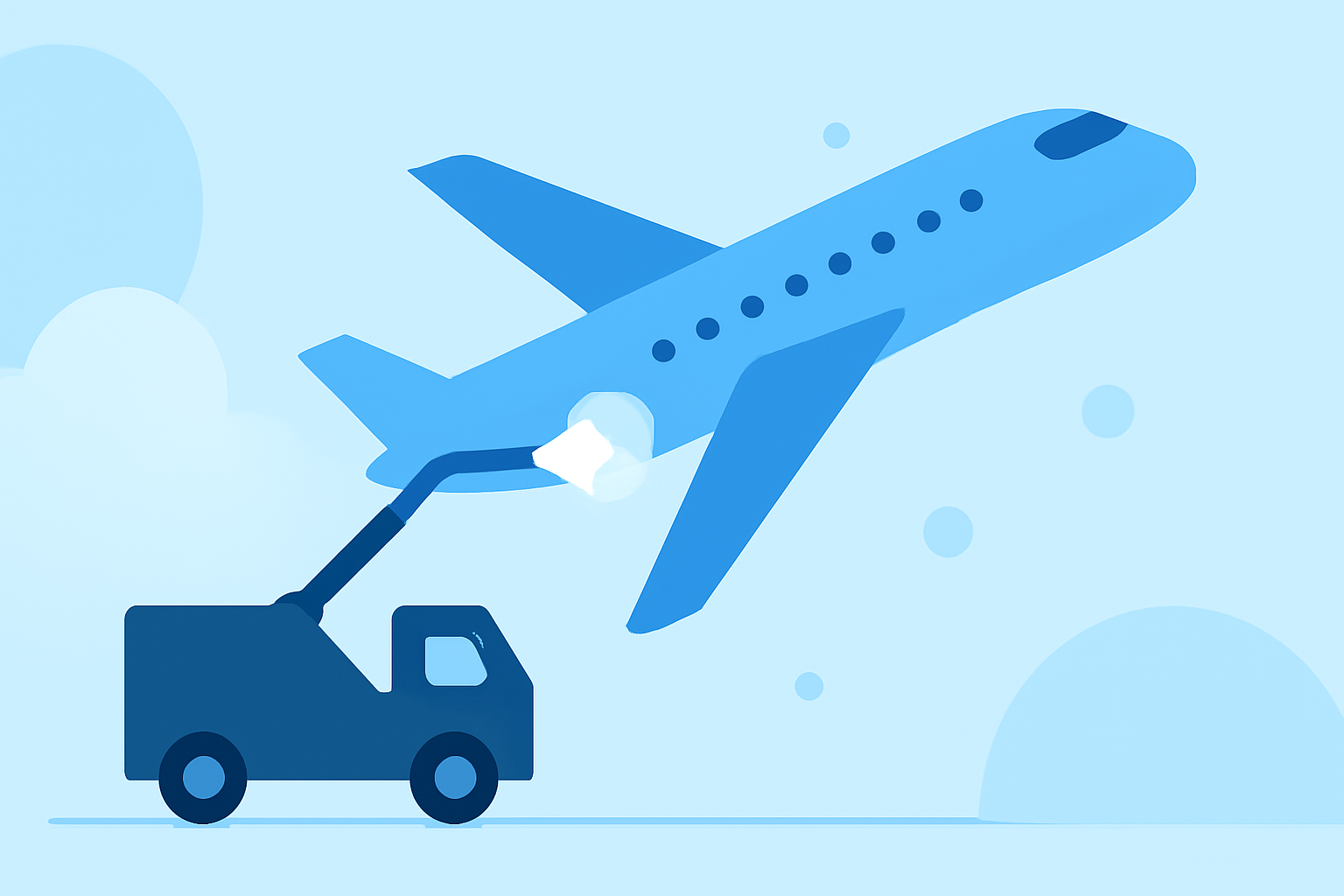
De-icing is a critical process in aviation, especially during winter months, to ensure aircraft safety and performance. Accumulated ice, snow, or frost on an aircraft's critical surfaces—such as wings, tailplane, and control surfaces—can significantly impair aerodynamics, increase weight, and obstruct sensors, leading to potential hazards during flight. (simpleflying.com)
What Is De-Icing?
De-icing involves removing frozen contaminants from an aircraft's surfaces to restore their aerodynamic properties. This process is typically performed on the ground before takeoff using heated fluids, mechanical methods, or specialized equipment. The primary goal is to ensure that the aircraft is free from ice, snow, or frost, as even small amounts can adversely affect lift and control. (learn-atc.com)
Why Is De-Icing Necessary?
Ice accumulation on aircraft surfaces disrupts airflow, leading to reduced lift and increased drag. This can result in longer takeoff runs, decreased climb performance, and, in severe cases, stalls or loss of control. Therefore, de-icing is essential to maintain the aircraft's performance and ensure passenger safety. (learn-atc.com)
De-Icing Procedures
De-icing procedures vary depending on the type of aircraft and the severity of the contamination. Common methods include:
-
Mechanical Removal: Using brushes or brooms to physically remove ice or snow from the aircraft's surfaces.
-
Chemical De-Icing Fluids: Applying heated de-icing fluids, such as Type I fluids, to melt and remove ice.
-
Anti-Icing Fluids: After de-icing, applying anti-icing fluids, like Type II, III, or IV, to prevent further ice accumulation during the wait before takeoff. (pilotinstitute.com)
Impact on Departure Delays
De-icing operations can lead to departure delays due to several factors:
-
Time Constraints: De-icing fluids have a limited effectiveness window, known as the "holdover time," which varies based on temperature and weather conditions. (thepointsguy.com)
-
Operational Coordination: Coordinating de-icing procedures with ground operations and air traffic control can be complex, especially during peak travel times.
-
Resource Availability: Limited de-icing equipment and personnel can result in longer wait times for aircraft requiring de-icing services.
Managing De-Icing and Departure Delays
To effectively manage de-icing and minimize departure delays, airlines and airports implement several strategies:
-
Advanced Planning: Monitoring weather forecasts and scheduling de-icing operations proactively to ensure timely departures.
-
Efficient Resource Allocation: Ensuring adequate de-icing equipment and trained personnel are available during peak times.
-
Passenger Communication: Providing timely updates to passengers regarding potential delays and the reasons behind them.
How Planes Live Can Assist
Planes Live offers real-time flight tracking and status updates, allowing passengers to monitor their flights' progress, including any de-icing delays. By providing timely information, Planes Live helps passengers stay informed and make necessary adjustments to their travel plans.
Conclusion
De-icing is a vital procedure to ensure aircraft safety during winter conditions. While it can lead to departure delays, understanding the process and utilizing tools like Planes Live can help passengers navigate these challenges more effectively.