
Understanding Doppler Radar: A Step-by-Step Guide
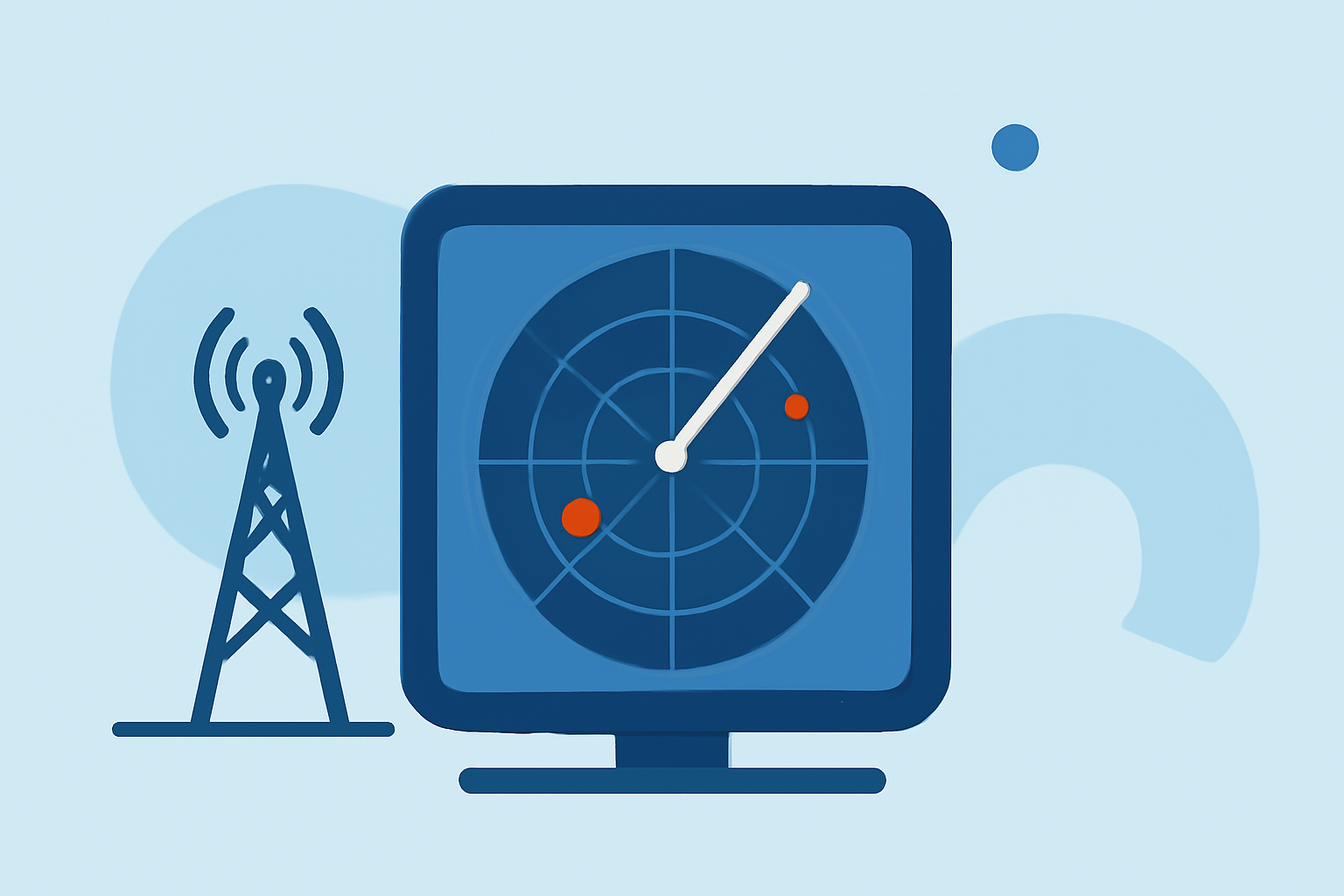
Doppler radar is a pivotal tool in meteorology, enabling the detection and analysis of precipitation and wind patterns. By emitting radio waves and measuring their reflections, Doppler radar provides critical insights into weather phenomena.
What Is Doppler Radar?
Doppler radar is a specialized radar system that utilizes the Doppler effect to measure the velocity of objects, such as raindrops or snowflakes, within a storm. By analyzing the frequency shift in the returned signal caused by the motion of these particles, Doppler radar can determine their speed and direction relative to the radar. (prod-01-alb-www-noaa.woc.noaa.gov)
How Does Doppler Radar Work?
-
Emission of Radio Waves: The radar system transmits a pulse of microwave energy toward a target, like a cloud or precipitation.
-
Reflection of Waves: The energy encounters particles in the atmosphere, such as raindrops or snowflakes, which scatter the energy in all directions.
-
Reception of Reflected Signal: A portion of the scattered energy is reflected back toward the radar.
-
Analysis of Frequency Shift: The radar measures the frequency change (Doppler shift) in the returned signal, which indicates the velocity of the particles moving toward or away from the radar. (prod-01-alb-www-noaa.woc.noaa.gov)
Key Components of Doppler Radar Data:
-
Reflectivity: Indicates the intensity of precipitation, helping to assess the severity of storms.
-
Velocity: Shows the speed and direction of precipitation particles, aiding in the detection of wind patterns and rotation within storms.
-
Spectrum Width: Measures the variability in velocity, providing insights into turbulence and wind shear. (nssl.noaa.gov)
Applications of Doppler Radar:
-
Severe Weather Detection: Identifies rotation within storms, such as mesocyclones, which can lead to tornadoes.
-
Precipitation Measurement: Assesses rainfall rates and snowfall amounts, contributing to flood forecasting.
-
Wind Analysis: Monitors wind patterns, including wind shear, which is crucial for aviation safety.
Limitations of Doppler Radar:
While Doppler radar is invaluable, it has certain limitations:
-
Range Constraints: The maximum distance a radar pulse can travel and return before the next pulse is transmitted is limited, affecting the detection range. (nssl.noaa.gov)
-
Beam Blockage: Obstructions like mountains or buildings can block the radar beam, leading to areas of no data.
-
Vertical Resolution: The radar's ability to detect vertical features, such as tornadoes, depends on the elevation angle of the beam.
Conclusion:
Doppler radar is a cornerstone in modern meteorology, offering real-time data on precipitation and wind patterns. Its ability to detect severe weather phenomena enhances forecasting accuracy and public safety.
For a visual explanation of Doppler radar, you might find this video helpful: