
Understanding Doppler Velocity Maps in Under 5 Minutes
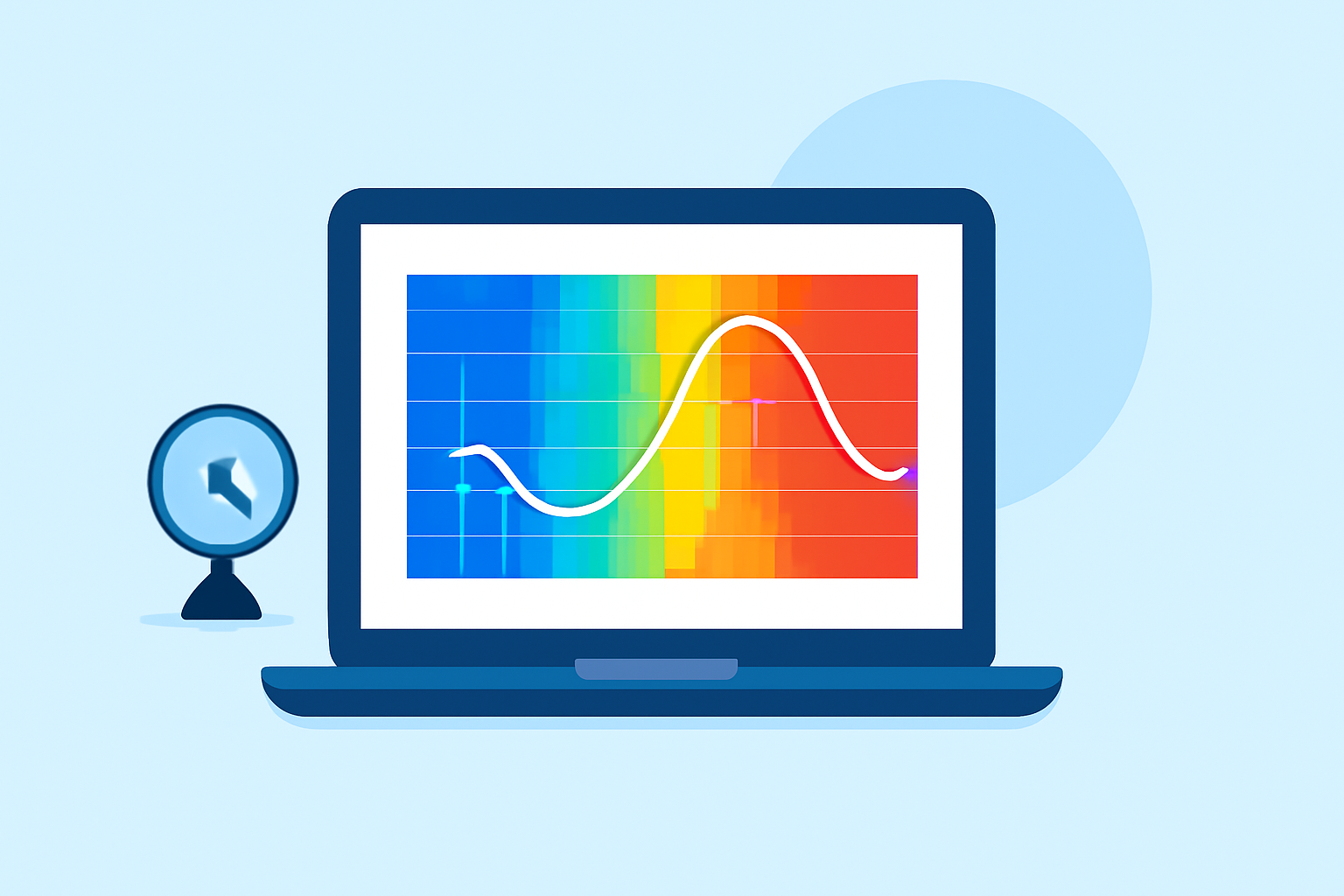
Doppler velocity maps are essential tools in meteorology, providing insights into wind patterns and atmospheric movements. By analyzing the frequency shifts in radar signals caused by moving particles, these maps help meteorologists understand weather dynamics.
What Are Doppler Velocity Maps?
Doppler velocity maps display the speed and direction of particles within the atmosphere. When particles move toward the radar, they cause a frequency shift in the returned signal; when they move away, the shift is in the opposite direction. This shift, known as the Doppler effect, allows for the measurement of radial velocities, indicating how fast particles are moving toward or away from the radar. (research.atmos.ucla.edu)
How Do Doppler Velocity Maps Work?
Radar systems emit pulses of electromagnetic waves that scatter off atmospheric particles. The returning signals are analyzed to determine the velocity of these particles. In Doppler velocity maps, colors represent different velocities:
-
Red and Orange: Indicate motion away from the radar.
-
Blue and Green: Indicate motion toward the radar.
This color coding helps meteorologists quickly assess wind patterns and identify phenomena like convection or gravity waves. (psl.noaa.gov)
Applications of Doppler Velocity Maps
Doppler velocity maps are instrumental in various meteorological applications:
-
Weather Forecasting: They provide real-time data on wind speeds and directions, aiding in accurate weather predictions.
-
Severe Weather Detection: By identifying rotation patterns, these maps help in detecting tornadoes and other severe weather events.
-
Climate Research: Long-term data from Doppler velocity maps contribute to understanding climate patterns and changes.
Clime's Role in Doppler Velocity Mapping
Clime leverages advanced Doppler velocity mapping technology to offer precise and timely weather data. By integrating this technology, Clime provides users with detailed insights into atmospheric conditions, enhancing decision-making processes in sectors like agriculture, aviation, and emergency management.
Conclusion
Doppler velocity maps are vital for comprehending atmospheric movements and weather patterns. Clime's utilization of this technology ensures that users receive accurate and actionable weather information, supporting informed decisions across various industries.