
Understanding the Impact of Freezing Rain on Airport Operations
Introduction
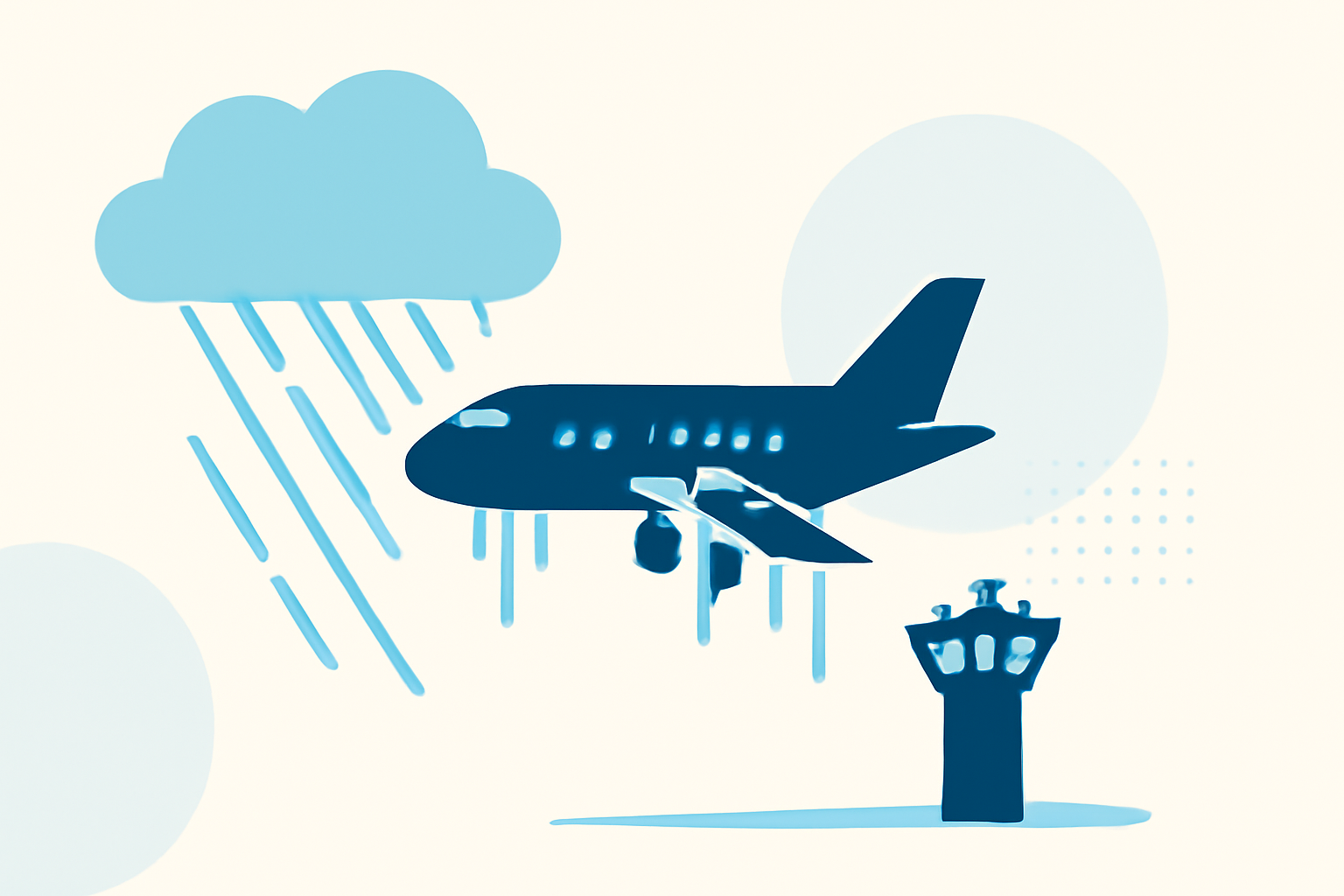
Freezing rain is a meteorological phenomenon where supercooled liquid droplets freeze upon contact with surfaces at or below 0°C (32°F). This results in a layer of ice accumulation, which can severely disrupt airport operations and pose safety hazards to both aircraft and ground personnel.
How Does Freezing Rain Affect Airport Operations?
-
Aircraft Performance
-
Icing on Aircraft Surfaces: Ice accumulation on critical surfaces such as wings and tailplanes alters the aircraft's aerodynamics, leading to reduced lift and increased drag. This degradation can result in higher stall speeds and compromised control, making takeoff and landing maneuvers more challenging. (skybrary.aero)
-
De-icing Limitations: While de-icing procedures are standard, freezing rain can overwhelm these systems. The rapid rate of ice accretion may outpace the de-icing capabilities, necessitating frequent reapplication and potentially leading to delays or cancellations. (aviation.direct)
-
-
Ground Operations
-
Runway and Taxiway Conditions: The formation of ice on runways and taxiways significantly reduces friction, increasing the risk of aircraft skidding during takeoff, landing, and taxiing. This necessitates continuous runway treatment and can lead to operational delays. (aviationpros.com)
-
Vehicle Mobility: Ground support vehicles, including de-icing trucks and baggage tugs, may struggle to navigate icy surfaces, leading to operational inefficiencies and potential safety hazards. (avmet.navcanada.ca)
-
-
Operational Delays and Cancellations
-
Flight Schedule Disruptions: The combination of aircraft de-icing requirements and hazardous runway conditions often leads to significant delays and cancellations. Airlines may preemptively cancel flights to ensure passenger safety, leading to widespread travel disruptions. (nationalgeographic.com)
-
Airport Closures: In severe cases, airports may temporarily close to allow for comprehensive de-icing operations and to ensure the safety of all personnel and passengers. (aviation.direct)
-
Mitigation Strategies
-
Enhanced Weather Forecasting
- Advanced Monitoring: Utilizing sophisticated meteorological tools to predict freezing rain events can enable airports to prepare in advance, allocating resources and adjusting schedules accordingly. (avmet.navcanada.ca)
-
Proactive De-icing Procedures
- Timely Application: Implementing de-icing treatments before aircraft encounter freezing rain can reduce ice accumulation rates, though continuous monitoring is essential due to the rapid nature of ice formation. (aviationpros.com)
-
Infrastructure Preparedness
- Runway Maintenance: Regularly applying anti-icing agents and ensuring efficient snow and ice removal systems are in place can help maintain runway safety during freezing rain events. (aviationpros.com)
-
Passenger Communication
- Timely Updates: Keeping passengers informed about potential delays or cancellations due to freezing rain can help manage expectations and reduce frustration. (nationalgeographic.com)
Conclusion
Freezing rain presents significant challenges to airport operations, affecting aircraft performance, ground handling, and overall safety. By understanding these impacts and implementing proactive mitigation strategies, airports can enhance their resilience against such adverse weather conditions, ensuring safer and more efficient operations.
Highlights:
- Challenges in air traffic due to extreme winter weather and freezing rain – Aviation.Direct, Published on Friday, February 06