
Understanding Ground-Level Ozone and Its Impact Inside Your Car
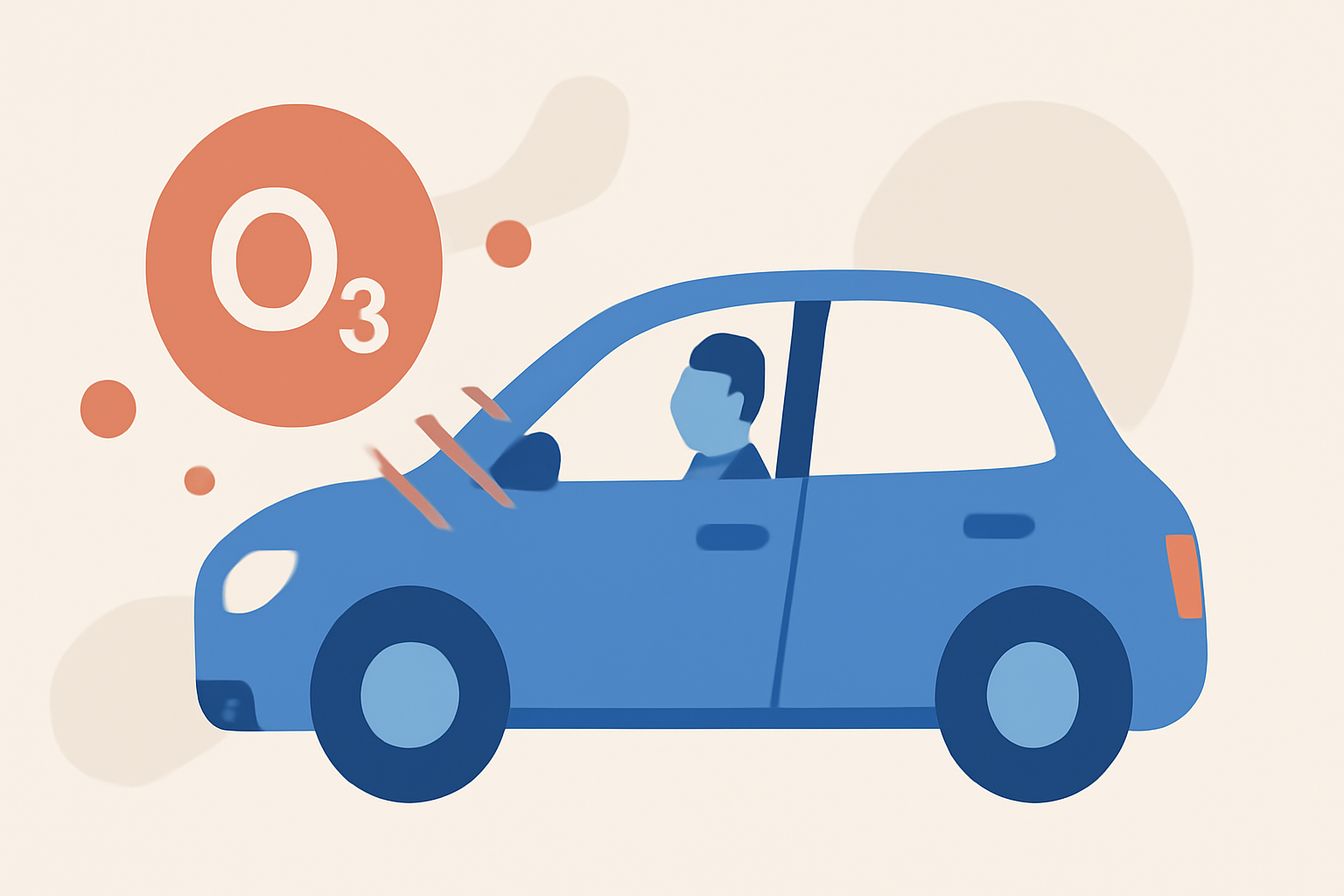
Ground-level ozone is a harmful air pollutant that forms when sunlight reacts with pollutants like nitrogen oxides and volatile organic compounds. This process, known as photochemical smog, is most prevalent on hot, sunny days in urban areas but can also affect rural regions due to wind transport. (epa.gov)
How Does Ground-Level Ozone Affect Health?
Breathing air containing ground-level ozone can lead to various health issues, including:
-
Respiratory Symptoms: Coughing, throat irritation, chest tightness, and shortness of breath.
-
Reduced Lung Function: Difficulty breathing deeply and easily.
-
Aggravation of Lung Diseases: Worsening of conditions like asthma, chronic bronchitis, and emphysema.
These effects can occur even in healthy individuals, but those with existing lung conditions are particularly vulnerable. (epa.gov)
Is Ground-Level Ozone Present Inside My Car?
Yes, ground-level ozone can infiltrate your vehicle, especially when driving through areas with high pollution levels. While modern cars have air filtration systems, they may not completely eliminate ozone from the cabin air.
How Can I Reduce Exposure to Ground-Level Ozone in My Car?
To minimize your exposure to ground-level ozone while driving:
-
Check Air Quality Index (AQI): Before heading out, consult local air quality reports to determine ozone levels.
-
Limit Driving During Peak Ozone Hours: Ozone levels are typically highest in the afternoon and early evening.
-
Keep Windows Closed: This prevents outdoor ozone from entering the vehicle.
-
Use Air Conditioning: Set the system to recirculate air, which can help reduce the intake of outdoor pollutants.
-
Maintain Your Vehicle: Regular maintenance ensures that your car's air filtration system operates effectively.
What Are the Benefits of Reducing Ground-Level Ozone Exposure?
By taking steps to limit your exposure to ground-level ozone, you can:
-
Protect Your Respiratory Health: Reduce the risk of respiratory symptoms and diseases.
-
Enhance Overall Well-being: Experience fewer health-related issues associated with air pollution.
-
Contribute to Environmental Improvement: Lowering personal exposure can encourage broader efforts to reduce air pollution.
Understanding ground-level ozone and its effects empowers you to make informed decisions that protect your health and the environment.