
Understanding Jet Streams and Headwinds on Long-Haul Flights
Long-haul flights, especially those crossing vast oceans or continents, are significantly influenced by atmospheric phenomena like jet streams and headwinds. Understanding these factors can provide insights into flight durations, fuel consumption, and overall travel comfort.
What Are Jet Streams?
Jet streams are narrow bands of strong winds found in the upper levels of the atmosphere, typically between 30,000 and 40,000 feet—the cruising altitude for most commercial aircraft. They flow predominantly from west to east and can reach speeds up to 275 mph (443 km/h). These high-altitude winds are primarily formed due to the uneven heating of the Earth's surface, creating temperature gradients that drive air movement. (flysafe.zone)
How Do Jet Streams Affect Flight Times?
The impact of jet streams on flight durations is most noticeable on eastbound and westbound routes:
-
Eastbound Flights: Aircraft can take advantage of the jet stream's tailwinds, leading to faster ground speeds and shorter flight times. For instance, a flight from New York to London can be significantly quicker when aligned with the jet stream. (flysafe.zone)
-
Westbound Flights: Conversely, flying against the jet stream's headwinds can slow down aircraft, resulting in longer flight durations and increased fuel consumption. This is why westbound transatlantic flights often take more time than their eastbound counterparts. (scienceinsights.org)
What Are Headwinds and How Do They Impact Flights?
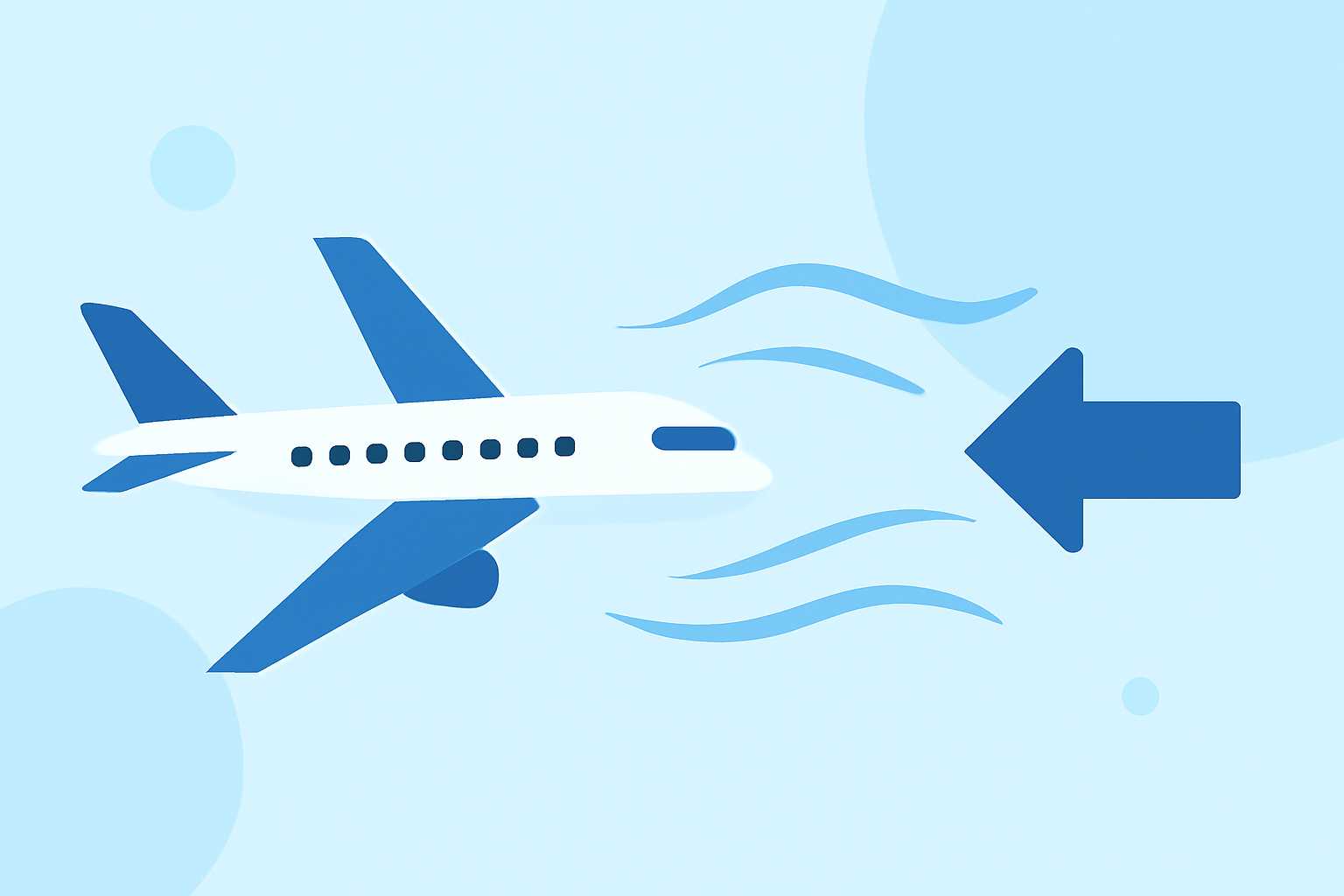
Headwinds are winds that blow directly opposite to an aircraft's direction of travel. When planes encounter strong headwinds, they experience reduced ground speeds, leading to longer flight times and higher fuel consumption. Airlines often adjust flight paths to minimize the impact of headwinds, sometimes flying longer routes to avoid the strongest wind currents. (slashgear.com)
How Do Jet Streams Affect Fuel Consumption?
The presence of jet streams can significantly influence fuel efficiency:
-
Tailwinds: On eastbound flights, tailwinds from the jet stream can reduce fuel consumption by increasing ground speed without requiring additional engine power.
-
Headwinds: On westbound flights, headwinds necessitate more engine power to maintain desired speeds, leading to higher fuel usage. (quartzmountain.org)
How Do Jet Streams Affect Turbulence?
Jet streams are associated with clear-air turbulence (CAT), which occurs when an aircraft encounters sudden changes in wind speed or direction. This type of turbulence is often unpredictable and can be more severe near the boundaries of jet streams. Pilots monitor jet stream patterns to anticipate and navigate around areas of potential turbulence, enhancing passenger comfort. (skybrary.aero)
How Do Airlines Plan Routes Considering Jet Streams?
Airlines utilize sophisticated flight planning tools to optimize routes based on current jet stream positions and strengths. For eastbound flights, they aim to align with the jet stream to benefit from tailwinds, while for westbound flights, they may adjust routes to avoid strong headwinds. This dynamic planning helps in reducing flight times and fuel consumption. (boltflight.com)
How Can Planes Live Enhance Your Travel Experience?
Understanding the complexities of jet streams and headwinds can be challenging. Planes Live offers real-time flight tracking and detailed information on flight paths, including how they interact with jet streams. By using Planes Live, travelers can gain insights into their flight's route, expected arrival times, and potential delays caused by atmospheric conditions. This transparency allows passengers to plan accordingly and stay informed throughout their journey.
In conclusion, jet streams and headwinds play a crucial role in shaping the dynamics of long-haul flights. By leveraging tools like Planes Live, travelers can enhance their understanding and experience of air travel.