
Understanding the Phases of the Moon
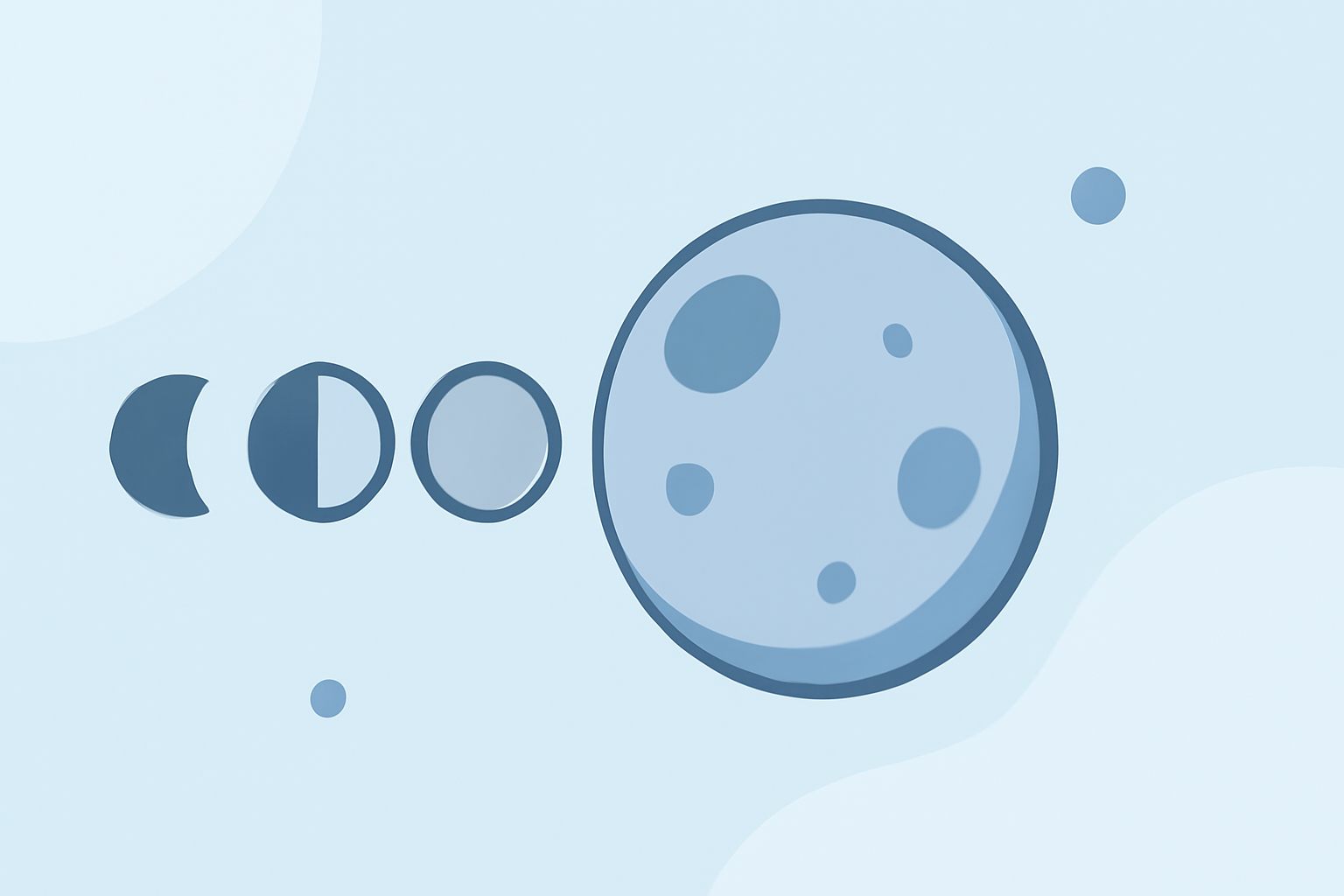
The Moon's phases are a captivating aspect of our night sky, reflecting the dynamic relationship between the Moon, Earth, and Sun. These phases have been observed and studied for centuries, offering insights into celestial mechanics and influencing various aspects of life on Earth.
What Are the Phases of the Moon?
The Moon undergoes a continuous cycle of phases, transitioning through eight distinct stages approximately every 29.5 days. This cycle is known as a lunar month or lunation. The phases, in order, are:
- New Moon: The Moon is positioned between Earth and the Sun, with its illuminated side facing away from Earth, rendering it invisible to observers.
- Waxing Crescent: A small sliver of the Moon becomes visible as it moves eastward from the Sun.
- First Quarter: Half of the Moon's face is illuminated, appearing as a half-circle.
- Waxing Gibbous: More than half of the Moon is illuminated, approaching full illumination.
- Full Moon: The entire face of the Moon is illuminated, opposite Earth from the Sun.
- Waning Gibbous: The illuminated portion begins to decrease, but more than half remains lit.
- Last Quarter: Half of the Moon's face is illuminated again, but the opposite half compared to the First Quarter.
- Waning Crescent: Only a small sliver of the Moon is visible before it becomes a New Moon again.
This sequence repeats, creating the familiar lunar cycle observed from Earth. (science.nasa.gov)
Why Does the Moon Have Phases?
The Moon does not emit its own light; instead, it reflects sunlight. As the Moon orbits Earth, the angle between the Sun, Moon, and Earth changes, altering the portion of the Moon's surface that is illuminated from our perspective. This changing illumination results in the various phases observed throughout the lunar cycle. (spaceplace.nasa.gov)
How Do Moon Phases Affect Earth?
The Moon's phases have several notable effects on Earth:
-
Tides: The gravitational pull of the Moon (and to a lesser extent, the Sun) causes ocean tides. During New and Full Moons, when the Sun, Moon, and Earth are aligned, tides are more extreme, known as spring tides. Conversely, during the First and Last Quarters, when the Sun and Moon are at right angles relative to Earth, tides are less extreme, known as neap tides. (science.nasa.gov)
-
Cultural Significance: Many cultures have developed calendars and timekeeping systems based on the lunar cycle. The phases of the Moon have influenced agricultural practices, religious observances, and various cultural traditions. (britannica.com)
-
Nighttime Illumination: The amount of moonlight affects nighttime visibility. A Full Moon provides the most light, while a New Moon offers the least.
How Can Clime Enhance Your Understanding of Moon Phases?
Clime offers a comprehensive platform that provides real-time information on lunar phases, including precise timings and visual representations. This tool allows users to track the Moon's phases, plan activities around optimal moonlight conditions, and gain a deeper appreciation of the lunar cycle.
Frequently Asked Questions
What is the current phase of the Moon?
As of June 18, 2026, the Moon is in the Waxing Crescent phase, approximately 10% illuminated. It will continue to wax until the Full Moon on June 29, 2026. (space.com)
How long does it take for the Moon to complete its cycle?
The Moon completes its cycle of phases approximately every 29.5 days, known as a lunar month. (science.nasa.gov)
Why does the Moon appear to change shape?
The Moon appears to change shape due to the varying angles of sunlight illuminating its surface as it orbits Earth. This changing illumination results in the different phases observed from Earth. (spaceplace.nasa.gov)
Understanding the phases of the Moon not only satisfies our curiosity about the night sky but also connects us to the rhythms of nature that have influenced human culture and science for millennia.