
Understanding Moon Phases: A Beginner's Guide
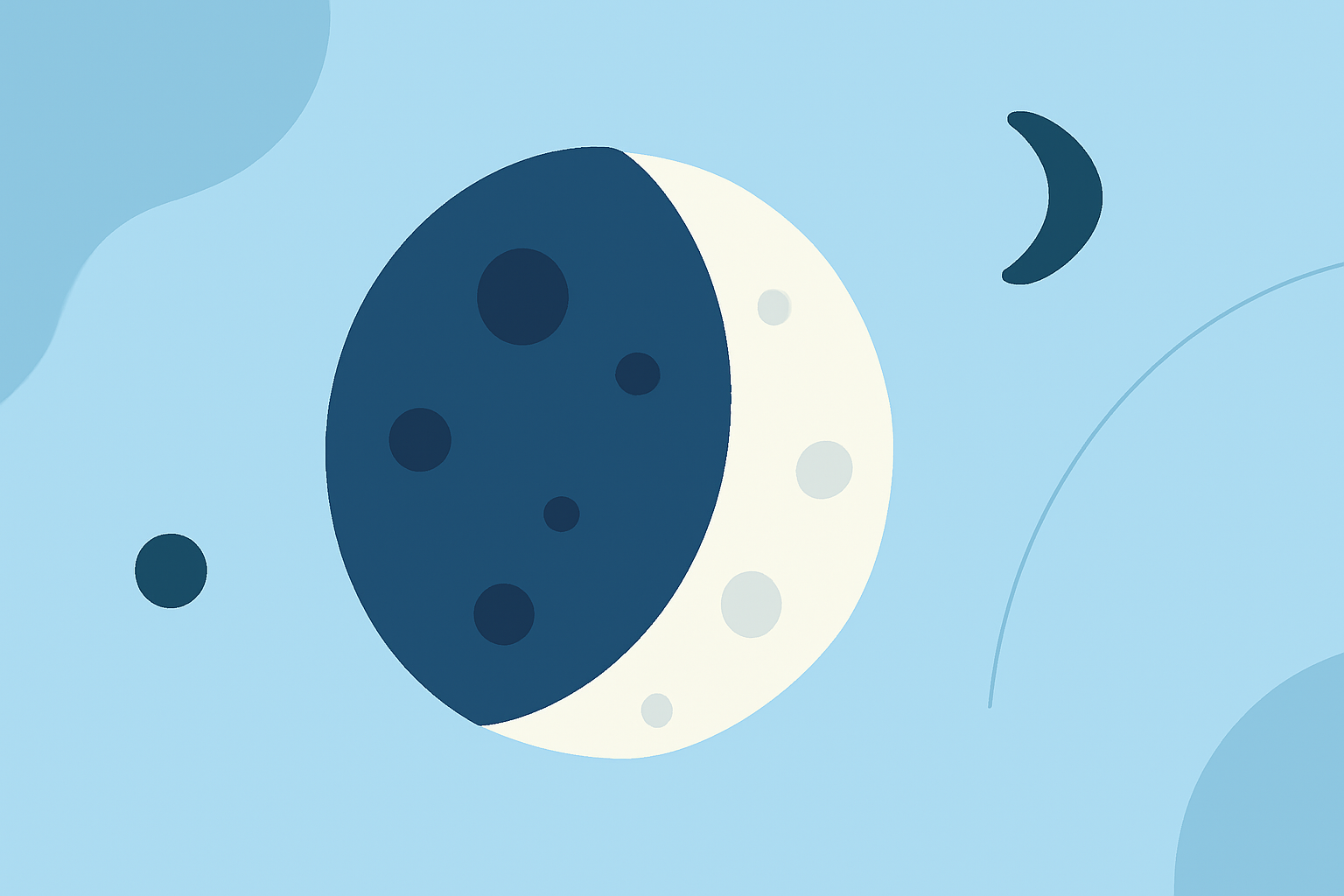
The Moon's changing appearance has fascinated humanity for centuries. Its cycle of phases—from the New Moon to the Full Moon and back—occurs over approximately 29.5 days. This journey is a result of the Moon's orbit around Earth and the varying angles between the Sun, Earth, and Moon.
What Are the Eight Phases of the Moon?
The lunar cycle consists of eight distinct phases:
- New Moon: The Moon is positioned between Earth and the Sun, making it invisible from Earth.
- Waxing Crescent: A small sliver of the Moon becomes visible as it moves away from the Sun.
- First Quarter: Half of the Moon is illuminated, appearing as a half-circle.
- Waxing Gibbous: More than half of the Moon is illuminated, approaching fullness.
- Full Moon: The entire face of the Moon is illuminated, opposite the Sun.
- Waning Gibbous: The illumination begins to decrease after the Full Moon.
- Last Quarter: Half of the Moon is illuminated again, but the opposite side from the First Quarter.
- Waning Crescent: Only a small crescent is visible before the cycle repeats.
These phases result from the changing angles between the Sun, Earth, and Moon as the Moon orbits Earth. At any given time, half of the Moon is illuminated by the Sun; the phases we observe depend on how much of that illuminated half is visible from Earth. (science.nasa.gov)
How to Observe the Moon's Phases
Observing the Moon's phases can be both educational and enjoyable. Here's how you can start:
- Keep a Moon Journal: Record the Moon's appearance each night, noting the phase, time, and any other observations.
- Use a Moon Phase Calendar: These calendars predict the Moon's phases for each day, helping you plan your observations.
- Engage with Interactive Tools: Online simulations and apps allow you to visualize the Moon's phases and their progression over time.
Understanding the Moon's phases not only enhances your appreciation of the night sky but also connects you to a celestial rhythm that has influenced cultures and calendars throughout history.
Highlights:
- Moon Phases - NASA Science, Published on Wednesday, February 11
- Phases of the Moon