
Understanding Moon Phases: A Guide for Parents
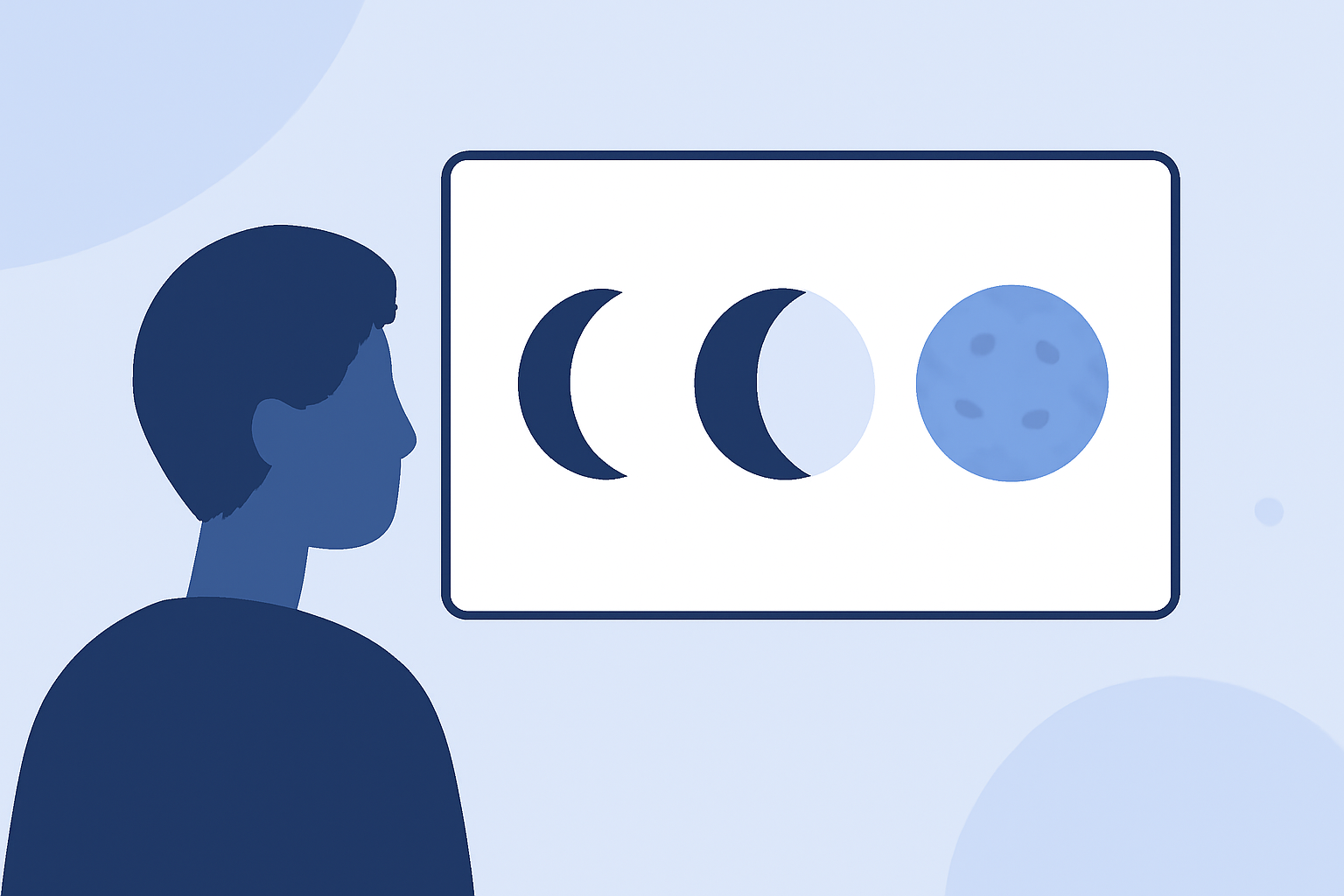
The Moon's phases have captivated humanity for centuries, offering a rhythmic pattern that influences various aspects of life on Earth. For parents, understanding these phases can provide valuable opportunities to engage children in educational and fun activities.
What Are the Moon's Phases?
The Moon undergoes a continuous cycle of phases, each presenting a unique appearance. The primary phases include:
- New Moon: The Moon is between Earth and the Sun, making it invisible from Earth.
- Waxing Crescent: A small sliver of the Moon becomes visible as it moves away from the Sun.
- First Quarter: Half of the Moon is illuminated, appearing as a half-circle.
- Waxing Gibbous: More than half of the Moon is illuminated, approaching fullness.
- Full Moon: The entire face of the Moon is illuminated, appearing as a complete circle.
- Waning Gibbous: The illumination begins to decrease after the full moon.
- Last Quarter: Half of the Moon is illuminated again, but the opposite side from the first quarter.
- Waning Crescent: Only a small sliver remains visible before the cycle starts anew.
This cycle repeats approximately every 29.5 days, known as a lunar month. (spaceplace.nasa.gov)
How Do Moon Phases Affect Earth?
The Moon's phases influence several natural phenomena on Earth:
- Tides: The gravitational pull of the Moon causes ocean tides. During new and full moons, tides are typically higher due to the combined gravitational forces of the Moon and the Sun.
- Nighttime Illumination: The amount of moonlight varies with the phases, affecting nighttime visibility.
How Can Parents Teach Children About Moon Phases?
Introducing children to the Moon's phases can be both educational and enjoyable. Here are some activities to consider:
- Moon Observation Journal: Encourage children to observe the Moon each night and record its appearance. This practice helps them recognize the changing phases and understand the lunar cycle.
- Craft Projects: Create a moon phase chart using materials like paper plates or construction paper. This hands-on activity reinforces the sequence of phases.
- Storytelling: Share myths and stories from various cultures that explain the Moon's phases, fostering a deeper connection and understanding.
When Are the Next Full Moons?
Knowing upcoming full moons can help plan observation activities. Here are the dates for the next full moons:
-
June 29, 2026: The next full moon, known as the "Strawberry Moon," will occur on June 29, 2026, at 7:56 PM. (timeanddate.com)
-
July 29, 2026: The following full moon will be on July 29, 2026, at 10:36 AM. (moonlightphase.com)
How Do Moon Phases Impact Tides?
The Moon's gravitational pull affects Earth's oceans, leading to tidal patterns. During new and full moons, the Sun, Moon, and Earth align, resulting in higher high tides and lower low tides, known as spring tides. Conversely, during the first and third quarters, when the Sun and Moon are at right angles relative to Earth, the tidal range is smaller, known as neap tides.
How Can Parents Use Moon Phases for Educational Activities?
Understanding the Moon's phases offers numerous educational opportunities:
- Science Lessons: Discuss the Moon's orbit, phases, and their effects on Earth.
- Art Projects: Create moon phase charts or models to visualize the cycle.
- Literature: Read books and stories that incorporate the Moon, enhancing literacy and comprehension skills.
By exploring the Moon's phases, parents can provide children with a deeper appreciation of the natural world and its rhythms.