
Understanding Radar Products During Severe Weather
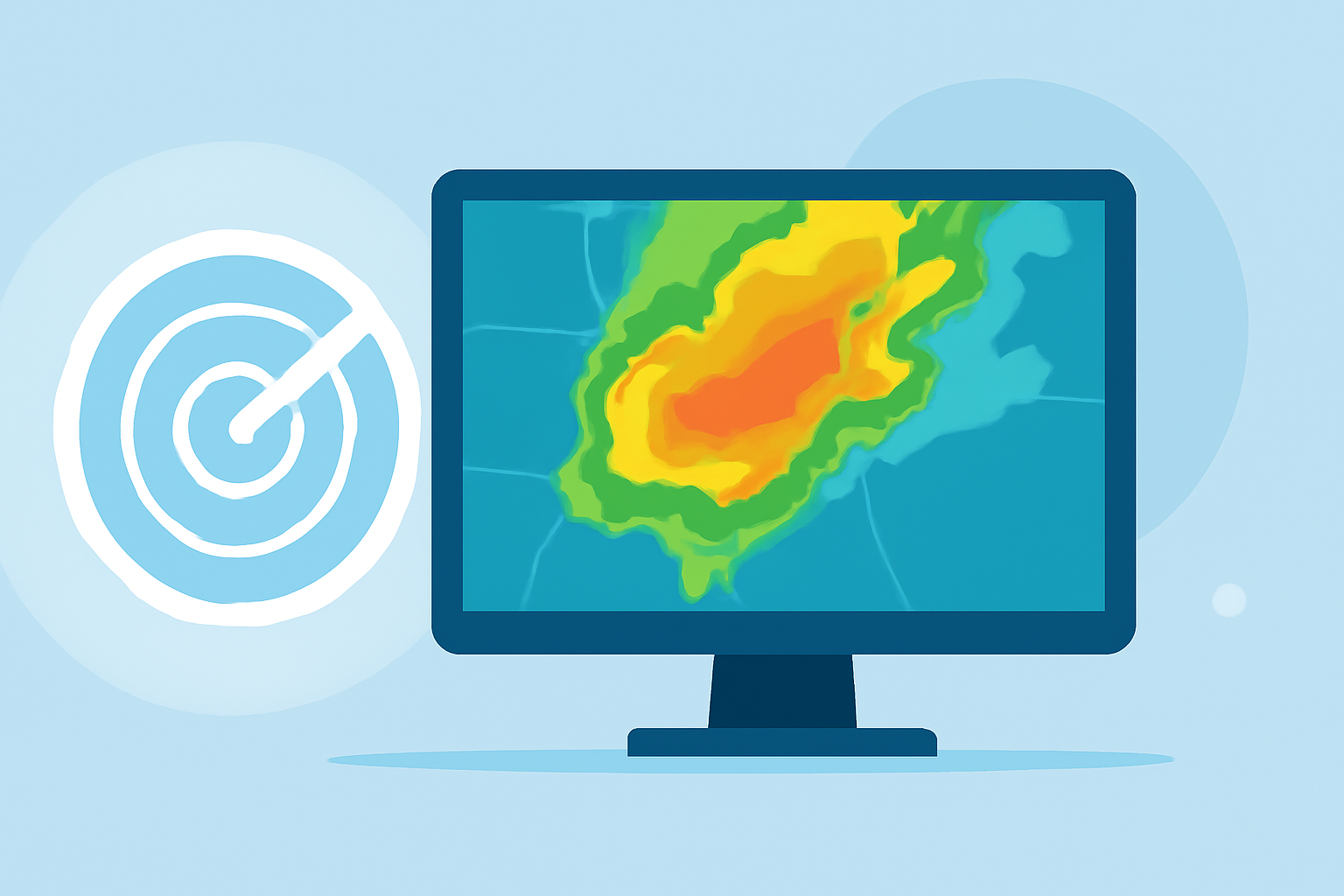
Radar technology plays a crucial role in monitoring and predicting severe weather events. By analyzing various radar products, meteorologists can assess storm intensity, movement, and potential hazards.
What Are Radar Products?
Radar products are data outputs generated by weather radar systems, providing insights into atmospheric conditions. These products are essential for detecting precipitation, evaluating storm structures, and issuing timely warnings.
Key Radar Products Used in Severe Weather Monitoring
-
Base Reflectivity: This product displays the intensity of precipitation by measuring the strength of returned radar signals. Brighter colors indicate heavier precipitation, aiding in identifying areas of intense rainfall or snowfall. (ncei.noaa.gov)
-
Base Velocity: This product measures the speed and direction of precipitation particles, helping to detect wind patterns within storms. It is instrumental in identifying rotation within thunderstorms, which can indicate potential tornado development. (ncei.noaa.gov)
-
Dual-Polarization Radar Products: These products transmit and receive radar signals in both horizontal and vertical orientations, providing more detailed information about precipitation particles. They help distinguish between different types of precipitation, such as rain, snow, or hail, and can detect non-meteorological targets like birds or insects. (weather.gov)
-
Composite Reflectivity: This product combines data from multiple radar scans to create a comprehensive image of precipitation intensity over a larger area. It is useful for assessing the overall severity of storm systems. (ncei.noaa.gov)
-
Storm Relative Motion: This product adjusts velocity data to account for the movement of the storm, providing a clearer picture of wind patterns relative to the storm's motion. It is particularly useful for identifying rotation within supercell thunderstorms. (ncei.noaa.gov)
How Radar Products Aid in Severe Weather Forecasting
By analyzing these radar products, meteorologists can:
-
Assess Storm Intensity and Structure: Understanding the strength and organization of storms helps in predicting potential hazards like hail, strong winds, or tornadoes.
-
Monitor Storm Movement: Tracking the direction and speed of storms aids in issuing timely warnings for affected areas.
-
Identify Severe Weather Threats: Detecting features like rotation within storms can lead to early tornado warnings, enhancing public safety.
Clime's Role in Severe Weather Monitoring
Clime offers advanced radar-based weather monitoring tools that provide real-time data on precipitation intensity, storm movement, and potential severe weather threats. These tools are designed to deliver accurate and timely information, supporting effective decision-making during severe weather events.
By leveraging Clime's radar products, users can stay informed about changing weather conditions, ensuring preparedness and safety during severe weather events.
Understanding and utilizing radar products is essential for effective severe weather monitoring and forecasting. Tools like Clime enhance the ability to interpret radar data, leading to better preparedness and response strategies.