
Understanding Sulfur Dioxide Levels and Their Impact on Air Quality
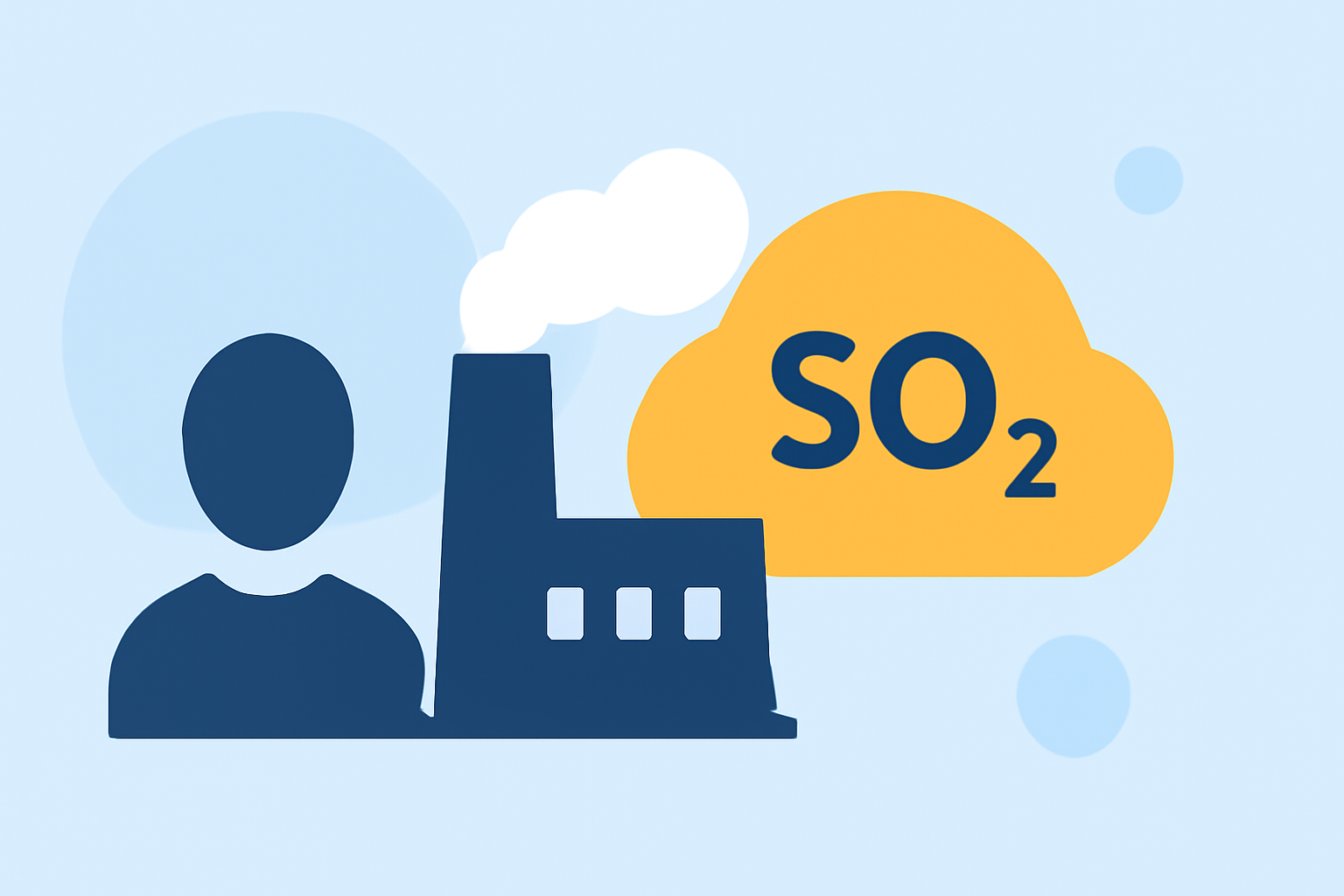
Sulfur dioxide (SO₂) is a colorless gas with a pungent odor, primarily produced by the combustion of fossil fuels in power plants and industrial processes. Elevated SO₂ levels can significantly impact air quality and human health.
What Are the Health Effects of Sulfur Dioxide Exposure?
Short-term exposure to high concentrations of SO₂ can lead to respiratory symptoms such as coughing, throat irritation, and shortness of breath. Individuals with asthma or other lung diseases may experience exacerbated symptoms. Long-term exposure can aggravate existing lung conditions and may lead to decreased lung function. The National Institute for Occupational Safety and Health (NIOSH) recommends a time-weighted average (TWA) exposure limit of 2 parts per million (ppm) over an 8-hour workday and a short-term exposure limit (STEL) of 5 ppm over a 15-minute period. (cdc.gov)
How Is Air Quality Measured?
The Air Quality Index (AQI) is a standardized tool used to communicate the quality of air and associated health risks. It considers various pollutants, including SO₂, and categorizes air quality into six levels:
- Good (0–50): Air quality is satisfactory, posing little or no risk.
- Moderate (51–100): Air quality is acceptable; however, there may be a risk for some individuals sensitive to air pollution.
- Unhealthy for Sensitive Groups (101–150): Sensitive individuals may experience health effects; the general public is less likely to be affected.
- Unhealthy (151–200): Some members of the general public may experience health effects; sensitive groups may experience more serious effects.
- Very Unhealthy (201–300): Health alert: everyone may experience more serious health effects.
- Hazardous (301 and higher): Health warning of emergency conditions: the entire population is more likely to be affected.
Each pollutant has specific concentration breakpoints that correspond to these AQI categories. For SO₂, the AQI is calculated based on 1-hour average concentrations. The U.S. Environmental Protection Agency (EPA) provides detailed AQI breakpoints for SO₂, which are used to determine the AQI value. (aqs.epa.gov)
How Is the AQI for Sulfur Dioxide Calculated?
To calculate the AQI for SO₂, follow these steps:
- Measure the SO₂ Concentration: Obtain the 1-hour average concentration of SO₂ in micrograms per cubic meter (µg/m³).
- Identify the Breakpoint Range: Find the AQI breakpoint range that includes the measured concentration.
- Apply the AQI Formula: Use linear interpolation to calculate the AQI value within the identified breakpoint range.
The formula for linear interpolation is:
AQI = ((AQI_high – AQI_low) / (C_high – C_low)) × (C – C_low) + AQI_low
Where:
- C = Measured concentration of SO₂
- C_low = Lower breakpoint concentration
- C_high = Higher breakpoint concentration
- AQI_low = AQI value corresponding to C_low
- AQI_high = AQI value corresponding to C_high
This calculation determines the AQI value that reflects the health risk associated with the measured SO₂ concentration. (scienceinsights.org)
How Can I Monitor Sulfur Dioxide Levels?
Monitoring SO₂ levels is essential for public health. The EPA and other environmental agencies provide real-time air quality data, including SO₂ concentrations and corresponding AQI values, through online platforms and mobile applications. These resources help individuals make informed decisions about outdoor activities based on current air quality conditions.
What Measures Can Be Taken to Reduce Exposure?
To minimize exposure to elevated SO₂ levels:
- Stay Informed: Regularly check local air quality reports.
- Limit Outdoor Activities: Reduce physical exertion outdoors during periods of high SO₂ concentrations.
- Create a Clean Indoor Environment: Use air purifiers and keep windows closed to reduce indoor SO₂ levels.
- Consult Health Professionals: Individuals with respiratory conditions should seek medical advice during high pollution periods.
By understanding sulfur dioxide levels and their impact on air quality, individuals can take proactive steps to protect their health and well-being.