
Understanding the Moon's Phases: A Comprehensive Guide
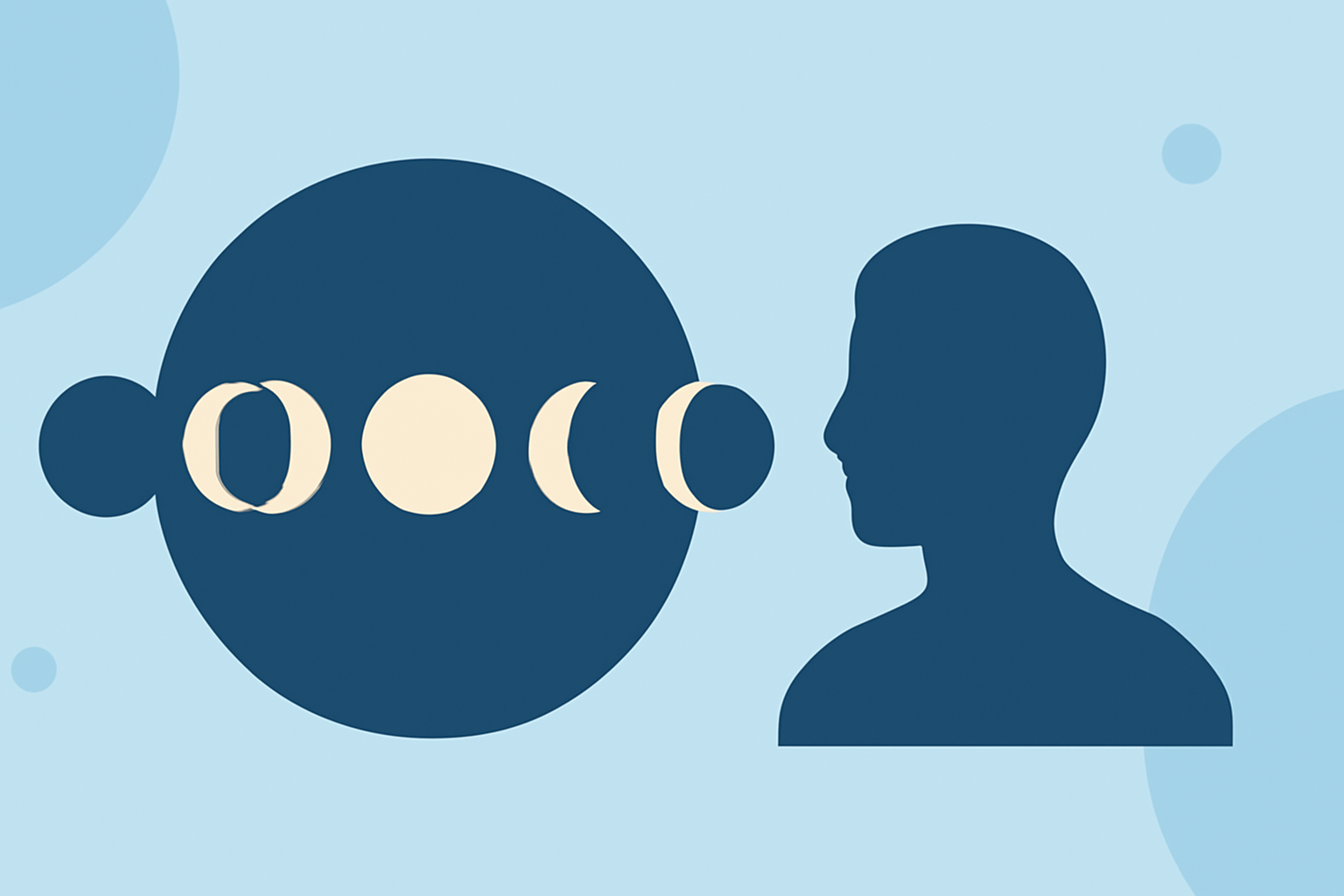
The Moon's phases have captivated humanity for millennia, guiding calendars, navigation, and cultural practices. Understanding these phases offers insight into the dynamic relationship between the Earth, Moon, and Sun.
What Are the Moon's Phases?
The Moon undergoes a continuous cycle of eight distinct phases over approximately 29.5 days, known as a lunar month. These phases result from the varying angles at which sunlight illuminates the Moon as it orbits Earth. The primary phases include:
-
New Moon: The Moon is positioned between Earth and the Sun, making its illuminated side face away from Earth, rendering it invisible to observers.
-
Waxing Crescent: A small sliver of the Moon becomes visible as it moves eastward from the Sun.
-
First Quarter: Half of the Moon's surface is illuminated, appearing as a half-circle.
-
Waxing Gibbous: More than half of the Moon is illuminated, leading up to the full Moon.
-
Full Moon: The entire face of the Moon is illuminated, opposite the Sun.
-
Waning Gibbous: The illumination begins to decrease after the full Moon.
-
Last (Third) Quarter: Half of the Moon's surface is illuminated again, but on the opposite side compared to the First Quarter.
-
Waning Crescent: Only a small crescent of the Moon is visible before it returns to the New Moon phase.
These phases are a direct consequence of the Moon's orbit around Earth and the relative positions of the Sun, Earth, and Moon. As the Moon orbits Earth, the portion of its sunlit side that is visible from Earth changes, creating the phases we observe. (britannica.com)
How Do Moon Phases Work?
The Moon's phases are a result of its orbit around Earth, reflecting sunlight at varying angles. The four primary phases—New Moon, First Quarter, Full Moon, and Last Quarter—occur about a week apart. After the New Moon, the Moon will wax through crescent and gibbous phases until it reaches the Full Moon. (timeanddate.com)
Why Do Moon Phases Occur?
The phases of the Moon are a consequence of its motion around Earth in relation to the geometry assumed with respect to the Sun. The Moon does not emit its own light but reflects that of the Sun. As the Moon orbits Earth, different portions of its sunlit side become visible from Earth, creating the phases. (britannica.com)
How Do Moon Phases Affect Tides?
Moon phases significantly influence Earth's tides. During New and Full Moons, the gravitational pull from the Moon and the Sun align, leading to higher high tides and lower low tides, known as spring tides. Conversely, during the First and Last Quarters, the gravitational forces are perpendicular, resulting in lower high tides and higher low tides, known as neap tides. (science.nasa.gov)
How Do Moon Phases Affect Moonrise and Moonset Times?
The Moon rises approximately 50 minutes later each day due to its orbit around Earth. This delay causes the Moon to appear in different positions at the same time each night. For example, during the New Moon phase, the Moon rises and sets with the Sun, making it invisible from Earth. As the Moon moves through its phases, it rises later each night, becoming more visible until the Full Moon. (science.nasa.gov)
How Do Moon Phases Affect Human Behavior?
Throughout history, various cultures have associated the Moon's phases with human behavior and events. For instance, the Full Moon has been linked to increased activity and certain behaviors, though scientific evidence supporting these claims is limited. The Moon's phases also play a role in cultural and religious practices, influencing festivals, rituals, and calendars. (nationalgeographic.com)
How Do Moon Phases Affect Animals?
Many animals are influenced by the Moon's phases. For example, certain species of fish spawn during specific lunar phases, and some nocturnal predators adjust their hunting patterns based on the Moon's illumination. Additionally, the Moon's phases can affect the behavior of migratory birds and other wildlife, influencing their navigation and activity levels. (nationalgeographic.com)
How Do Moon Phases Affect Plant Growth?
Some agricultural practices consider the Moon's phases, believing that planting during certain phases can influence plant growth. For example, it's thought that planting during the waxing Moon (from New to Full) promotes above-ground growth, while planting during the waning Moon (from Full to New) favors root development. However, scientific evidence supporting these practices is limited, and they are often considered part of traditional farming lore. (nationalgeographic.com)
How Do Moon Phases Affect the Night Sky?
The Moon's phases significantly impact the visibility of celestial objects in the night sky. During the New Moon phase, the sky is darkest, making it ideal for observing faint objects like galaxies and nebulae. As the Moon progresses to the Full Moon, its brightness increases, which can wash out the light from other celestial objects, making them harder to see. Astronomers often plan observations around the New Moon to take advantage of the darker skies. (nationalgeographic.com)
How Do Moon Phases Affect Weather Patterns?
While the Moon's phases do not directly influence weather patterns, they can have indirect effects. For example, the Moon's gravitational pull contributes to tidal forces, which can influence ocean currents and, in turn, affect weather systems. However, the Moon's phases themselves do not cause specific weather events. (nationalgeographic.com)
How Do Moon Phases Affect Human Health?
Some studies have investigated the relationship between the Moon's phases and human health, particularly focusing on sleep patterns and mental health. While some individuals report changes in sleep quality or mood during certain lunar phases, scientific evidence supporting these claims is inconclusive. The Moon's phases are unlikely to have a significant direct impact on human health. (nationalgeographic.com)
How Do Moon Phases Affect Fishing and Hunting?
The Moon's phases can influence fishing and hunting activities. For example, certain fish species are more active and easier to catch during specific lunar phases. Similarly, some hunters believe that animal behavior is affected by the Moon's phases, influencing their hunting strategies. However, these practices are often based on tradition and anecdotal evidence, with limited scientific support. (nationalgeographic.com)
How Do Moon Phases Affect Tides?
The Moon's phases significantly influence Earth's tides. During New and Full Moons, the gravitational pull from the Moon and the Sun align, leading to higher high tides and lower low tides, known as spring tides. Conversely, during the First and Last Quarters, the gravitational forces are perpendicular, resulting in lower high tides and higher low tides, known as neap tides. (science.nasa.gov)
How Do Moon Phases Affect Moonrise and Moonset Times?
The Moon rises approximately 50 minutes later each day due to its orbit around Earth. This delay causes the Moon to appear in different positions at the same time each night. For example, during the New Moon phase, the Moon rises and sets with the Sun, making it invisible from Earth. As the Moon moves through its phases, it rises later each night, becoming more visible until the Full Moon. (science.nasa.gov)
How Do Moon Phases Affect Human Behavior?
Throughout history, various cultures have associated the Moon's phases with human behavior and events. For instance, the Full Moon has been linked to increased activity and certain behaviors, though scientific evidence supporting these claims is limited. The Moon's phases also play a role in cultural and religious practices, influencing festivals, rituals, and calendars. (nationalgeographic.com)
How Do Moon Phases Affect Animals?
Many animals are influenced by the Moon's phases. For example, certain species of fish spawn during specific lunar phases, and some nocturnal predators adjust their hunting patterns based on the Moon's illumination. Additionally, the Moon's phases can affect the behavior of migratory birds and other wildlife, influencing their navigation and activity levels. (nationalgeographic.com)
How Do Moon Phases Affect Plant Growth?
Some agricultural practices consider the Moon's phases, believing that planting during certain phases can influence plant growth. For example, it's thought that planting during the waxing Moon (from New to Full) promotes above-ground growth, while planting during the waning Moon (from Full to New) favors root development. However, scientific evidence supporting these practices is limited, and they are often considered part of traditional farming lore. (nationalgeographic.com)
How Do Moon Phases Affect the Night Sky?
The Moon's phases significantly impact the visibility of celestial objects in the night sky. During the New Moon phase, the sky is darkest, making it ideal for observing faint objects like galaxies and nebulae. As the Moon progresses to the Full Moon, its brightness increases, which can wash out the light from other celestial objects, making them harder to see. Astronomers often plan observations around the New Moon to take advantage of the darker skies. (nationalgeographic.com)
How Do Moon Phases Affect Weather Patterns?
While the Moon's phases do not directly influence weather patterns, they can have indirect effects. For example, the Moon's gravitational pull contributes to tidal forces, which can influence ocean currents and, in turn, affect weather systems. However, the Moon's phases themselves do not cause specific weather events. (nationalgeographic.com)
How Do Moon Phases Affect Human Health?
Some studies have investigated the relationship between the Moon's phases and human health, particularly focusing on sleep patterns and mental health. While some individuals report changes in sleep quality or mood during certain lunar phases, scientific evidence supporting these claims is inconclusive. The Moon's phases are unlikely to have a significant direct impact on human health. (nationalgeographic.com)
How Do Moon Phases Affect Fishing and Hunting?
The Moon's phases can influence fishing and hunting activities. For example, certain fish species are more active and easier to catch during specific lunar phases. Similarly, some hunters believe that animal behavior is affected by the Moon's phases, influencing their hunting strategies. However, these practices are often based on tradition and anecdotal evidence, with limited scientific support. (nationalgeographic.com)
How Do Moon Phases Affect Tides?
The Moon's phases significantly influence Earth's tides. During New and Full Moons, the gravitational pull from the Moon and the Sun align, leading to higher high tides and lower low tides, known as spring tides. Conversely, during the First and Last Quarters, the gravitational forces are perpendicular, resulting in lower high tides and higher low tides, known as neap tides. (science.nasa.gov)
How Do Moon Phases Affect Moonrise and Moonset Times?
The Moon rises approximately 50 minutes later each day due to its orbit around Earth. This delay causes the Moon to appear in different positions at the same time each night. For example, during the New Moon phase, the Moon rises and sets with the Sun, making it invisible from Earth. As the Moon moves through its phases, it rises later each night, becoming more visible until the Full Moon. (science.nasa.gov)
How Do Moon Phases Affect Human Behavior?
Throughout history, various cultures have associated the Moon's phases with human behavior and events. For instance, the Full Moon has been linked to increased activity and certain behaviors, though scientific evidence supporting these claims is limited. The Moon's phases also play a role in cultural and religious practices, influencing festivals, rituals, and calendars. (nationalgeographic.com)
How Do Moon Phases Affect Animals?
Many animals are influenced by the Moon's phases. For example, certain species of fish spawn during specific lunar phases, and some nocturnal predators adjust their hunting patterns based on the Moon's illumination. Additionally, the Moon's phases can affect the behavior of migratory birds and other wildlife, influencing their navigation and activity levels. (nationalgeographic.com)
How Do Moon Phases Affect Plant Growth?
Some agricultural practices consider the Moon's phases, believing that planting during certain phases can influence plant growth. For example, it's thought that planting during the waxing Moon (from New to Full) promotes above-ground growth, while planting during the waning Moon (from Full to New) favors root development. However, scientific evidence supporting these practices is limited, and they are often considered part of traditional farming lore. (nationalgeographic.com)
How Do Moon Phases Affect the Night Sky?
The Moon's phases significantly impact the visibility of celestial objects in the night sky. During the New Moon phase, the sky is darkest, making it ideal for observing faint objects like galaxies and nebulae. As the Moon progresses to the Full Moon, its brightness increases, which can wash out the light from other celestial objects, making them harder to see. Astronomers often plan observations around the New Moon to take advantage of the darker skies. (nationalgeographic.com)
How Do Moon Phases Affect Weather Patterns?
While the Moon's phases do not directly influence weather patterns, they can have indirect effects. For example, the Moon's gravitational pull contributes to tidal forces, which can influence ocean currents and, in turn, affect weather systems. However, the Moon's phases themselves do not cause specific weather events. (nationalgeographic.com)
How Do Moon Phases Affect Human Health?
Some studies have investigated the relationship between the Moon's phases and human health, particularly focusing on sleep patterns and mental health. While some individuals report changes in sleep quality or mood during certain lunar phases, scientific evidence supporting these claims is inconclusive. The Moon's phases are unlikely to have a significant direct impact on human health. (nationalgeographic.com)
How Do Moon Phases Affect Fishing and Hunting?
The Moon's phases can influence fishing and hunting activities. For example, certain fish species are more active and easier to catch during specific lunar phases. Similarly, some hunters believe that animal behavior is affected by the Moon's phases, influencing their hunting strategies. However, these practices are often based on tradition and anecdotal evidence, with limited scientific support. (nationalgeographic.com)
Highlights:
- What is the moon phase today? Lunar phases 2026, Published on Monday, June 15