
Understanding the Phases of the Moon
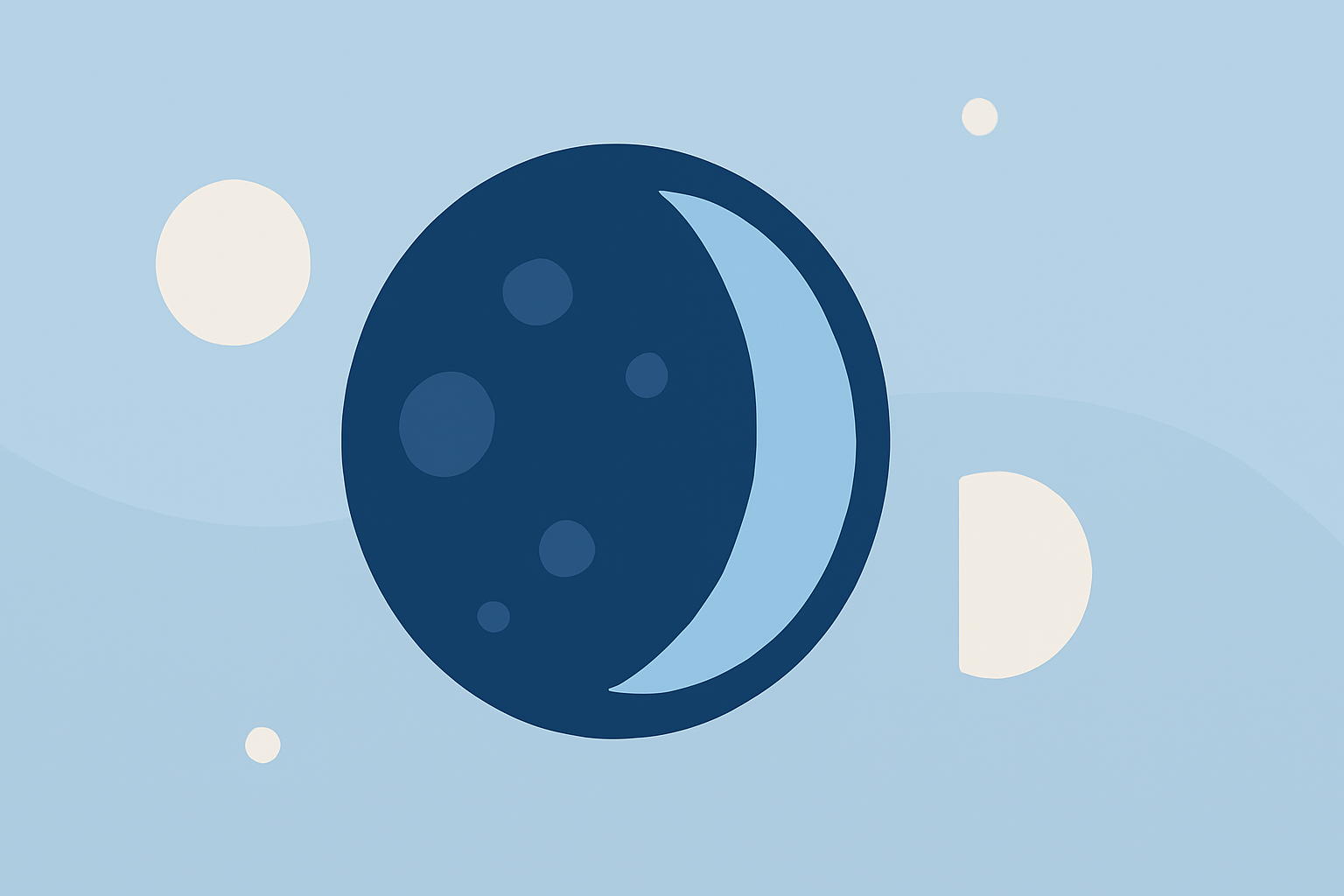
The Moon's journey through its phases is a captivating celestial event that has intrigued humanity for centuries. This cycle, known as the lunar cycle, spans approximately 29.5 days and is divided into eight distinct phases. Each phase offers a unique perspective of the Moon's illumination as it orbits Earth.
1. New Moon
The lunar cycle begins with the New Moon phase. During this time, the Moon is positioned between Earth and the Sun, causing the side illuminated by the Sun to face away from Earth. As a result, the Moon appears dark and is not visible from our vantage point. This phase marks the start of a new lunar cycle. (science.nasa.gov)
2. Waxing Crescent
Following the New Moon, the Moon enters the Waxing Crescent phase. In this phase, a small sliver of the Moon becomes visible as a crescent on the right side. The term "waxing" indicates that the illuminated portion is increasing. This phase occurs approximately 3 to 7 days after the New Moon. (science.nasa.gov)
3. First Quarter
Approximately a week after the New Moon, the Moon reaches the First Quarter phase. Here, half of the Moon's surface is illuminated, and it appears as a half-circle. Despite the term "quarter," the Moon is about halfway through its orbit around Earth. (science.nasa.gov)
4. Waxing Gibbous
In the Waxing Gibbous phase, more than half of the Moon is illuminated, but it is not yet full. The term "gibbous" comes from the Latin word for "hump," reflecting the bulging shape of the illuminated portion. This phase occurs roughly 7 to 10 days after the First Quarter. (science.nasa.gov)
5. Full Moon
The Full Moon phase occurs when the entire face of the Moon is illuminated by the Sun. This happens when the Moon is on the opposite side of Earth from the Sun, allowing us to see the fully lit side. The Full Moon is typically visible for about three days. (science.nasa.gov)
6. Waning Gibbous
After the Full Moon, the illuminated portion begins to decrease, entering the Waning Gibbous phase. The term "waning" indicates that the visible light is diminishing. This phase occurs approximately 10 to 14 days after the Full Moon. (science.nasa.gov)
7. Last Quarter
The Last Quarter phase, also known as the Third Quarter, occurs about three weeks into the lunar cycle. During this phase, half of the Moon is illuminated, but the opposite half compared to the First Quarter. The illuminated portion is now decreasing, leading up to the New Moon. (science.nasa.gov)
8. Waning Crescent
In the Waning Crescent phase, only a small sliver of the Moon is illuminated on the left side. This phase occurs in the final days before the New Moon, completing the lunar cycle. (science.nasa.gov)
Understanding the Lunar Cycle
The Moon's phases are a result of its orbit around Earth, reflecting sunlight at varying angles. This cycle repeats about once a month, approximately every 29.5 days. The phases are: New Moon, Waxing Crescent, First Quarter, Waxing Gibbous, Full Moon, Waning Gibbous, Last Quarter, and Waning Crescent. (science.nasa.gov)
Influence on Tides
The Moon's phases also influence tides on Earth. During New and Full Moons, tides are strongest due to the combined gravitational pull from the Moon and the Sun. This phenomenon is known as spring tide, characterized by higher high tides and lower low tides. (science.nasa.gov)
Visualizing the Phases
To better understand the progression of the Moon's phases, consider this illustrative example:
- New Moon: The Moon is between Earth and the Sun, and its illuminated side faces away from Earth, making it invisible.
- Waxing Crescent: A small crescent of light appears on the right side of the Moon.
- First Quarter: Half of the Moon is illuminated on the right side.
- Waxing Gibbous: More than half of the Moon is illuminated, but it is not yet full.
- Full Moon: The entire face of the Moon is illuminated.
- Waning Gibbous: The illuminated portion begins to decrease, with the left side still lit.
- Last Quarter: Half of the Moon is illuminated on the left side.
- Waning Crescent: A small crescent of light appears on the left side of the Moon.
For a visual representation of these phases, you might find the following video helpful:
Moon Phases Explained (Animations and Timelapse)
Understanding the Moon's phases not only enriches our appreciation of the night sky but also connects us to the natural rhythms that have guided human activities for millennia.
Highlights:
- What is the moon phase today? Lunar phases 2026, Published on Monday, June 15