
Understanding Urban Heat Islands and Their Impact During Heat Waves
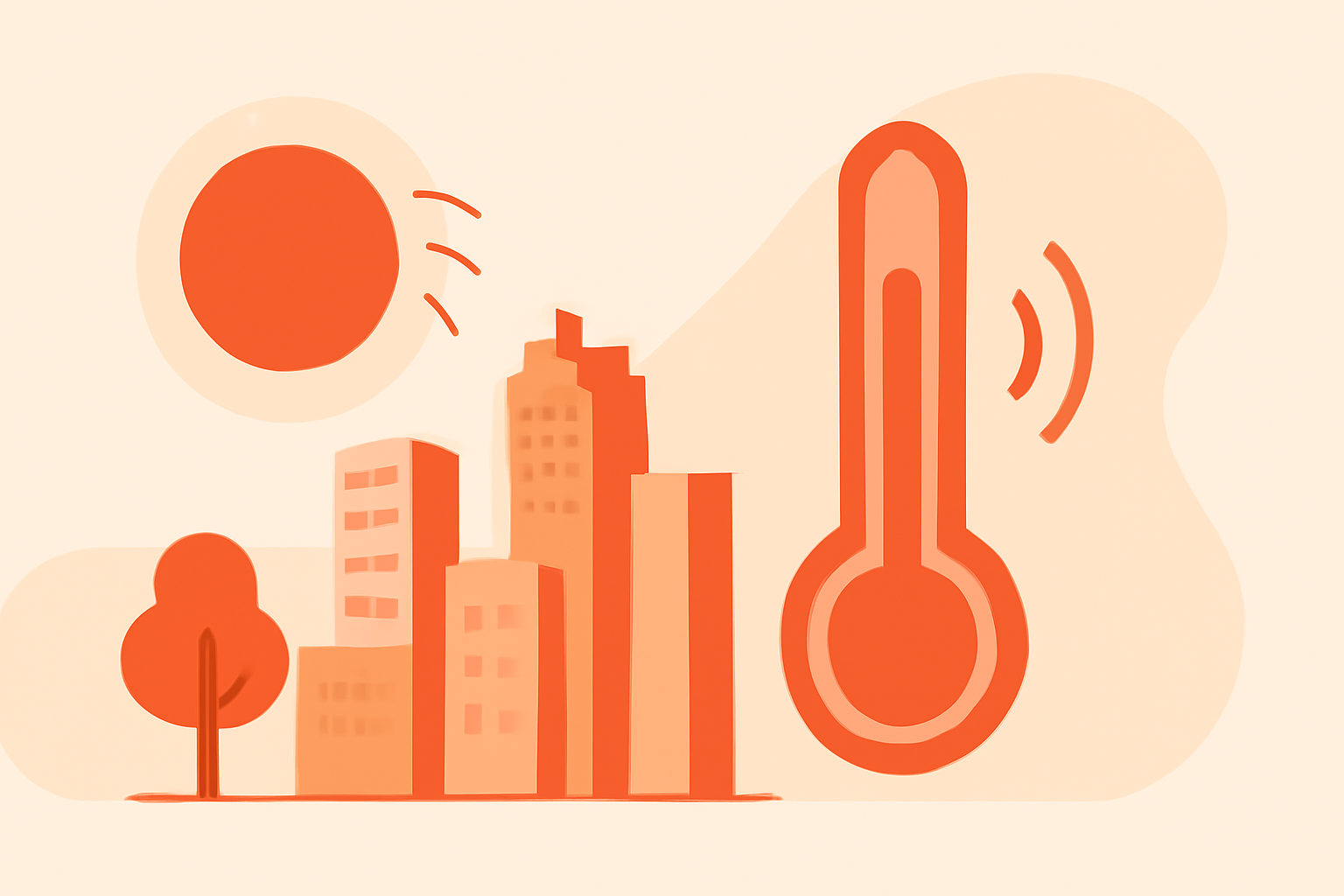
Urban heat islands (UHIs) are urbanized areas that experience higher temperatures than their rural surroundings. This phenomenon is particularly pronounced during heat waves, posing significant challenges to urban environments.
What Are Urban Heat Islands?
UHIs occur when cities and other urbanized areas have fewer natural features, like trees, vegetation, and ponds, than outlying areas. Roadways, sidewalks, and buildings absorb and retain much of the sun’s heat. This land-cover transition can result in an urban surface temperature that is higher than in a non-urban area, which is defined as a surface urban heat island (SUHI). (usgs.gov)
What Causes Urban Heat Islands?
Several factors contribute to the formation of UHIs:
-
Reduced Natural Landscapes: Urban areas often lack trees, vegetation, and water bodies, which naturally cool the environment through shade and evapotranspiration. (epa.gov)
-
Urban Material Properties: Materials like asphalt and concrete absorb and re-emit more heat than natural surfaces, leading to higher temperatures. (epa.gov)
-
Urban Geometry: The design of cities, with narrow streets and tall buildings, can trap heat and reduce airflow, exacerbating the UHI effect. (epa.gov)
-
Heat Generated from Human Activities: Vehicles, air-conditioning units, and industrial facilities emit heat, adding to the urban heat load. (epa.gov)
How Do Urban Heat Islands Affect Heat Waves?
During heat waves, UHIs can intensify the effects of extreme heat:
-
Increased Energy Consumption: Higher temperatures lead to greater use of air conditioning, raising energy demand and costs. (epa.gov)
-
Health Risks: Elevated temperatures can cause heat-related illnesses, such as heat exhaustion and heat stroke, and exacerbate cardiovascular and respiratory conditions. (epa.gov)
-
Environmental Impact: Warmer temperatures can harm aquatic life by increasing water temperatures and reducing oxygen levels. (epa.gov)
What Are the Trends in Urban Heat Islands?
The UHI effect is becoming more pronounced due to urbanization and climate change:
-
Climate Change Interaction: Rising global temperatures are expected to intensify the UHI effect, leading to more frequent and severe heat waves. (epa.gov)
-
Urbanization: As urban populations grow and natural landscapes decrease, the UHI effect is likely to strengthen. (epa.gov)
How Can the Urban Heat Island Effect Be Mitigated?
Several strategies can help reduce the severity of the UHI effect:
-
Increasing Vegetation: Planting trees and creating green spaces can provide shade and cool the environment through evapotranspiration. (epa.gov)
-
Cool Roofs and Pavements: Using reflective materials for roofs and pavements can reduce heat absorption. (epa.gov)
-
Urban Planning: Designing cities with wider streets and more open spaces can improve airflow and reduce heat retention. (epa.gov)
By understanding the causes and impacts of urban heat islands, and implementing effective mitigation strategies, cities can enhance resilience against heat waves and improve the quality of life for their residents.
Highlights:
- Millions of U.S. kids attend schools in "urban heat zones", Published on Monday, June 30
- Formerly redlined areas now are often urban heat islands, Published on Saturday, September 18
- D.C. heat island effect among worst in U.S., Published on Wednesday, July 17