
Understanding Weather Forecast Confidence Intervals for Outdoor Events
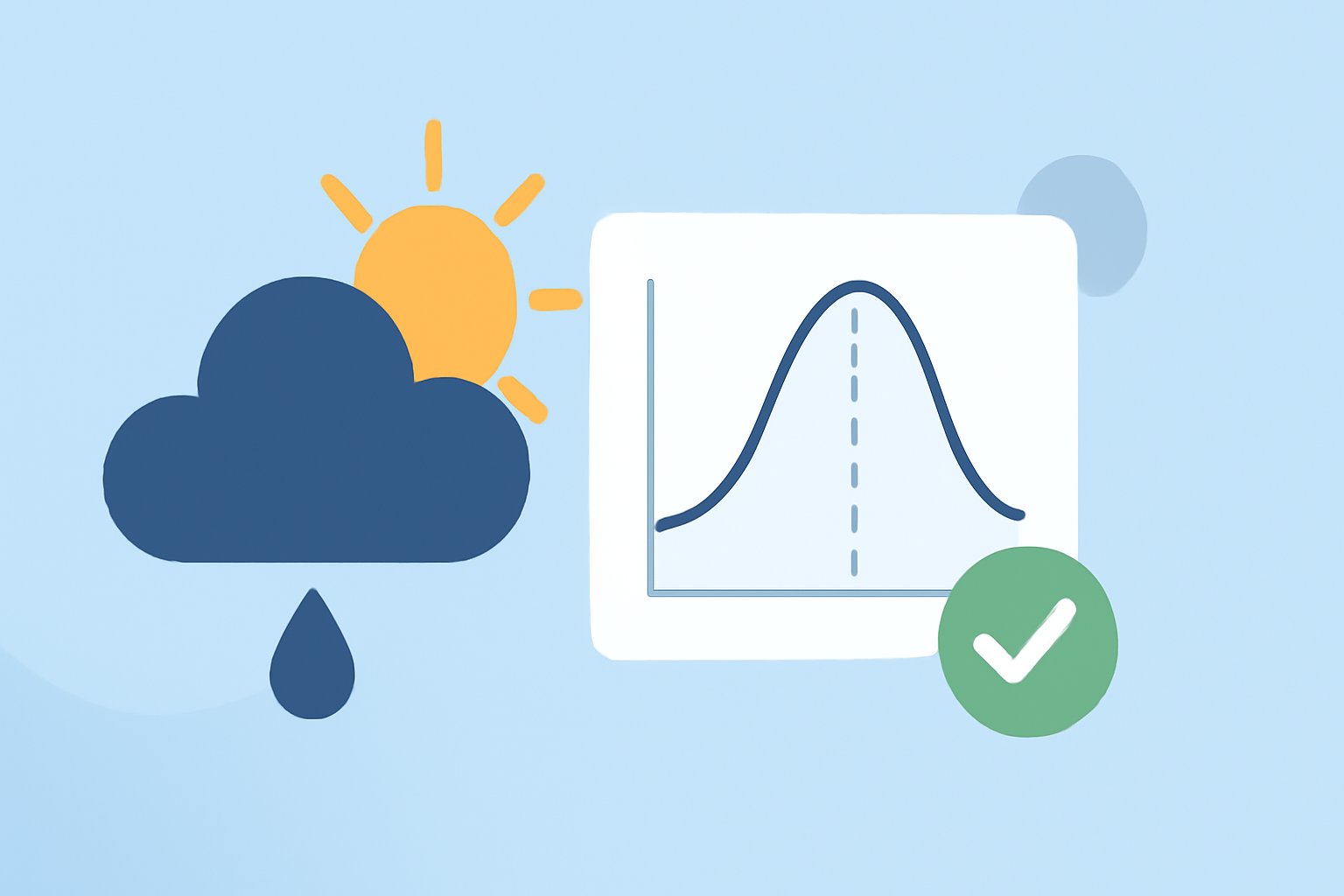
When planning outdoor events, understanding the uncertainty in weather forecasts is crucial. Weather forecasts often come with confidence intervals, which indicate the range within which the actual weather conditions are likely to fall. This article explains how to interpret these intervals to make informed decisions for your events.
What Are Confidence Intervals in Weather Forecasting?
A confidence interval in weather forecasting provides a range of possible values for a weather parameter, such as temperature or precipitation, along with the probability that the actual value will fall within that range. For example, a forecast might predict a temperature of 70°F with a 90% confidence interval of 68°F to 72°F, meaning there's a 90% chance the actual temperature will be between 68°F and 72°F. (frogcast.com)
Why Are Confidence Intervals Important for Outdoor Events?
Understanding confidence intervals helps you assess the reliability of a forecast and plan accordingly. For instance, if a forecast predicts a 30% chance of rain with a wide confidence interval, the actual conditions could vary significantly, making it challenging to decide whether to proceed with an outdoor event. Conversely, a forecast with a narrow confidence interval and a high probability of rain provides more certainty, allowing for better decision-making. (metoffice.gov.uk)
How to Interpret Confidence Intervals for Event Planning
-
Assess the Range and Probability: Examine the forecasted range and the associated probability. A narrow range with a high probability indicates high confidence in the forecast, while a wide range with a low probability suggests uncertainty.
-
Consider the Impact of Uncertainty: Evaluate how the forecast uncertainty might affect your event. For example, a 50% chance of rain with a wide confidence interval may require contingency planning, such as arranging for indoor alternatives.
-
Monitor Updates: Weather conditions can change rapidly. Regularly check for updated forecasts as your event approaches to make timely adjustments.
Practical Example
Imagine you're planning an outdoor wedding and the forecast predicts a 40% chance of rain with a confidence interval indicating temperatures between 65°F and 75°F. The wide range suggests uncertainty in both precipitation and temperature. In this scenario, it would be prudent to have a backup plan, such as securing an indoor venue or renting tents, to ensure the event proceeds smoothly regardless of the weather.
Tools and Resources
Utilizing tools that provide probabilistic forecasts can enhance your planning. These tools offer a range of possible outcomes and the likelihood of each, helping you make more informed decisions. For example, some services provide ensemble forecasts that combine multiple weather models to give a more comprehensive view of potential weather scenarios. (metoffice.gov.uk)
By understanding and interpreting weather forecast confidence intervals, you can better prepare for outdoor events, mitigate risks, and ensure a successful experience for all participants.
Highlights:
- Interpreting a 10-Day Weather Forecast for Planning and Travel - Reference.com, Published on Thursday, March 26
- How to Interpret Current Weather Forecasts for Better Planning - Ask.com, Published on Thursday, March 05
- How acccurate are personal weather station forecasts? — Davis Instruments