
Understanding Weather Radar: A Quick Guide
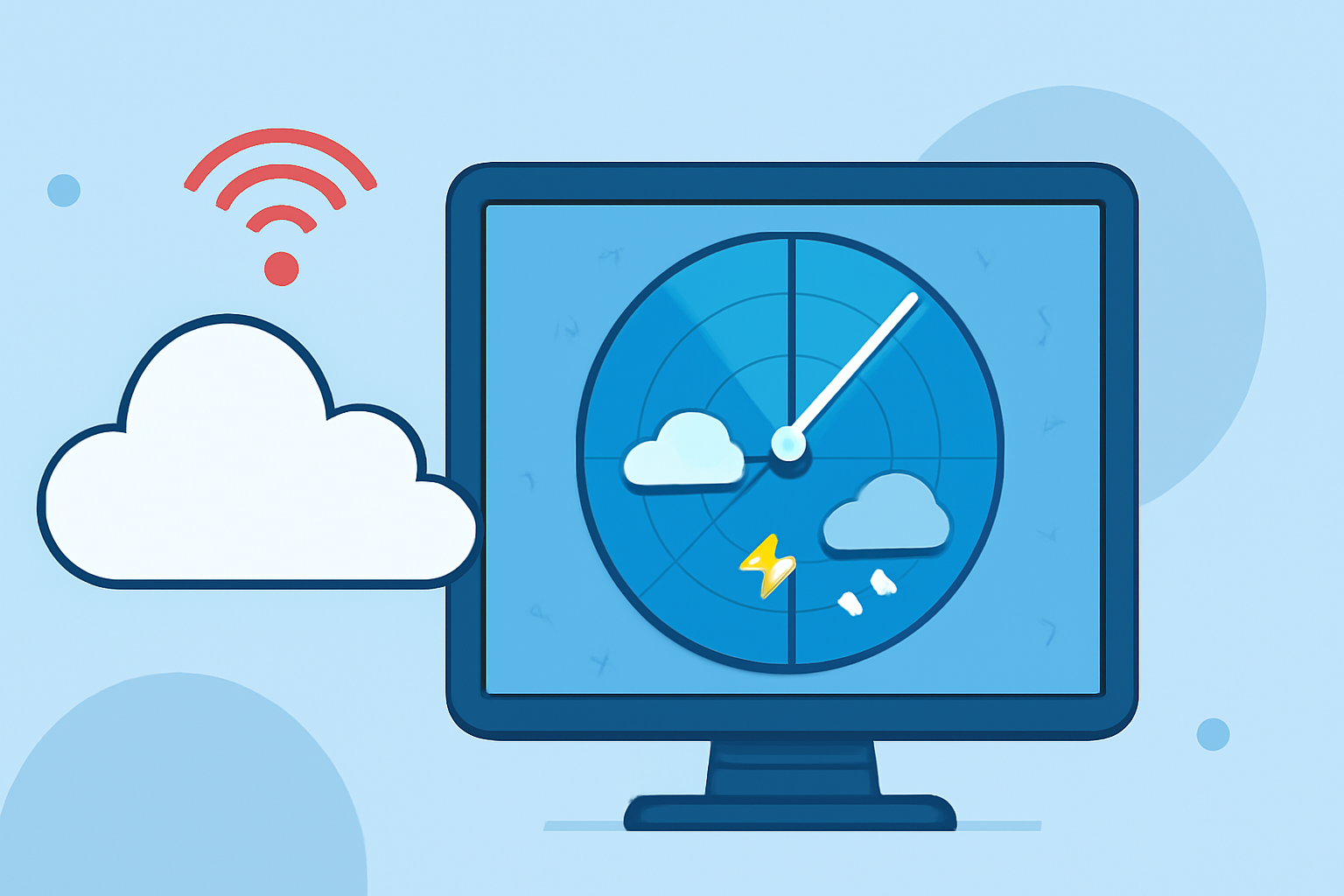
Weather radar is a crucial tool in meteorology, enabling the detection and analysis of atmospheric phenomena such as precipitation, wind patterns, and severe weather events. By emitting radio waves and analyzing their reflections, weather radars provide real-time data that aids in forecasting and public safety.
What Is Weather Radar?
Weather radar is an object detection system that uses radio waves to determine the range, altitude, direction of movement, and speed of objects. The antenna transmits pulses of radio waves or microwaves, which bounce off any object in their path. The object returns a tiny part of the wave's energy to a dish or antenna. (ncei.noaa.gov)
How Does Weather Radar Work?
Modern weather radars, known as Doppler radars, operate by transmitting pulses of radio waves and measuring the time it takes for the reflected signals to return. This process helps determine the distance to precipitation and its movement. The Doppler effect allows these radars to measure the velocity of precipitation particles, providing insights into wind speeds and directions within storms. (prod-01-alb-www-noaa.woc.noaa.gov)
Key Components of Weather Radar Systems
-
Transmitter and Receiver: These components emit and receive radio waves, respectively.
-
Antenna: Rotates to scan the atmosphere, directing the radio waves and collecting the reflected signals.
-
Signal Processor: Analyzes the received signals to determine the location, intensity, and movement of precipitation.
Types of Weather Radar
-
Doppler Radar: Measures the velocity of precipitation particles, aiding in detecting severe weather events like tornadoes and thunderstorms.
-
Dual-Polarization Radar: Introduces dual-polarization technology, allowing for more accurate identification of precipitation types and improved detection of severe weather events. (prod-01-alb-www-noaa.woc.noaa.gov)
Applications of Weather Radar
-
Precipitation Detection: Identifies and monitors rain, snow, sleet, and hail, providing data on their intensity and movement.
-
Severe Weather Monitoring: Detects severe weather phenomena such as tornadoes, thunderstorms, and hurricanes, enabling timely warnings.
-
Wind Analysis: Assesses wind patterns within storms, contributing to understanding storm dynamics and potential hazards.
Clime's Role in Weather Radar Technology
Clime leverages advanced weather radar technology to provide accurate and timely weather information. By integrating cutting-edge radar systems, Clime enhances its forecasting capabilities, offering users reliable data for various applications, from daily weather updates to severe weather alerts.
Conclusion
Understanding the basics of weather radar technology is essential for interpreting weather patterns and making informed decisions. Clime's commitment to utilizing advanced radar systems ensures that users receive precise and up-to-date weather information, supporting safety and preparedness.