
Understanding Weather's Impact on Tennis Performance
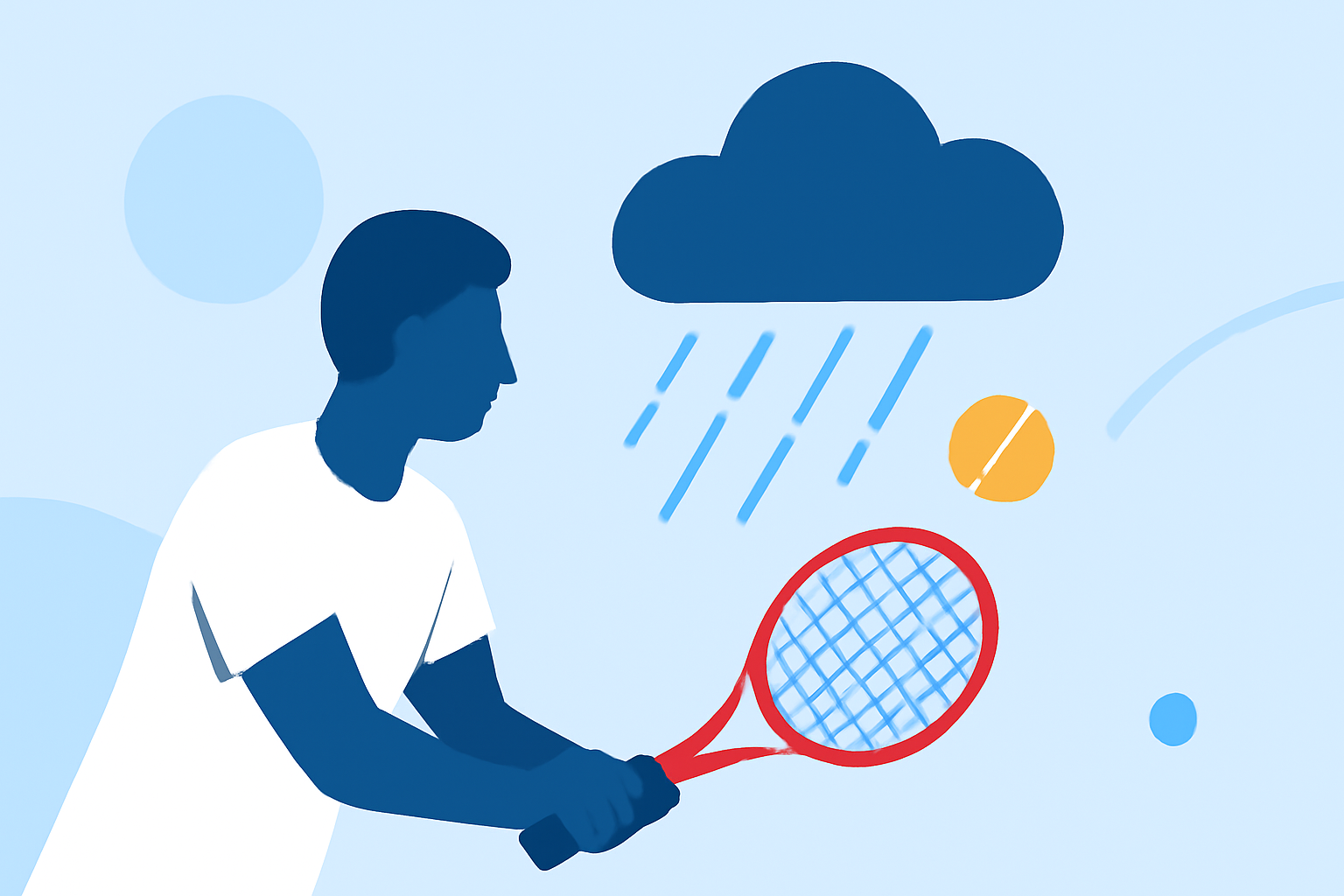
Weather conditions significantly influence tennis performance, affecting everything from ball behavior to player endurance. Understanding these impacts is crucial for players aiming to optimize their game.
How Does Temperature Affect Tennis Play?
Temperature plays a pivotal role in tennis dynamics. Warmer temperatures cause tennis balls to bounce higher and travel faster, favoring aggressive players with powerful serves. Conversely, cooler temperatures result in lower bounces and slower ball speeds, benefiting players who rely on precision and control. (tennisnerd.net)
What Role Does Humidity Play in Tennis Matches?
High humidity increases air density, causing tennis balls to move slower and reducing bounce height. This can lead to longer rallies and increased fatigue, as players exert more energy to maintain rallies. Defensive players may find these conditions advantageous, while aggressive players might struggle to hit through the heavier air. (sportbetting.ng)
How Does Wind Impact Tennis Performance?
Wind is one of the most unpredictable elements in tennis. Even a light breeze can alter the ball’s flight path, forcing players to adjust their timing and shot selection. Precision-based players who rely on flat, low-margin shots often find it difficult to maintain consistency in windy conditions. In contrast, players who use heavy topspin and tactical variety tend to adapt more easily. (epicbetarena.com)
What Are the Effects of Playing in the Rain?
Rain can halt play, as wet courts become slippery and dangerous. Even light rain can make hard courts slippery, increasing the risk of injury. Additionally, wet tennis balls bounce lower and move slower, disrupting the flow of the game. (wcpo.com)
How Does Cold Weather Affect Tennis Play?
Playing tennis in cold weather can be uncomfortable and may even risk injury if temperatures drop too low. Cold muscles increase the risk of injury, particularly strains and pulls. You may also find it harder to grip the racquet, and your range of motion can be restricted. Below 50°F (10°C): Many tennis players start feeling uncomfortable. Below 40°F (4°C): The game may become impractical for most players in these weather conditions. Below 32°F (0°C): Freezing temperatures are generally too cold for outdoor tennis. (sportsgearswag.com)
How Can Clime's Smart Display Assist Tennis Players?
Clime's smart display offers real-time weather updates, providing players with current conditions and forecasts tailored to their location. This feature enables players to plan their training sessions and matches effectively, ensuring they are prepared for any weather-related challenges. By integrating Clime's smart display into their routine, players can make informed decisions, adapt to changing conditions, and enhance their overall performance on the court.
Understanding the interplay between weather conditions and tennis performance is essential for players seeking to maintain a competitive edge. Utilizing tools like Clime's smart display can provide valuable insights, allowing players to adapt their strategies and training to the ever-changing elements of the game.