
Getting Started with Weather-Aware Packing During Heat Waves
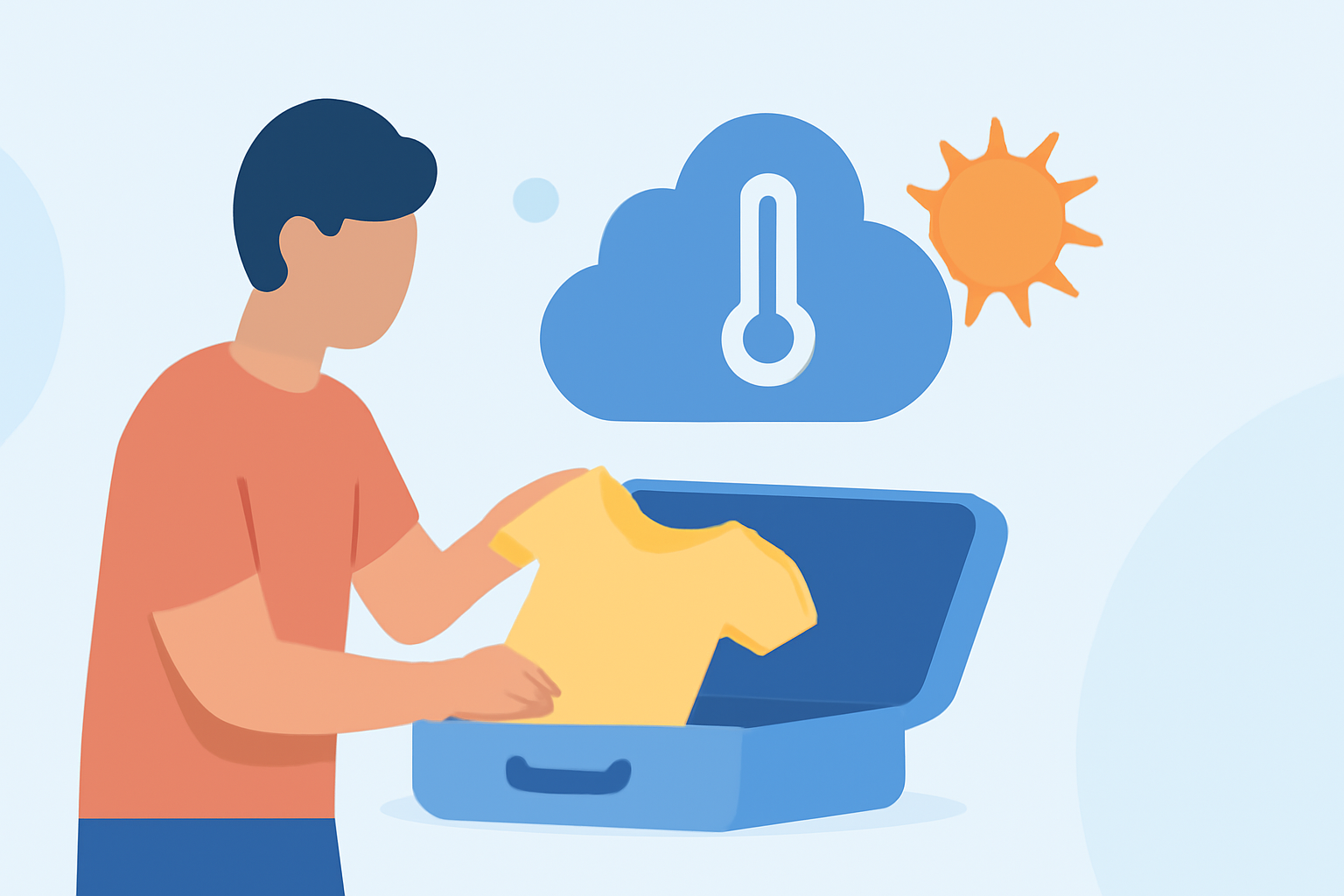
Heat waves are becoming more frequent and intense, posing significant health risks. Being prepared with the right clothing and accessories can make a substantial difference. Here's how to pack effectively for extreme heat.
1. What Should I Wear During a Heat Wave?
Opt for loose-fitting, lightweight, and light-colored clothing. These materials allow your body to breathe and reflect sunlight, keeping you cooler. Avoid dark colors, as they absorb heat. Materials like cotton and linen are excellent choices. Additionally, wear a wide-brimmed hat to shield your face and neck from direct sunlight. (epa.gov)
2. How Can I Stay Hydrated?
Dehydration is a common concern during heat waves. Carry a reusable water bottle and drink water regularly, even if you don't feel thirsty. Avoid alcohol and caffeine, as they can lead to dehydration. Including electrolyte-rich drinks can also help maintain your body's balance. (epa.gov)
3. What Accessories Are Essential?
Consider packing a portable fan or a cooling towel to help regulate your body temperature. Sunscreen with a high SPF is crucial to protect your skin from harmful UV rays. Sunglasses with UV protection will shield your eyes from glare and potential damage. If you have sensitive skin, a lightweight, long-sleeved shirt can provide additional protection. (epa.gov)
4. How Can I Protect My Health?
Be aware of the symptoms of heat-related illnesses, such as dizziness, nausea, and rapid heartbeat. If you experience these symptoms, seek shade, hydrate, and rest. It's advisable to limit outdoor activities during peak heat hours, typically between 10 a.m. and 4 p.m. If you must be outside, take frequent breaks in the shade. (epa.gov)
5. How Can I Prepare My Home?
Ensure your air conditioning system is functioning properly. If you don't have air conditioning, identify public places like libraries or shopping malls where you can stay cool. Use fans to circulate air, and close curtains or blinds during the day to block out heat. If a power outage occurs, avoid using generators indoors due to the risk of carbon monoxide poisoning. (epa.gov)
By taking these precautions, you can significantly reduce the risks associated with heat waves and ensure your safety and comfort.
Highlights:
- Extreme Heat | US EPA, Published on Wednesday, February 25
- Extreme Heat | US EPA, Published on Thursday, August 21
- Adapting to Heat | US EPA, Published on Sunday, March 08